


Face Bites Are Almost Always Our Fault, Not the Dog's
In one study, a person bent over the dog right before 76% of face bites, and only 6% of dogs gave a warning anyone noticed. The lesson is about human posture, not 'bad' dogs.

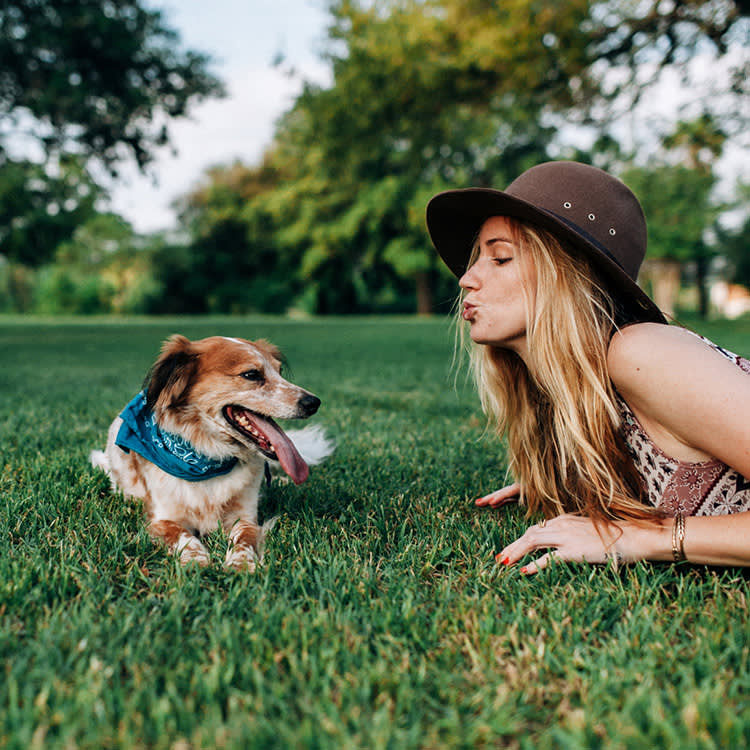
We tend to file dog bites under “dangerous dogs,” as if the danger lives in the animal and the rest of us are just unlucky bystanders. The data on face bites says something far less comfortable, and far more useful: the danger usually lives in our posture, and in our near-total inability to read the dog in the half-second before it happens.
That reframe is the whole point of this piece. A face bite is rarely a dog “snapping out of nowhere.” It is almost always the predictable end of a sequence that a person started and didn’t see coming. Once you understand the sequence, you can interrupt it, and the choreography that prevents face bites turns out to be simple, physical, and teachable to a child.
The single move that precedes most face bites
In a 2015 study, researchers examined 132 incidents in which a person was bitten only on the face, with no bites anywhere else on the body, and worked backward to identify the human behavior that came right before each one. The results form a short, damning list:
- In 76 percent of cases, the person had bent over the dog just beforehand.
- In 19 percent, the person had put their face close to the dog’s face.
- In 5 percent, there was close-range eye contact between dog and person.
Notably absent from the trigger list: trimming nails, stepping on the dog, falling on it, hitting it, pulling its hair, yanking its body, or scolding it. None of those preceded a single face bite in the study. The bites did not follow pain or punishment. They followed looming, the act of lowering a large face down over a smaller one. From the dog’s point of view, a face descending from above is a threat posture, and the response is defensive.
This is why the fix is mechanical. You do not have to diagnose a dog’s temperament to avoid most face bites. You have to stop bending over dogs and stop pressing your face toward theirs. Crouch beside a dog instead of over it, turn slightly sideways rather than squaring up, and let the dog close the last few inches if it wants contact. That posture change alone removes the trigger behind three out of four face bites.
The finding that should change how you supervise kids
Read the rest of the study and the picture sharpens into a child-safety issue. More than two-thirds of the face bites were to children, and 84 percent of those were to kids under 12. More than three-quarters of all the bites happened with a dog the person knew, not a stray. The children were often supervised at the time, with a parent present in 43 percent of cases and the dog’s owner present in 62 percent. More than half the bites landed on the nose and lips.
The supervision detail is the one to sit with. Adults were right there and the bites still happened, because being present is not the same as reading the dog. Children are especially prone to exactly the high-risk moves the study flagged: they crouch low, push their faces in for a kiss, and lock eyes, all while missing the dog’s signals. The protective skill is not “watch the child.” It is “watch the dog’s body and intervene before the child looms.”
Parents tell me they were watching the whole time, and I believe them, they were watching the child. But the warning was on the dog, and the dog is who needs watching. Teach a kid to greet a dog from the side, hands low, no hovering faces, and you’ve removed the move behind most of these bites before anyone has to be a hero.
Why “no warning” usually means “missed warning”
The most startling number in the study is this: in only 6 percent of bites did anyone report the dog giving a warning such as a growl or a tooth display. People walked away convinced the bite came with no signal at all.
It almost certainly did not. Dogs telegraph discomfort long before they escalate to a growl, and the early signals are quiet and easy to miss: a yawn when nothing is sleepy, repeated lip- or nose-licking, a head or body that turns away, a “whale eye” where the dog rolls its eyes to show the whites, a stiff freeze, a closed mouth that was panting a moment ago. These low-intensity signals are routinely overlooked even by adults, which is exactly how a bite ends up labeled “unprovoked.” The warning was there. We just don’t speak the language.
Two things follow. First, learn those quiet signals; they are the actual early-warning system, and they appear well before a growl. Second, when a dog gives them, honor them. Back off, give space, end the interaction. A dog that learns its quiet signals work, that turning away or licking its lips makes the pressure stop, has no reason to escalate to teeth. A dog whose subtle “no” gets ignored repeatedly is the dog that eventually says it the only way left.
The takeaway
Face bites are not random acts of dangerous dogs. They are the foreseeable result of a person looming over an animal that had been asking for space in a language no one was reading. The protection is humble and effective: don’t bend over dogs, don’t push your face into theirs, teach children the same, and treat a yawn, a lip-lick, or a turned head as the warning it is. Do that, and you’ve addressed the part of this equation that was always ours to fix.
This article touches on bite risk and safety. If a dog in your home has bitten or is showing escalating warning signals, loop in your veterinarian and a qualified, reward-based behavior professional rather than managing it alone.
References
- Rezac, P., et al. “Factors affecting dog-human bites and bite circumstances.” Applied Animal Behaviour Science, vol. 173, 2015, pp. 84-89.
- Meints, K., et al. “Teaching Children and Parents to Understand Dog Signaling.” Frontiers in Veterinary Science, vol. 5, 2018, frontiersin.org.
- “Dog Bite Prevention.” American Veterinary Medical Association, avma.org/resources-tools/pet-owners/dog-bite-prevention.
Dr. Solis is a board-certified veterinary dermatologist with over twelve years of clinical experience. She advises on skin conditions, allergies, and grooming practices that affect coat and skin health. All dermatology and allergy content at The Pet Times is reviewed by her team before publication.
Meet our experts ↗Keep reading
 TrainingNo Dog Is "Untrainable." Some People Just Quit.Dr. Nina Kohl · 8 min
 TrainingYour Dog Guards Their Bowl Because They're Worried, Not BossyDr. Nina Kohl · 6 min
 TrainingYour Dog Isn't Trying to Be 'Alpha.' The Science Buried That Idea.Dr. Amara Solis · 7 min
 TrainingYou Taught Your Dog to Paw at You. Here's How to Untrain It.Dr. Amara Solis · 7 min
 TrainingYour Dog's Behavior Problem Probably Isn't Your FaultDr. Nina Kohl · 6 min
 TrainingThat 'Fight' Was Probably a ConversationDr. Priya Nair · 8 min