


Some Dogs Just Shouldn't Meet. If Yours Might, Read This First.
Before you learn how to introduce a dog who lashes out, answer a harder question: should you introduce them at all? A behaviorist's safe, slow method, and the honest limits of it.

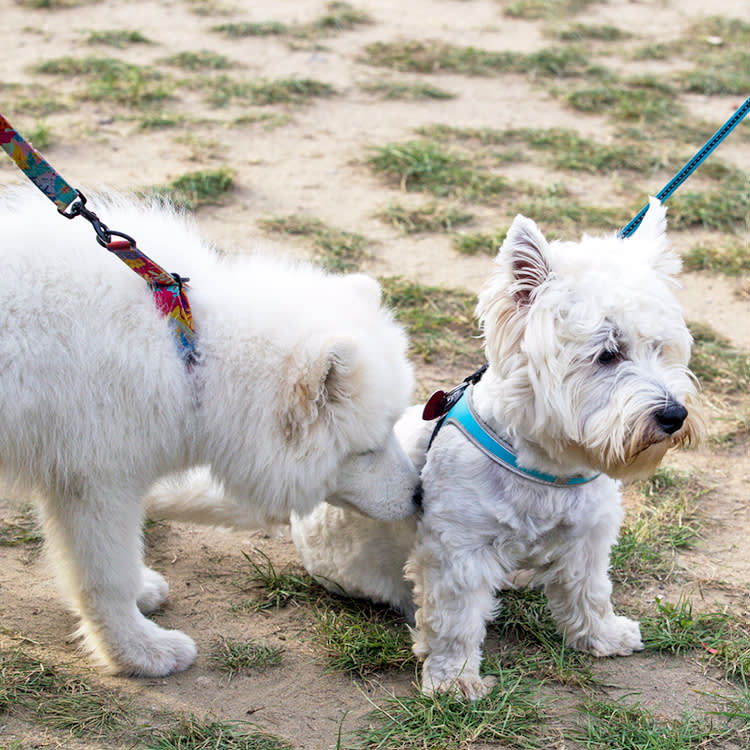
The internet is full of guides on how to introduce two dogs when one is aggressive. Almost none of them start where a behaviorist actually starts, with a blunt question: is this introduction worth attempting at all? For a dog with a genuine bite history toward other dogs, the honest answer is often no. The risk of one dog hurting another, or hurting the human who tries to break it up, can simply outweigh whatever you hoped the meeting would achieve. Keeping those dogs permanently, peacefully separate is not a failure. It is responsible ownership.
So before any technique, run the value test. If your dog is truly aggressive, offensively trying to bite or attack, the safest plan is usually no introduction. If your dog reads more as reactive, fearful and uncertain around other dogs rather than out to harm them, then a careful, staged meeting may be reasonable. The rest of this guide is for that second dog.
Set the stage: neutral ground, and a plan
Dogs are territorial, so the first rule is that neither dog is on home turf. Opening a backyard gate and letting an unfamiliar dog in is close to the worst thing you can do, it drops a stranger straight into another dog’s defended space. Choose open, neutral ground instead, a field or park, ideally fenced if the dogs will eventually be off leash, with enough room to keep real distance between them.
Start parallel, not face-to-face
Both dogs stay leashed for safety, but you never approach head-on with two dogs straining toward each other, that face-off, with dogs pulling at the ends of their leashes, cranks both animals into an aroused, defensive state before they have exchanged a single friendly signal. Use parallel walking instead: both handlers walk their dogs in the same direction, as far apart as it takes to keep both calm, and reward each dog with a treat whenever they glance at the other. As they stay relaxed, slowly narrow the gap, treating all the while. If the body language holds, you can let them touch noses for a couple of seconds, then call them back and walk on a few feet apart before allowing another brief nose-touch.
People want the two dogs to just meet and sort it out, and that’s exactly the approach that starts fights. A calm introduction is almost boringly slow, two dogs walking the same way, at a distance, getting paid for every relaxed glance. You are not forcing a friendship. You are letting each dog gather evidence that the other one is safe, one small, rewarded look at a time.
Work up to real interaction, carefully
If the parallel walking goes well and both dogs look relaxed and curious, you can consider off-leash contact, keeping a leash dragging on the reactive dog so you can regain control fast if you need to. Let them sniff, wander, and play for just a couple of minutes, then collect them again. That short window tells you a lot about how things are likely to go. If they stay calm and the interaction looks positive, you can gradually extend the time.
What not to do
- Do not introduce head-on. Two dogs locked in a stare-down at the ends of taut leashes get too aroused, too fast.
- Do not telegraph fear or stress. Dogs read us closely; if you are tense, they may decide the other dog is the reason and treat it as a threat.
- Do not meet on either dog’s turf. A dog on home ground may turn territorial and escalate.
- Do not meet in a cramped space. A furniture-filled living room can make a dog feel cornered and makes it far harder to separate them if things go sideways.
Read the body language, and believe it
Introductions live or die on your ability to read the dogs. Learn to spot trouble before it becomes a fight. Warning signs that a dog is stressed, fearful, or tipping toward aggression include raised hackles, bared teeth, ears held up and forward, a stiff posture, and a hard, fixed stare. See any of those and remove your dog from the situation, then, on your next attempt, return to parallel walking and reward calm looks from farther away.
The green lights are just as clear. The best sign is reciprocal play, dogs mirroring each other: one play-bows, the other play-bows; they chase one way around the yard, then the other; if they wrestle, they take turns being on top. One common misread worth flagging: a dog rolling onto their back and showing their belly is not always submission, it can just as easily mean they are done playing and want a break.
”Fixing” aggression is the wrong frame
It is tempting to ask whether you can cure a dog’s aggression, but that is the wrong question. You cannot reliably erase the underlying temperament. What you can do is control the environment the dog is in, and teach reliable alternative behaviors so the dog does not aggress in the first place. That shift, from curing the dog to managing the situation, is what actually keeps everyone safe.
Three tools do most of the work. Reward-based training conditions your dog to associate good things (treats, praise) with staying calm near another dog, reward them for looking at another dog without barking, or for sitting quietly by your side in another dog’s presence. Positive, reward-based methods are the standard here; punishment and fear-based approaches tend to raise arousal and make reactivity worse. Parallel walks and structured, time-limited activities keep interactions supervised and controllable, unlike free-for-all off-leash play, which can flip from playful to dangerous when one dog is reactive. And a gradual increase in time and proximity respects that this takes patience: start with a few seconds of sniffing on a parallel walk, or a few minutes of supervised off-leash play, and build only as the dogs earn it.
Living together when one dog is aggressive
Forced proximity often happens at holidays and gatherings, when everyone brings their dogs. Managing it comes down to separation and supervision. Because dogs can be territorial over toys, bowls, and space, give each dog their own room to eat, sleep, and decompress, which heads off resource-driven fights. Supervise every interaction so you can separate the dogs the instant you need to, and only allow contact in situations where both can stay calm, if that means they only ever meet on parallel walks, or only outdoors and never indoors, then that is the rule. You know your dog’s triggers best.
Often the realistic answer is that two dogs will never comfortably share the same spaces, and that is okay. A workable system is rotation: each dog gets its own room where it can be safely on its own, and you cycle them through the shared areas so each gets equal human time. If a dog can’t tolerate being separated, screaming and crying behind a closed door, then sometimes the kindest choice is that one dog sits a gathering out at home. Knowing your dog’s limits, and planning around them, is a core part of the job.
What newer research adds
The behavior field has only grown more confident on two points this guide rests on. First, the reactivity-versus-aggression distinction is now widely emphasized by veterinary behaviorists precisely because it changes the plan, mislabeling a fearful, reactive dog as “aggressive” can push owners toward harsh, counterproductive tactics. Second, the evidence base for reward-based training over aversive methods has continued to strengthen; studies associate punishment-based training with higher stress and more, not fewer, problem behaviors, while reward-based approaches improve outcomes even in tough cases. If you take one modern update from all of this, it is that patience and rewards are not the “soft” option, they are the effective one.
This article covers dog aggression and safety. For a dog with a bite history or serious aggression, work with a qualified, certified behavior professional or veterinary behaviorist rather than going it alone.
References
- Gardiner, John. “The Truth About Aggression and Dominance in Dogs.” UC Davis School of Veterinary Medicine, Animal Health Topics. healthtopics.vetmed.ucdavis.edu
- Ziv, G. “The Effects of Using Aversive Training Methods in Dogs—A Review.” Journal of Veterinary Behavior, 2017. www.sciencedirect.com
- American Veterinary Society of Animal Behavior. “Position Statement on Humane Dog Training.” avsab.org
Common questions
What's the difference between reactivity and aggression in dogs?
Aggression is behavior intended to cause harm, a dog who lunges and would bite another dog if unleashed. Reactivity is an outsized reaction to a trigger, like a dog who barks and lunges at a passing dog or a doorbell but is not actually trying to hurt anyone. They can look similar, but the intent behind them is different, and so is the safest way to handle each.
How do I stop my dog from humping another dog?
If one dog is getting irritated and you need to interrupt humping, redirect the humping dog's attention or calmly lead them away on a leash. It is usually an overexcitement or stress behavior rather than a dominance display, so lowering the arousal level of the interaction tends to help.
Dr. Chen is a small-animal veterinarian who leads health and safety coverage at The Pet Times. She writes and reviews the bulk of our illness, condition, and safety content, translating clinical guidance into clear, practical advice owners can act on at home.
Meet our experts ↗Keep reading
 TrainingYour Dog Isn't Throwing a Tantrum. That Word Is Hiding the Real ProblemDr. Nina Kohl · 7 min
 TrainingYour Nervous Dog Might Be Reading You. The Science Says the Stress Runs Both Ways.Dr. Nina Kohl · 6 min
 TrainingWhen Your Dog Turns to Stone on a Walk, Don't Pull. Read It.Dr. Amara Solis · 6 min
 TrainingYelling at Your Dog Lands in Their Body, Not Just Their EarsDr. Mara Chen · 5 min
 TrainingYour Chihuahua Isn't Needy. You're Holding a Companion Dog That Fits in a Purse.Dr. Mara Chen · 6 min
 TrainingAlmost Every Dog Has a 'Behavior Problem.' That's the Good News.Dr. Mara Chen · 6 min