


You Can't Know a Rescue Dog's Age. Here's How Close You Can Get.
When a dog joins your life as an adult, their real birthday is a mystery. But their body keeps a rough record. Here's how to read teeth, eyes, muzzle, and movement into a solid age range, plus the new test that gets closer than any guess.

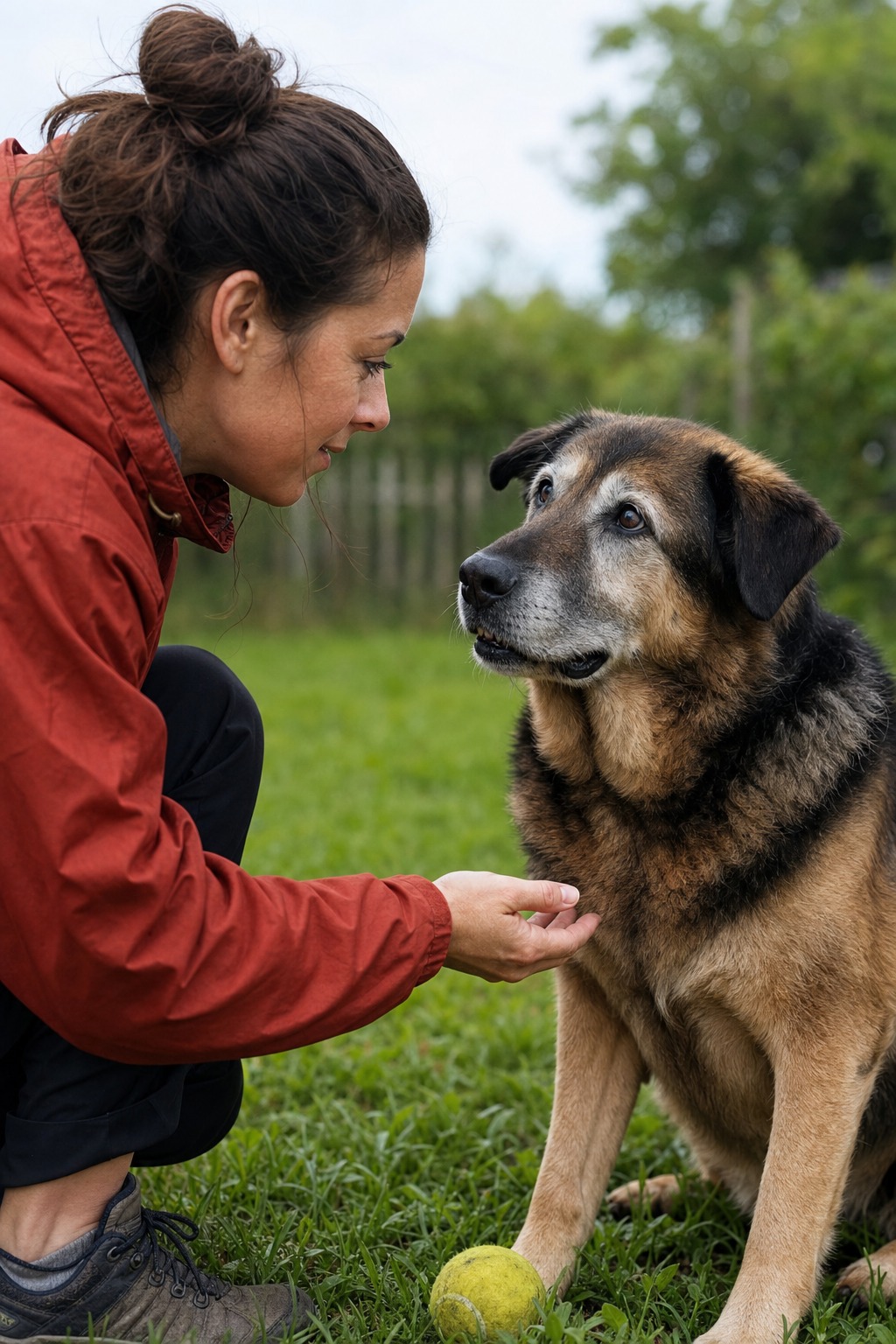
When a dog comes to you as an adult, whether from a shelter, a rescue, or a found-on-the-street story, you inherit everything about them except one thing: the day they were born. It’s a strangely tender gap. You can guess, and the shelter probably did, but the truth is nobody knows for sure.
Here’s the good news. Your dog’s body keeps a rough record of the years, and with a little know-how you can read it into a solid age range. Just set the expectation correctly first: for an adult dog, you are estimating a range, not recovering a birthday. The clues get blurrier the older a dog gets, and even a vet gives you a window, not a number.
Why puppies are easy and adults aren’t
Puppies are the exception, because early development runs on a schedule. Baby teeth come in, adult teeth replace them, ears go up, eyes change, and body size climbs, all on a reasonably predictable timeline. If you can see any of those milestones in progress, you can pin a young dog’s age to within a few weeks. It’s the closest thing to reading a calendar off an animal.
That clock stops being precise once a dog is grown. Most dogs are considered adults somewhere around 12 to 24 months, depending on size and breed, smaller dogs mature faster, giant breeds slower. After that, there are no more crisp developmental checkpoints. Aging turns into a slow accumulation of subtle changes, and reading those changes is the real skill. Here’s where to look.
The best physical clues, from most to least telling
Teeth
Teeth are the classic starting point, and for good reason, but they’re more honest in a young adult than an old one. In a dog who finished getting their adult teeth not long ago, the teeth are white, clean, and sharp-edged. With age, you’ll see the enamel dull and yellow, tartar build up along the gumline, and the biting surfaces wear flat, especially on the front incisors. Very worn, stained, or missing teeth suggest a senior.
The catch: teeth are influenced by a lot besides age. A chewer wears their teeth faster; a dog fed soft food or given regular dental care keeps theirs cleaner longer; some breeds are simply prone to dental disease. So read teeth as one input, not the verdict. A three-year-old with a hard-chewing habit can have rougher teeth than a well-cared-for seven-year-old.
Eyes
After roughly six to eight years, many dogs develop a normal, hazy blue-gray tint deep in the lens called nuclear (or lenticular) sclerosis. It’s not the same as cataracts, it doesn’t much affect vision, and it’s one of the more reliable senior tells because it’s an age-linked change rather than a lifestyle one. A dog with clear, bright eyes is more likely to be younger; a soft cloudiness suggests the back half of life.
Muzzle and coat
Graying is intuitive but tricky. Many dogs start showing white hairs around the muzzle and eyes in middle age, and a frosty face often signals a senior, but plenty of dogs gray early, sometimes tied to stress or genetics rather than years. Coat texture can shift too, thinning or coarsening with age. Use graying as a supporting clue, not a stopwatch.
Muscle tone and movement
The whole-body read is often the most informative. Younger adult dogs tend to carry firm muscle and move with easy spring. Older dogs may lose muscle over the hindquarters and topline, feel bonier along the spine, stiffen after rest, hesitate at stairs or jumps, or slow their pace on walks. None of that is proof on its own, arthritis and old injuries confound it, but a dog who’s lean-muscled and bouncy reads younger than one who’s stiff and softening, and combined with the eyes and teeth it sharpens the estimate.
Behavior and energy
Loosely, energy tapers with age. Young dogs and adolescents are often restless, mouthy, and tireless; older dogs sleep more, settle faster, and mellow. It’s the vaguest clue of the bunch, personality and health swamp it, but it rounds out the picture, especially at the extremes.
Put the clues together, then hold them loosely
No single feature nails an age. The trick is stacking them: bright eyes plus clean, sharp teeth plus firm muscle and spring points young; hazy eyes plus worn, tartar-heavy teeth plus a graying muzzle and stiff hindquarters points senior. Your vet does exactly this at an exam, weighing all of it into a range like “probably four to six” or “at least ten.” That range is the honest answer, and it’s genuinely useful, because it tells you whether you’re caring for a young adult, a middle-aged dog, or a senior who needs more frequent checkups and joint support.
Owners always want the exact number, and I get it, but the range is the real information. Whether a dog is ‘about three’ or ‘about eleven’ changes the whole care plan, and I can tell you that with confidence from the teeth, eyes, and how they move, even when I can’t tell you a birthday.
What newer research adds
For the first time, there’s a way to get closer than eyeballing teeth. Scientists have built epigenetic “clocks” for dogs that estimate biological age from DNA methylation, chemical marks on the genome that accumulate in a predictable pattern over a lifetime. A cheek swab or blood sample run through one of these clocks can put a number on a dog’s biological age, and commercial versions are starting to reach owners.
Two findings from this work are worth knowing. First, it reshaped the old “multiply by seven” myth: the updated dog-to-human formula pegs an eight-week-old puppy at roughly the age of a nine-month-old baby, and a 12-year-old Labrador at about a 70-year-old person, because dogs age fast early and then slow down. Second, larger breeds age faster at the molecular level, which lines up with why big dogs tend to have shorter lives. The clock measures biological aging rather than a calendar birthday, so it’s still an estimate, but it’s the most precise one available, and a meaningful step up from reading a dog’s face and hoping.
References
- American Kennel Club. “How to Tell a Dog’s Age.” akc.org
- Wang T, et al. “Quantitative translation of dog-to-human aging by conserved remodeling of the DNA methylome.” Cell Systems, 2020. cell.com
- Jin K, et al. “DNA methylation and chromatin accessibility predict age in the domestic dog.” Aging Cell, 2024. onlinelibrary.wiley.com
- Dog Aging Project. dogagingproject.org
This article covers pet health. Age estimates are guides, not diagnoses. Your veterinarian can give you the most accurate range and tailor care to your dog’s likely life stage.
Common questions
How can you tell a dog's age by their teeth?
In puppies, teeth are a reliable clock because baby and adult teeth erupt on a predictable schedule. In adults, teeth are a rougher guide: vets read wear on the surfaces, tartar buildup, and yellowing, but diet, chewing habits, and dental care all affect them, so teeth alone can mislead.
Is there a test that shows a dog's real age?
There's now a DNA-based epigenetic age test that estimates biological age from methylation patterns in a dog's cells. It gets closer than a physical exam, but it measures biological aging rather than an exact calendar birthday, and it's still an estimate.
Not a substitute for your vet. Our guidance is educational. For urgent symptoms, contact a vet or emergency clinic right away. Editorial standards
Dr. Kohl is a board-certified veterinary dentist with a particular interest in preventive oral care. She reviews all dental health content at The Pet Times and contributes practical guides on home dental routines, professional cleaning, and oral disease prevention.
Meet our experts ↗Keep reading
 Living'Designer Dog' Is a Marketing Word. The Genetics Are Messier.Dr. Ravi Mehta · 7 min
 LivingA Stranger Found Him Tied to a Bench in the Rain. A TikTok With 100 Followers Got Him Home.Nina Vasquez · 6 min
 LivingA Lab From Brazil Went Back-to-Back. The Better Story Was in Third.Nina Vasquez · 5 min
 LivingHe Lost 90% of His Business. Then He Groomed 1,461 Dogs for Free.Marcus Webb · 5 min
 Living43 Arrests at a Texas Dogfight. Nearly All of Them Bonded Out.Dr. Amara Solis · 7 min
 Living529 Days Alone on an Island. A T-Shirt Is What Finally Caught Her.Nina Vasquez · 5 min