


The Best Trainer for Your New Puppy Might Already Live in Your House
House-training, manners, recall, even how to play, an older dog can teach a puppy things you can't. Here's how canine mentorship actually works, and which older dogs make good teachers.

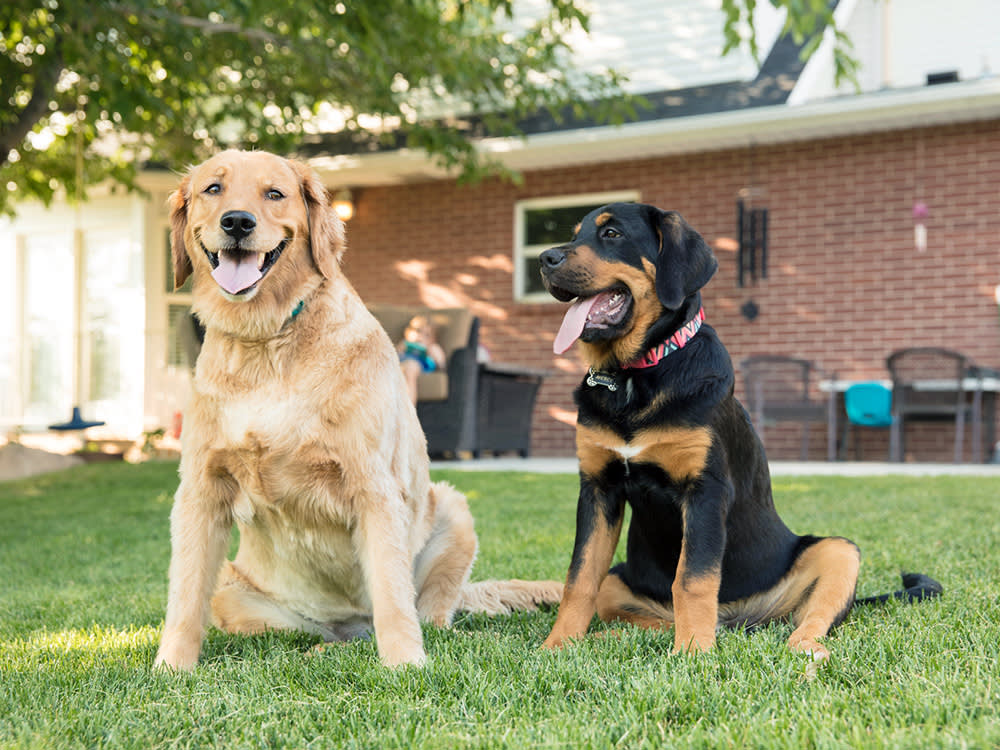
We put enormous effort into training puppies, the treats, the clickers, the patient repetition, and rightly so. But there’s a trainer many households overlook, one who works for free, speaks the language natively, and never has an off day at the wrong moment: the older dog already curled up on the couch.
Dogs learn a startling amount from other dogs. A steady, well-adjusted older dog can teach a puppy things a human simply can’t, because some lessons only make sense delivered in dog. Mentorship, the informal passing of skills and confidence from someone wiser to someone greener, isn’t just a human arrangement. Lucky puppies get it too, and it shapes who they become.
Here’s what that mentorship actually covers, and how to know whether your older dog is cut out for the job.
Manners a human can’t teach: boundaries
The first and maybe most valuable thing a puppy learns from an older dog is where the lines are, socially. Puppies are relentless. They’ll body-slam a resting adult dog over and over, demanding play, oblivious to every signal that the older dog is done. A good mentor dog corrects this, and does it in a language the puppy is built to understand.
You’ll see it: an older dog calmly places a paw over the puppy, or offers a low grumble, or gently mouths over the puppy’s muzzle, a clear, measured “that’s enough.” Done well, none of this frightens the puppy. It teaches. The puppy learns to read when another dog is not up for playing and to go find something else to do, which is exactly the kind of self-control and social literacy that makes an adult dog easy to live with.
The critical word there is measured. Boundary-setting only works as mentorship when it’s calm, fair, and proportionate. The goal is to teach the little one, not scare them. Learning to tolerate a small frustration, not getting what you want the instant you want it, is itself a gift; it builds the frustration tolerance that so many behavior problems come down to.
The practical curriculum: potty, recall, and cues
Ask around and you’ll hear it constantly: “My older dog house-trained the puppy.” There’s real substance to that. When the adult dog heads outside to relieve themselves, they’re scent-marking the yard, and those odors do a lot of the teaching, showing the puppy where the bathroom is. The puppy watches, follows, and often simply falls in line with the established routine.
Recall gets a boost too. If your older dog has a solid “come,” that’s a live demonstration a puppy can copy. Call out, the adult dog turns and trots to you, and the puppy, wired to chase and to follow older dogs around, tends to come right along. When they both arrive, you reward both, and you’ve started building a reinforcement history with the puppy almost effortlessly, on the older dog’s coattails.
Whether dogs truly learn commands by watching is debated among scientists, but the anecdotes are everywhere: an owner cues the older dog to sit, rewards it, and the puppy, after a beat of visible deliberation, sits too, as if checking whether they’ve read the room correctly. At minimum, a trained older dog makes the whole training environment easier for a puppy to slot into.
The lessons you can’t put on a cue card: play and language
Some of the most important things an older dog teaches don’t look like training at all. Play is one. It is often far easier for a puppy to learn how to play from a patient older dog than from even the most enthusiastic human. This matters enormously for puppies from rough starts, mill dogs, hoarding cases, dogs who never got to be joyfully silly. A mentor dog can teach them how, and watching a shut-down dog discover play through another dog is one of the quietly great things in this work.
The other is language itself. Dogs are native speakers of dog; we’re all foreign learners. Daily interaction with another dog keeps a puppy’s canine communication skills sharp, or builds them in the first place. That fluency is what lets a dog navigate the wider world of other dogs gracefully later on, and no human can teach it the way another dog can.
Why the puppy benefits beyond the lessons
Beyond specific skills, an older dog offers something a nervous new puppy badly needs: security. Leaving mother and littermates for a strange home is a genuine shock, and it’s just as jarring for an older pup rehomed into an unfamiliar family. A calm, friendly resident dog can be an anchor through that transition. Many puppies settle, rest, and sleep more easily with an older dog nearby; the image of a puppy sighing and drifting off tucked against an older dog is almost reason enough on its own to consider it.
For fearful dogs especially, ones who trust dogs more readily than people, a canine mentor can be the bridge into a new life. And energetic young dogs often get into less trouble with an older companion around, simply because the extra play and stimulation burn off the boredom that breeds mischief.
People think they need to teach a nervous puppy that the world is safe, and sometimes the fastest way to do that is to let another dog show them. A confident older dog is a walking demonstration that the vacuum won’t eat you and strangers are fine. Puppies believe other dogs in a way they don’t always believe us.
Not every older dog is a mentor
Here’s the important caveat: mentoring is a role, not a guarantee, and not every older dog is suited to it. The term itself comes from Homer’s Odyssey, in which Odysseus entrusted his son to a wise, steady family friend named Mentor before leaving for war. The point of the name was the temperament: protective, patient, trustworthy.
The same holds for dogs. The best canine mentors are sociable, agreeable, and comfortable across a wide range of situations. They handle the unexpected without unraveling, adjust to changes in routine, and carry medium energy, enough to engage and play, not so much that they overwhelm a puppy with constant motion. Above all, a good mentor reads other dogs well and responds appropriately to a puppy’s shifting moods. An anxious, reactive, or resource-guarding older dog is not a mentor in waiting; pairing them with a puppy can teach the wrong lessons or create real conflict. Be honest about which dog you actually have.
If your older dog is the steady, generous type, though, you have a teaching resource sitting right there, one who works in a language you’ll never fully speak. Let them do the parts of the job they’re better at than you are. Your puppy will be better for having been raised, in part, by a dog.
What newer research adds
The science of how dogs learn from each other is catching up to what owners have long observed. Studies on social learning in dogs have shown they’re genuinely capable of picking up information by watching others, both other dogs and humans, through what researchers call the “Do as I Do” paradigm, where dogs can be taught to imitate demonstrated actions. It’s not the whole explanation for household mentorship, scent and routine do heavy lifting for things like house-training, but it lends real support to the idea that puppies learn by watching a steady role model.
Research on canine development and stress also increasingly backs the “security blanket” effect. A calm companion animal can buffer stress during frightening or novel situations, an effect documented in dogs much as it is in other social species. That’s the formal version of what mentor dogs do every day: lend a nervous youngster their calm until the youngster grows some of their own.
Dr. Chen is a small-animal veterinarian who leads health and safety coverage at The Pet Times. She writes and reviews the bulk of our illness, condition, and safety content, translating clinical guidance into clear, practical advice owners can act on at home.
Meet our experts ↗Keep reading
 First DaysPotty Training Isn't About the Puppy. It's About the MathJordan Ellis · 7 min
 First DaysThe Simple Math That Ends Puppy Potty AccidentsDr. Lena Park · 6 min
 TrainingStop Scheduling Puppy Training. The Best Sessions Are 30 Seconds Long.Dr. Nina Kohl · 7 min
 First DaysYour Puppy Isn't Regressing. They're in a Fear PeriodJordan Ellis · 8 min
 First DaysThe Only Puppy in the Litter Missed a Class. It Shows Up Years Later as a Bite.Dr. Nina Kohl · 9 min
 TrainingThe Leash Is a Seatbelt, Not a Steering Wheel. That's Why Your Puppy Pulls.Dr. Nina Kohl · 9 min