


The Real Hibiscus Danger to Cats Isn't Hibiscus. It's Its Toxic Look-Alike
Hibiscus is non-toxic to cats and rarely worse than a stomach ache. The actual risk is a poisonous plant that shares one of hibiscus's common names. Here is how to tell them apart.

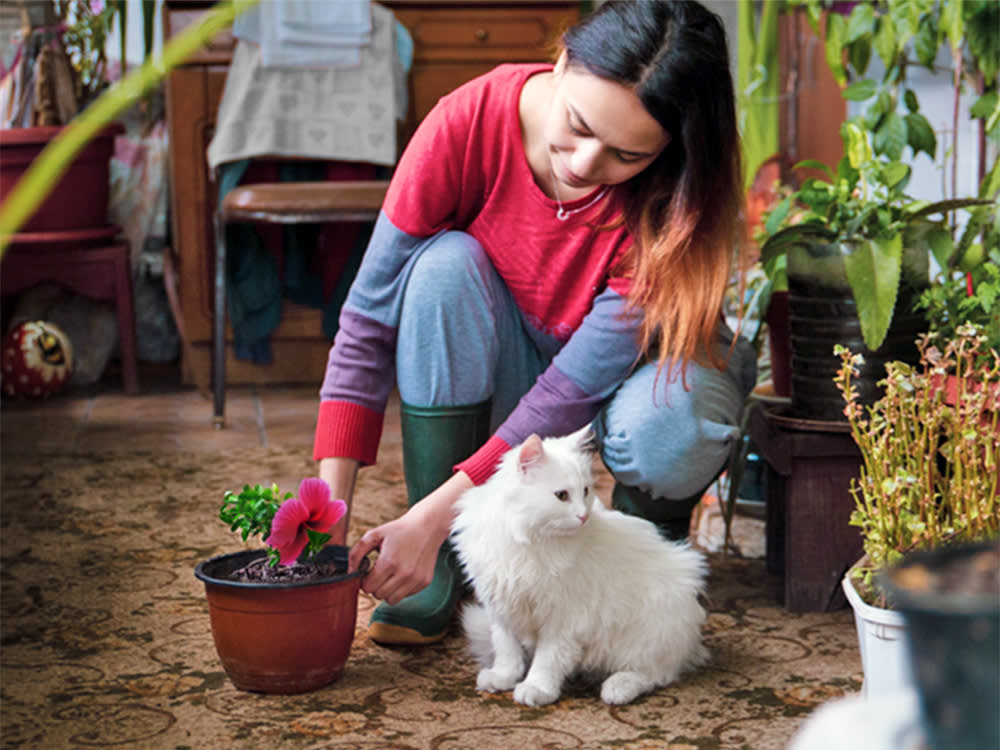
If you searched “are hibiscus toxic to cats,” you were probably bracing for a yes. Here is the reassuring part: for true hibiscus, the answer is no. The ASPCA lists hibiscus as non-toxic to cats, and the worst a real hibiscus typically does is give a cat who eats too much of it a stomach ache.
But there is a reason this question deserves more than a one-word answer, and it is the part that actually protects your cat. Hibiscus shares a common name with a genuinely poisonous plant. Reassurance about the wrong plant is worse than no reassurance at all. So the useful version of this article is not “is hibiscus safe.” It is “do you actually have hibiscus, or do you have its toxic twin?”
The reassuring half: real hibiscus is fine
Let’s clear true hibiscus first, because once you know it is safe you can focus on the part that matters.
Hibiscus is wildly popular in gardens, bouquets, and the teacup. There are over 100 varieties, and a few names come up constantly:
- Roselle (Hibiscus sabdariffa): the variety used to make most hibiscus tea.
- Chinese hibiscus (Hibiscus rosa-sinensis): the big, showy garden and houseplant hibiscus.
- Rose of Sharon (Hibiscus syriacus): a hardy garden shrub. Remember that name. It is about to do some damage.
None of these contains a compound that poisons cats. If your cat chews a Chinese hibiscus leaf or bats a roselle flower off your plate, you are not dealing with a toxin. You may be dealing with a stomach, which we will get to, but not a poison.
“With confirmed true hibiscus, I tell cat owners to relax and just watch the litter box for a day,” says Dr. Mara Chen, a veterinarian who writes for Pet Times. “It is not a plant that hurts cats. The conversation I actually care about is making sure they know it is hibiscus and not the thing people mix it up with.”
The dangerous half: the “rose of Sharon” trap
Here is the collision. The common name “rose of Sharon” is pinned to two completely unrelated plants.
One is Hibiscus syriacus, the harmless garden hibiscus above. The other is Hypericum calycinum, better known as St. John’s wort (also called Klamath weed). They are not related, they do not behave alike in a cat, and they get sold and described under the same casual nickname.
That second plant is the real hazard. Hypericum contains hypericin, and the ASPCA lists St. John’s wort as toxic to cats. Its signature danger is not a simple stomach ache. Hypericin causes photosensitization, a reaction where the skin becomes painfully sensitive to sunlight and can blister or develop ulcerative, weepy dermatitis, especially on lightly furred or light-skinned areas. Cats may also show mouth irritation, agitation or restlessness, incoordination, and lethargy.
“Photosensitivity is the tell that should make any owner pick up the phone,” Dr. Chen says. “Stomach upset after a plant is common and usually minor. Skin that suddenly reacts to sunlight is a different category, and with a plant that gets confused for harmless hibiscus, that is exactly the signal you do not want to dismiss.”
So if you only take one thing from this article, take this: a plant casually called “rose of Sharon” might be a friendly hibiscus or a toxic Hypericum, and the way to be sure is to check the botanical name. Hibiscus syriacus is fine. Hypericum calycinum is not.
If your cat eats a true hibiscus
Assuming you have confirmed it is real hibiscus, here is the honest, low-drama playbook.
Some cats develop mild to moderate gastrointestinal upset after eating plant material, hibiscus included. Watch for:
- Drooling or nausea
- Vomiting
- Diarrhea
- Loss of appetite
Not every cat reacts, and many nibble a little hibiscus with no effect at all. The more they eat, the more likely they are to feel it, so quantity matters.
What to do:
- Remove the plant or block access so your cat cannot keep grazing.
- Note roughly how much they ate, and keep the plant or a photo so you can confirm the species.
- If the plant was recently treated with fertilizer or pesticide, find the product name and active ingredients. That information can matter more than the plant itself.
- Watch your cat. If GI signs appear and persist, call your veterinarian. Treatment for true hibiscus upset is simple supportive care, anti-nausea medication, anti-diarrheal medication, or fluids, and cats typically bounce back quickly as outpatients.
And if you cannot say for certain that it was hibiscus and not the Hypericum look-alike, do not wait it out. Call your vet or the ASPCA Animal Poison Control Center at (888) 426-4435 (a consultation fee may apply). Identification is the whole game here.
Build a cat-safe plant shelf you don’t have to police
The most reliable way to skip this entire question is to stock your home with plants that carry no risk and no confusing twin. Confirmed cat-safe options include:
- Orchids (Phalaenopsis): elegant, long-blooming, and pet-friendly.
- Zinnias (Zinnia elegans): bold garden color that also draws butterflies.
- Snapdragons (Antirrhinum majus): cat-safe and happy in cooler weather.
And keep the genuinely dangerous flowers out of reach entirely, because these are not “stomach ache” plants:
- Lilies (Lilium and Hemerocallis): true lilies and daylilies can cause fatal kidney failure in cats from even a tiny exposure, including pollen. This is the single most important plant to keep away from any cat.
- Daffodils (Narcissus): especially the bulb, can cause vomiting, tremors, heart rhythm changes, and seizures.
- St. John’s wort (Hypericum): the toxic “rose of Sharon,” for all the reasons above.
The bottom line
True hibiscus is non-toxic to cats, and a cat who eats some is far more likely to need a quiet afternoon than a vet. The hazard worth your attention is not the plant in the question but the one hiding behind a shared name: St. John’s wort, sold as “rose of Sharon,” carries hypericin and can make a cat painfully sun-sensitive. Identify what you actually have, keep the dangerous look-alike and the truly deadly plants like lilies out of reach, and keep the ASPCA poison control number where you can find it. With cats and plants, the name on the tag matters more than the reassurance in the headline.
References
- “Toxic and Non-Toxic Plants: St. John’s Wort.” ASPCA Animal Poison Control Center. https://www.aspca.org/pet-care/aspca-poison-control/toxic-and-non-toxic-plants/st-johns-wort
- “Which Lilies Are Toxic to Pets.” ASPCA. https://www.aspca.org/news/which-lilies-are-toxic-pets
- “Animal Poison Control.” ASPCA. (888) 426-4435. https://www.aspca.org/pet-care/animal-poison-control
- “St. John’s Wort Poisoning in Cats.” Pet Poison Helpline. https://www.petpoisonhelpline.com/poison/st-johns-wort/
Common questions
What is the toxic plant confused with hibiscus?
St. John's wort (Hypericum), sometimes sold under the same common name 'rose of Sharon.' Unlike hibiscus, Hypericum contains hypericin and is toxic to cats. It can cause photosensitization, meaning painful skin reactions in sunlight, along with mouth irritation and other signs. This name collision is the real hazard, not hibiscus.
What happens if my cat eats hibiscus?
Most likely, very little, or at most mild gastrointestinal upset: drooling, nausea, vomiting, or diarrhea, especially if they ate a lot. Remove the plant, note how much they ate, and watch them. Call your vet if symptoms appear or persist. If you are not certain the plant was true hibiscus rather than a toxic look-alike, treat it as a possible poisoning and call right away.
Are hibiscus flowers more dangerous than the leaves?
No. There is no evidence that any one part of a true hibiscus plant is more harmful than another. The flowers, leaves, and stems are all considered non-toxic, though eating a large quantity of any of them is more likely to upset a cat's stomach than a nibble.
When should I call poison control for my cat?
Call your vet or the ASPCA Animal Poison Control Center at (888) 426-4435 if your cat ate a plant you cannot confidently identify as hibiscus, if they show skin redness or sunlight sensitivity (a red flag for the St. John's wort look-alike), or if vomiting or diarrhea is repeated or severe. A quick call costs little and rules out the dangerous look-alike fast.
Not a substitute for your vet. Our guidance is educational. For urgent symptoms, contact a vet or emergency clinic right away. Editorial standards
Dr. Park is a board-certified emergency and critical care specialist. She reviews our health and safety content for clinical accuracy and contributes guides on recognising urgent conditions. Her focus is helping owners act quickly and correctly when it matters most.
Meet our experts ↗Keep reading
 LivingA Five-Month-Old Kitten Turned On a Faucet, Blocked a Drain, and Closed a Cat CafeSara Lim · 6 min
 FoodThe 'Natural' Raw Diet Is Failing Cats on Two FrontsDr. Amara Solis · 7 min
 Health & WellnessYour Indoor Cat Will Never Get Out. Until the Night She Does.Dr. Amara Solis · 6 min
 Health & WellnessThe Monarch Bird Flu Cases Were Not a Fluke. They Were a PatternDr. Ravi Mehta · 5 min
 Health & WellnessCats Rarely Get Lyme. They Get Something Far Worse.Dr. Amara Solis · 8 min
 Health & WellnessYour Cat Begs to Go Outside. The Honest Case for Keeping Them In.Dr. Priya Nair · 8 min