


This Dog Cancer Gives Almost No Warning. Then It's an Emergency.
Hemangiosarcoma builds a fragile, blood-filled tumor that often stays silent until it ruptures. Knowing the breeds at risk, the subtle early signs, and the collapse that signals a crisis is the difference between a plan and a panic.


Most illnesses give you a runway. Hemangiosarcoma often does not. It is a cancer that can grow quietly inside a dog for weeks, then announce itself all at once, when a fragile, blood-filled tumor tears open and the dog collapses. That pattern, long silence followed by a sudden crisis, is the single most important thing to understand about it, because the families who cope best are the ones who knew what they were watching for before the emergency arrived.
This is not a comfortable topic. It is a useful one.
The cruelty of hemangiosarcoma is the timing. By the time a dog shows dramatic signs, the tumor has usually already bled. So my goal with owners is never to scare them, it’s to make sure they know what a rupture looks like, because recognizing it in the first ten minutes is what buys their dog a chance.
What it is, and where it hides
Hemangiosarcoma is one of the more common canine cancers, and it develops from the cells that line blood vessels. Because blood vessels run everywhere, the tumor can form almost anywhere, but there are favorites: about half of cases start in the spleen, followed by the liver, then the heart. A minority appear in or under the skin. It is aggressive, shows up most often in middle-aged and older dogs, and is seen slightly more in males. Why it develops is not fully understood, though skin forms are sometimes linked to sun exposure on thinly-haired areas like the belly, inner thighs, and eyelids, which is a small argument for shade on light-bellied, sun-loving dogs.
The breeds that carry more risk
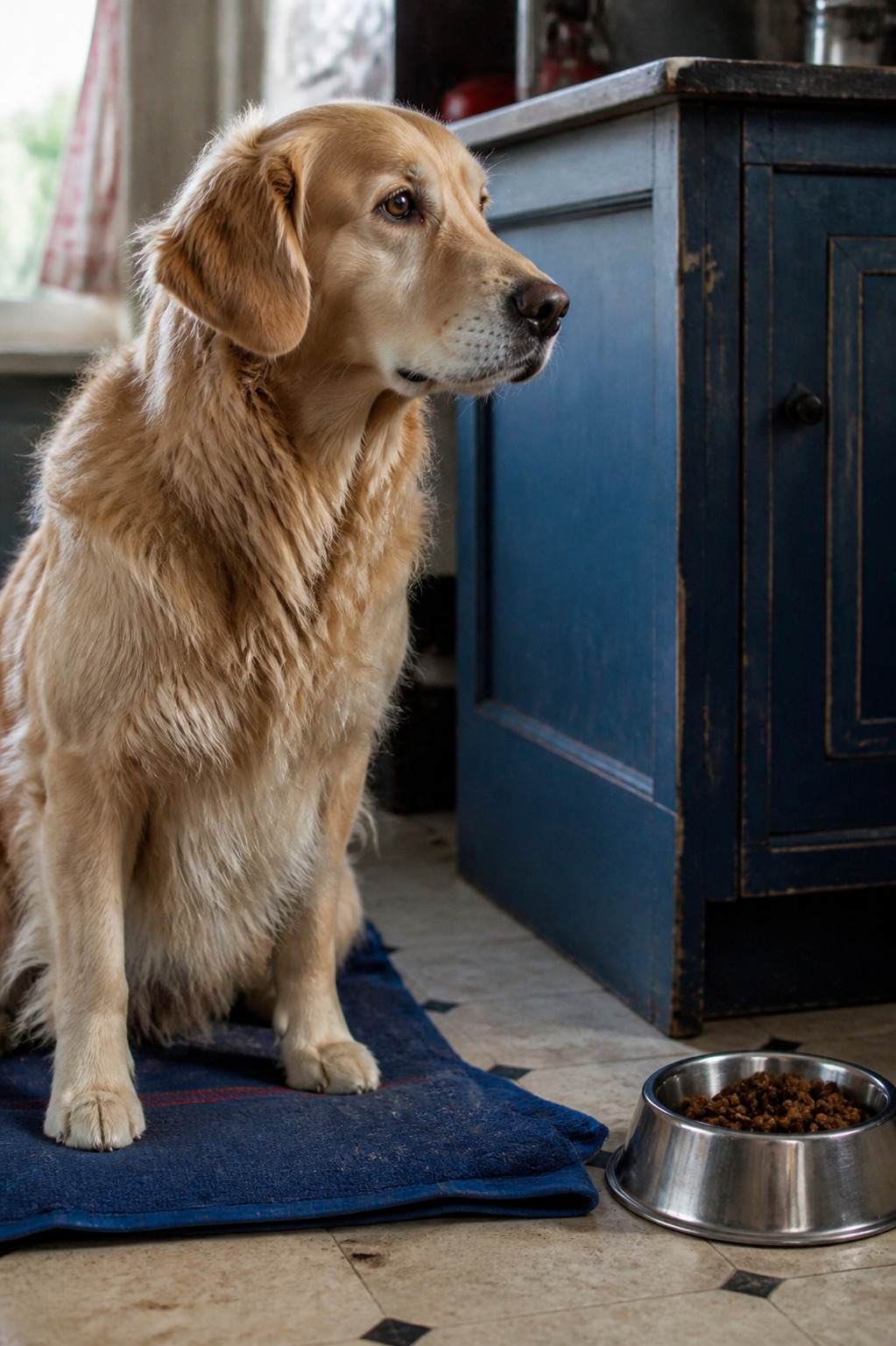
Certain breeds are overrepresented, and if you own one, this is your cue to pay closer attention to energy and gum color rather than to panic. Golden Retrievers, German Shepherds, Portuguese Water Dogs, Boxers, and Skye Terriers all sit on the higher-risk list. Vigilance, not dread, is the right response.
The signs are quiet until they aren’t
On or just under the skin, the tumor can show up as a reddish or purplish lump that bruises or bleeds easily, which is actually the “lucky” version because you can spot it early. Internal tumors are the problem. Early on, the only hints may be intermittent lethargy or pale gums, easy to miss or blame on age.
As an internal tumor grows, the vessels feeding it start to leak, and blood pools where it should not. That is when signs sharpen: weight loss, a fading appetite, increased panting, weakness, a cough, or a bulging belly. The one to burn into memory is a dog who suddenly becomes weak, with a swollen or distended abdomen and pale gums. That combination can mean the spleen has ruptured and is bleeding internally, and it is a get-to-an-emergency-vet-now situation.
How it’s diagnosed
A suspicious skin mass, meaning one bigger than a pea or one that has lingered more than a month, is worth checking, and a vet can often sample it with a fine needle aspiration. Internal tumors are trickier and usually can’t be safely needled, so diagnosis leans on bloodwork, an abdominal ultrasound, X-rays, and sometimes a CT scan. One genuinely important nuance: roughly half of bleeding masses found on the spleen turn out to be benign, not cancer, which is part of why a ruptured spleen is often removed and then sent to pathology rather than assumed to be the worst.
What treatment can and can’t do
The standard approach is surgery to remove the tumor (a splenectomy, in the common splenic case) followed by chemotherapy. The hard truth is that splenic hemangiosarcoma has often spread microscopically by the time it is found, so the aim of treatment is usually to slow the disease and prevent life-threatening bleeds rather than to cure it. Skin-surface tumors caught early are the more hopeful exception. With surgery alone, survival is typically measured in a couple of months; adding chemotherapy extends that meaningfully for many dogs but does not usually eliminate the cancer.
Where the research is actually moving
This is the part worth updating, because the field has not stood still, and a few avenues offer cautious reasons for hope.
A drug developed at the University of Minnesota called eBAT, designed to hit the tumor and its blood supply while sparing the immune system, has been studied as a way to delay spread after surgery, with reported median survival in one trial around 258 days, longer than surgery-plus-standard-chemo tends to deliver. It is still investigational, and researchers are working out the best dosing and timing.
A separate line of work pairs standard doxorubicin chemotherapy with propranolol, an old, cheap beta-blocker. A clinical trial that finished enrolling in 2023 found no serious added toxicity, and in a subset of dogs the combination appeared to stretch survival beyond what chemo alone would predict, though not every dog benefited. It is promising and not yet a settled standard.
Owners often ask about the medicinal mushroom extract from Coriolus versicolor, known as PSP or by the supplement name I’m-Yunity. It traces back to a small 2012 University of Pennsylvania study of 15 Golden Retrievers, where the highest dose was associated with a median survival near 199 days, and later trials have continued to evaluate it against or alongside chemotherapy. The honest read is that it is interesting, generally well tolerated, and not a substitute for surgery and oncology care. Talk to a veterinary oncologist before adding it.
What this means for you
You cannot reliably screen your way out of hemangiosarcoma, so the practical takeaways are simpler than the science. Know whether your dog’s breed runs higher risk. Get lingering or growing skin lumps checked. Learn the rupture picture, sudden weakness, pale gums, a swelling belly, and treat it as the emergency it is. And if a diagnosis does come, know that surgery plus chemotherapy remains the backbone, that new options are being actively studied, and that a veterinary oncologist is the person to help you weigh quality of life against every choice on the table.
References
- Hemangiosarcoma in dogs — Veterinary Partner (VIN)
- Researching New Treatments for Canine Hemangiosarcoma — AKC Canine Health Foundation
- Compound Derived From a Mushroom Lengthens Survival Time in Dogs With Cancer — Penn Today
- Diagnosis, Prognosis, and Treatment of Canine Hemangiosarcoma: an ABROVET consensus review — Cancers (2023)
Not a substitute for your vet. Our guidance is educational. For urgent symptoms, contact a vet or emergency clinic right away. Editorial standards
Dr. Chen is a small-animal veterinarian who leads health and safety coverage at The Pet Times. She writes and reviews the bulk of our illness, condition, and safety content, translating clinical guidance into clear, practical advice owners can act on at home.
Meet our experts ↗Keep reading
 Health & WellnessImodium for Dogs: The Risks, the Dosing, and Why Vets HesitateDr. Ravi Mehta · 6 min
 Health & WellnessThe Grain-Free Heart Disease Scare, and What the Headlines Got WrongDr. Amara Solis · 9 min
 Health & WellnessThe Cutest Thing About Your Flat-Faced Dog Is the Thing That's Suffocating ItDr. Ravi Mehta · 7 min
 Health & WellnessYour Dog Keeps Gagging but Nothing Comes Up. Don't Wait It Out.Dr. Lena Park · 8 min
 Health & WellnessYour Dog Is Mothering a Stuffed Toy. Here's the Hormone Behind It.Dr. Lena Park · 6 min
 Health & WellnessA Worm Can Smell Cancer. That's the Idea Behind the At-Home Dog Test.Dr. Mara Chen · 7 min