


Your New Home Smells Like Nothing to Your Dog. That's the Whole Problem
A dog reads a home through its nose and its routine, and a move erases both at once. Here's how to rebuild a sense of safety on purpose, from the boxes going up to the first night left alone.

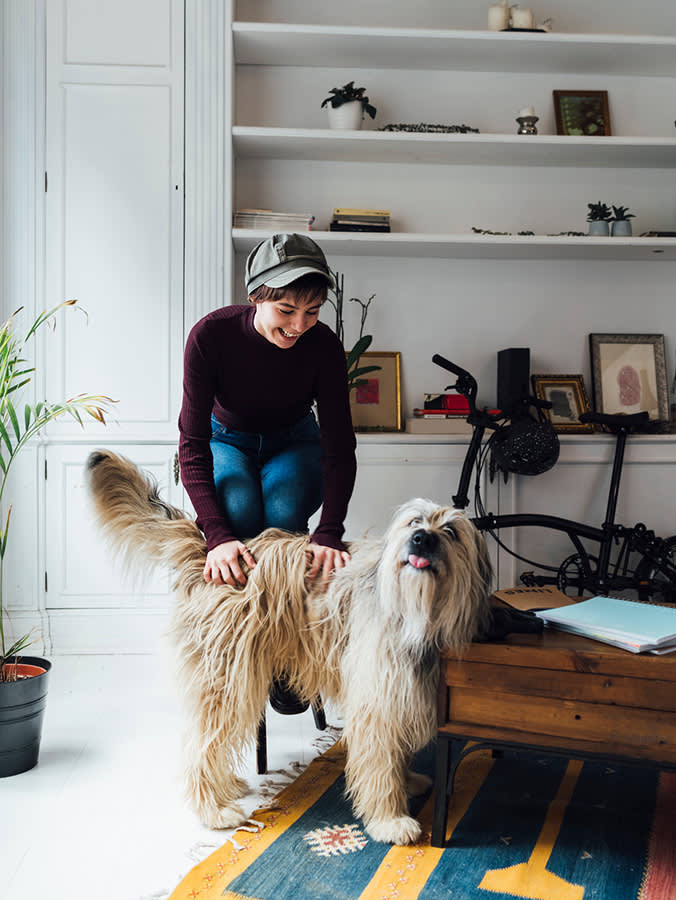
To you, a new home is an upgrade. To your dog, it is a place that smells like strangers, sounds wrong, and follows none of the old rules. Dogs build their sense of safety out of two things, a scent map of their territory and a predictable daily rhythm, and a move wipes both clean in a single afternoon. That is the real reason a settled, easygoing dog can suddenly pace, cling, or have accidents in a beautiful new house: not the house, but the erased map underneath it. Once you see the problem that way, the fixes stop being a grab bag of tips and become one job, rebuilding the map and the rhythm on purpose.
Start before the first box, not after
The stress of a move begins the moment your living room turns into a staging area, so the work starts there too. Bring packing supplies, boxes, tape, paper, bubble wrap, into the house several days early and just leave them out. To a dog, a tower of boxes that appeared overnight is an alarming change; the same boxes that drifted in gradually, paired with a treat tossed nearby or a little play, become background. You are pre-loading a calm association before the chaos arrives.
A safety note that gets overlooked in the rush: never leave a dog alone with bubble wrap or loose tape, both of which are tempting and genuinely dangerous to chew, and supervise around flattened boxes, which dogs love to destroy.
During the actual packing, the kindest move is often to get your dog out of the room. Watching their entire world get dismantled and sealed into boxes is unsettling, and there is nothing they can do about it. Have someone take them on a walk, or drop them with a friend for the heavy days. This is also the moment to ask for help in the specific, easy-to-grant way people actually say yes to: not “can you help me move,” but “could you walk my dog tomorrow evening?” Plenty of people will happily take the dog job over the sofa-lifting job.
Do not let the packing swallow your dog’s routine whole, either. You will not manage the usual 45-minute walk, and that is fine, but ten minutes of fresh air or five minutes of fetch in the yard is not nothing. It is the thread of normalcy your dog is clinging to, and it steadies you both.
Move the scent map with you
Here is the single most useful idea most moving guides skip: your dog’s old belongings are not clutter to upgrade, they are the portable version of home. A bed that reeks of your dog, a couple of dinged-up bowls, an unwashed blanket, these carry the scent signature your dog uses to decide a place is safe. Dragging fur-covered old gear into a pristine new home feels wrong, but it is the fastest way to make the new place register as theirs.
So resist the new-house shopping spree, at least at first. Hold off on the fresh bed, the matching bowls, and the upgraded crate for a few weeks until your dog has claimed the space. If you need to buy something to scratch the itch, make it a new toy or chew, not a replacement for the smelly things doing the real work. You can speed the process along by spending time on the floor with your dog in the new rooms; it spreads their scent faster and doubles as the reassurance they need.
Give the first few days a smaller world
Do not hand your dog the run of an unfamiliar house on day one. A whole new home is a lot of unknown territory to patrol, and patrolling is stressful. Instead, borrow the shelter world’s “decompression room” idea: set your dog up in one quiet room with their old bed, a water bowl, and a favorite toy, and let them expand into the rest of the house gradually as they relax. It gives them a defensible home base to return to and makes house-training accidents easier to head off while everything is new.
Keep introductions small, too. Your friends and family are dying to meet the dog in the new place, and that visit can wait. For the first stretch, limit the cast to the people the dog already lives with, plus quiet walks around the new neighborhood. A parade of new humans in a new house is two overwhelming things at once.
Hold the routine steady, especially the timing
If scent is half of a dog’s security, predictable rhythm is the other half, and it is the half fully within your control. Whatever the old pattern was, up, out to the yard, breakfast, then a walk, run that same sequence in the new place from the first morning. The order and timing of meals, walks, and bedtime are how a dog tells time and predicts the day, and keeping them constant tells your dog that even though everything looks different, the important things still work the way they always did.
If a new commute or job forces changes, fold them in slowly and protect as much of the old timing as you can for at least the first couple of weeks. Once your dog has settled, additional tweaks land much more softly.
Don’t leave them alone too soon, and ease into it
Even a dog who has happily stayed home alone for years can come unglued in a new house, because dogs are intensely place-attached: “I’m fine alone” was learned about the old home, not this one. Wait as long as you reasonably can before leaving your dog by themselves, even if that means awkwardly bringing them along on errands for a few days. If you moved with other people, take turns staying back so someone is around at first.
When you do start leaving, build up in small doses. Begin with short absences, a few minutes, then longer, so your dog learns that you leaving this new place still means you coming back. Leave them with something genuinely good, a stuffed food toy or a safe long-lasting chew, plus the familiar bed or crate, so being alone comes paired with a treat rather than with panic.
When to add tools, and when to call the vet
If the basics are not enough, a few extra supports can help. A dog-appeasing pheromone diffuser, sold under brand names like Adaptil, releases a synthetic copy of the calming scent a mother dog produces, and it has held up in clinical studies on settling and stress. To get the benefit, plug it in at dog height in the main room about 24 hours before move-in and run it continuously for at least four weeks; a single diffuser covers roughly 700 square feet.
Watch, too, for signs the transition is not just slow but stuck. A few days of clinginess, extra sleeping, or a couple of accidents is normal decompression. Trainers often describe the arc with the “Rule of Threes”: roughly three days to get through the initial overwhelm, three weeks to start learning the new routine, and three months to truly relax and show their full personality. But persistent panic when left alone, refusal to eat for more than a day, destructive escape attempts, or house-soiling that does not improve are worth a call to your veterinarian. Cornell’s veterinary behavior team notes that for some dogs, short-term anti-anxiety medication started before or around a move can take the edge off enough for the behavioral work to land, and that is a conversation to have early rather than after weeks of struggle.
Above all, let your dog set the pace. Some settle in days, most in a few weeks, a few need months, and none of them are doing it wrong. Your patience, far more than any product, is what turns a strange-smelling house into their home.
References
Marcus Webb writes about the gear, gadgets, and everyday choices that make life with a pet easier. His coverage runs from product picks to training and the causes worth paying attention to, always with an eye on what actually earns a place in your home.
Meet our experts ↗Keep reading
 TrainingYour Dog Isn't Being Bad When They Lunge at Cars. Their Brain Thinks It's HuntingDr. Ravi Mehta · 6 min
 TrainingCanine Dysfunctional Behavior: Why the First Step Is Ruling It OutDr. Ravi Mehta · 8 min
 TrainingYou Don't Win Over a Scared Dog. You Become Safe and Boring.Dr. Lena Park · 9 min
 TrainingYou Can't 'Cry It Out' a Dog. The Baby Advice Falls Apart Here.Dr. Lena Park · 5 min
 TrainingThe Tail Chase Is Cute Until You Can't Interrupt ItDr. Amara Solis · 7 min
 LivingYour City Dog Isn't 'Reactive.' The Sidewalk Is Screaming at Them.Dr. Mara Chen · 8 min