


The 'Gentle Leader' Isn't Automatically Gentle. Read This Before You Buy One.
Head halters can turn a pulling dog into an easy walk overnight. They can also cause harm if you skip the part nobody advertises. Here's the honest case for and against, plus how to use one safely.

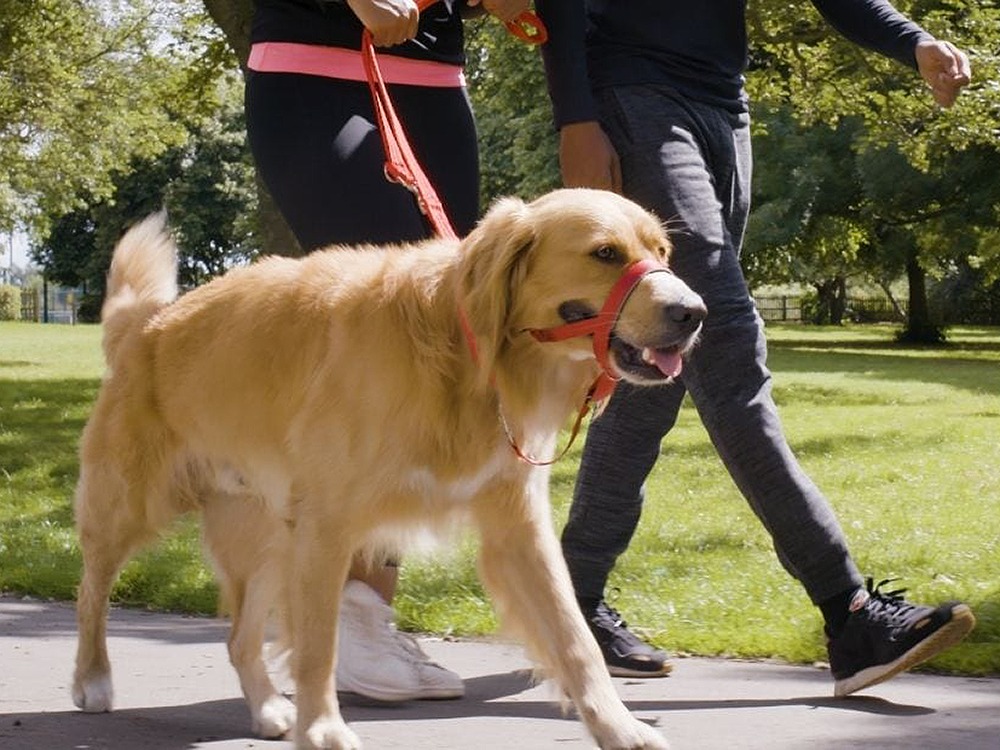
Search “how do I stop my dog from pulling” and the head halter shows up fast, usually with a promise attached: slip it on and your leash-reactive tank of a dog turns into a polite walking companion in an afternoon. Sometimes that’s even true. That’s exactly why the tool deserves a closer look than the marketing gives it.
Here’s the honest version. A head halter is neither the miracle its fans describe nor the torture device its critics claim. It’s a tool, and like most tools, nearly everything about whether it helps or hurts comes down to the dog you put it on and the ten minutes of setup most people skip. Let’s take it apart.
What a head halter actually is
Marketed under names like the “gentle leader” and the “head collar,” the design is simple: a strap wraps around the dog’s muzzle, a second loops behind the ears around the neck, and the leash clips underneath the chin. The idea is borrowed straight from a horse’s halter. Control the head and the body follows, so a dog that used to drag you down the block suddenly can’t get much leverage.
That’s the appeal in one sentence: it works quickly, and it looks kinder than a prong or choke collar. For an owner who’s been hauled around for months, feeling in control on the very first walk is a powerful thing.
I understand completely why people reach for these, a client who’s been dreading walks can feel relief the first time they clip one on. My job is to make sure that relief doesn’t come at a cost the dog pays later. Used thoughtfully, on the right dog, a head halter can be genuinely useful. Used as a shortcut, it can create new problems.
The case for caution
The horse comparison is also where the worry starts. A dog’s neck is nothing like a horse’s, it’s shorter, smaller, and far less muscled, so a hard pull to one side has a lot less to work against. Yank a dog sideways by the head and you can strain the neck in a way you simply couldn’t with a 1,200-pound animal.
The muzzle raises a second concern. A dog’s nose is dense with sensitive nerves running close to the surface, and it’s the center of how a dog experiences the world. Pressure and force concentrated on that region are worth taking seriously, both for comfort and because a dog’s sense of smell is not something you want to risk. Add the possibility of neck and spine strain from a sudden jerk, and you have a real list of reasons to be careful rather than casual.
The case for “it depends”
Plenty of skilled trainers and behavior vets still use head halters, and they aren’t wrong to. The honest read is that the risks are mostly about misuse, not the tool existing.
I tell owners to think of it as an emergency brake, not the steering wheel, something for the sudden lunge, not a handle to haul the dog around by the face all walk. I’m selective about which patients I recommend it for, and I never hand one over without teaching the owner to introduce it slowly. The dogs I’d steer away from it entirely are the ones with any history of neck injury.
In practice, the adverse reactions that show up in the clinic tend to be the less dramatic kind: dogs that were never properly introduced to the halter and respond by rubbing their face on the ground or pawing at it hard enough to scrape the skin raw. Serious neck injury from correct use is uncommon. Both problems point at the same fix, the introduction.
If you use one, do this first
The difference between a helpful head halter and a harmful one is almost entirely in the first week, before you ever reach a busy sidewalk. The goal is a dog that thinks the halter is a good thing, not a punishment strapped to its face.
- Build a positive association before it goes on. Let your dog sniff the halter, then give a treat. Repeat until the sight of it means good things are coming.
- Go slow with wearing it. Put it on for seconds at first, paired with treats, then work up to short stretches around the house before any walk.
- Practice indoors, then in the yard, then out. Add distractions gradually. A dog that’s calm in the living room isn’t automatically ready for a street full of squirrels.
- Get the fit right. It should sit comfortably and must not be cinched tight over the mouth. Remember it isn’t a muzzle, your dog should be able to pant, drink, and take treats.
- Keep pressure gentle and never yank sideways. Think steady guidance, not correction.
A simpler path worth considering
If the whole thing sounds like more risk than you want to manage, you have options. A well-fitted slip lead that rests on the neck is one alternative some trainers prefer. A front-clip harness is another common choice that avoids the head entirely.
But the most durable answer isn’t a piece of gear at all. Working with a good trainer to actually teach loose-leash walking addresses the pulling and reactivity at the source, and the endpoint of any of these tools should be the same: a dog that no longer needs it. Treat the head halter, or any of them, as a training aid you’re working to phase out, not a permanent crutch. Your best asset is a knowledgeable trainer who can show you how to fit, condition, use, and eventually retire whatever you choose.
References
- Positive reinforcement training, American Veterinary Medical Association (AVMA)
- Humane Dog Training Position Statement, American Veterinary Society of Animal Behavior (AVSAB)
- How to choose a dog trainer, American Kennel Club
This article offers general training and safety guidance and isn’t a substitute for individualized advice from your veterinarian or a qualified trainer.
Common questions
Are head halters safe?
They can be, with the right dog and a careful introduction. The main risks come from a hard yank to the side, which can strain the neck, and from a dog that never got comfortable wearing it and paws its face raw. Dogs with pre-existing neck problems should generally avoid them.
What can I use instead of a head halter?
A well-fitted front-clip harness or a properly used slip lead are common alternatives. But the most reliable fix for pulling and reactivity is loose-leash training, ideally with a qualified trainer, so you eventually don't need any special gear at all.
Dr. Mehta is a board-certified veterinary nutritionist who evaluates pet food formulations, ingredient quality, and the science behind dietary trends. He writes and reviews all nutrition content at The Pet Times, including our food rankings and feeding guides.
Meet our experts ↗Keep reading
 Health & WellnessAn ER Vet on Why Walking Your Dog by the Collar Is a Quiet GambleDr. Amara Solis · 6 min
 Product PicksThe Leash Can't Stop the Pulling. It Can Stop the InjurySasha Ford · 12 min
 Product PicksThe No-Pull Harness That Won't Wreck Your Dog's Shoulders: 8 Picks RankedSasha Ford · 13 min
 Product PicksYour Dog Can't Walk Out. A Pocket-Sized Sling Can Carry Them.Tom Hadley · 4 min
 Product PicksMy Dog Destroys Every Travel Bowl. This Squeeze Bottle Finally Won.Jordan Ellis · 5 min
 Product PicksDog Shoes Don't Fail Because They're Ugly. They Fail Because They Fall Off.Sasha Ford · 5 min