


Camping With Your Dog, Minus the Part Where You Sleep on the Ground
Glamping gives you a real bed, a roof, and a bathroom while your dog still gets the woods. Here's how to pick a genuinely dog-friendly site and pack for a trip that goes smoothly.

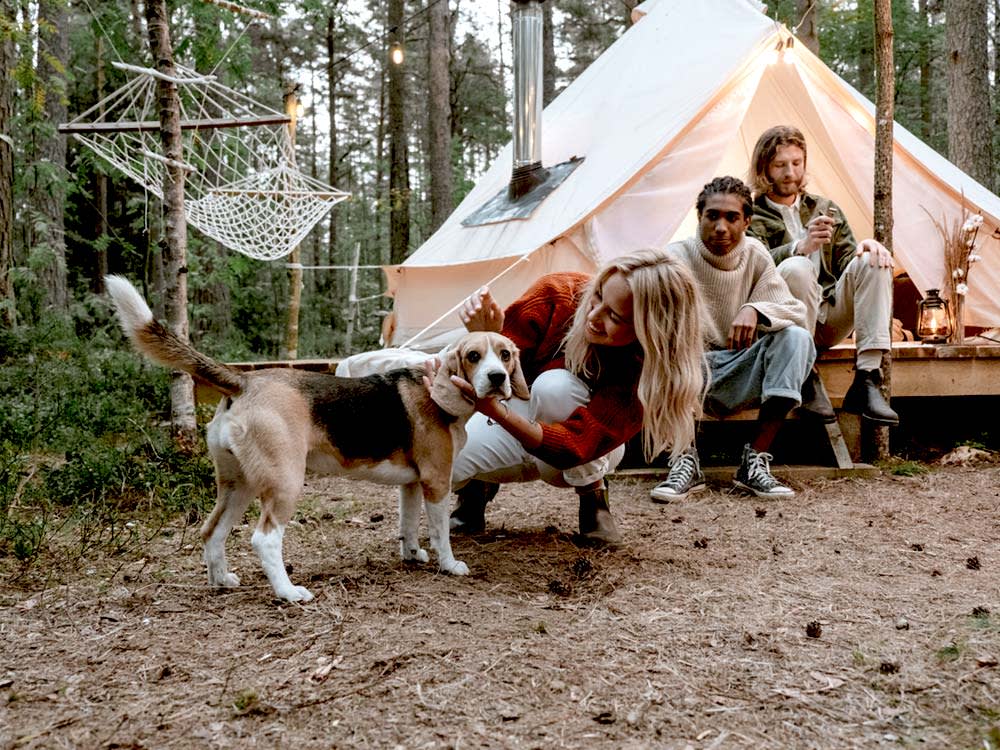
Camping is a great way to get your dog into the wild. Sleeping on a deflating pad with a headlamp in your teeth is not everyone’s idea of a vacation, though, and it is definitely not your dog’s problem to solve. Glamping splits the difference. You get the tricked-out tent, the real mattress, the hot shower, and the coffee that does not involve a camp stove at dawn. Your dog gets exactly what they wanted the whole time: the woods, the smells, and you, off your phone and outdoors.
The word blends glamour with camping, and the range is enormous, canvas safari tents, yurts, restored trailers, treehouses, and cabins, most with creature comforts like proper beds, indoor plumbing, electricity, and shelter from the weather. Prices swing just as widely, from budget yurts around a hundred-something a night to lavish tented ranches running well over a thousand. Somewhere in that spread is a trip that fits your dog and your wallet.
Why glamping suits dogs so well
A tent cabin or yurt gives a dog something a backcountry tent cannot: a stable, contained, climate-buffered home base. That matters more than it sounds. A dog who overheats easily has shade and often a fan or air conditioning. A dog who spooks at night has four solid walls instead of thin nylon. And you have a real door between your dog and the wildlife at 2 a.m., which is worth every extra dollar.
You also skip the parts of camping that go sideways with a dog in tow, wrestling a tent up in the wind while your pup winds their leash around your legs, or trying to keep kibble away from raccoons. Glamping quietly removes a lot of the friction, which means more time actually enjoying the place.
How to find a site that genuinely welcomes dogs
“Pet-friendly” is not a standard, it is a spectrum, so the single most important step is reading the actual listing before you book. Look for the specifics:
- Size and number limits. Some sites cap the number of dogs or exclude larger breeds.
- Per-pet fees. Many charge a nightly pet fee, and it adds up over a long stay.
- Unattended-dog rules. A lot of properties, understandably, do not allow dogs to be left alone in the unit, which shapes how you plan your days.
- Nearby trail and leash rules. Confirm dogs are welcome on the trails you actually want to hike, and whether they must stay leashed.
Booking platforms have made this easier. Sites like Hipcamp let you filter directly for dog-friendly glamping, though policies still vary host to host, so read each confirmation carefully. Larger operators have gotten clearer too: the safari-tent chain Under Canvas, for instance, welcomes dogs at its locations for a per-pet nightly fee, with the sensible rule that dogs cannot be left unattended in the tents. When in doubt, message the host and ask plainly.
What to look for on the ground
Beyond the paperwork, a few features make a real difference in comfort. Shade and airflow keep a dog from overheating in a canvas tent on a hot afternoon. A private or fenced site buys peace of mind for a dog who bolts. Easy water access, a creek, a lake, a spigot, helps on long days. And proximity to the trails or beaches you came for means less time driving with a restless dog and more time out in it.
Packing so nothing derails the weekend
Bring your dog’s food and a couple of familiar comforts, a bed or a blanket that smells like home settles a nervous dog fast in a strange tent. Pack a travel water bowl, a leash plus a long line for lounging outside the tent, plenty of waste bags, any medications, and a copy of vaccination records in case the property or a nearby trailhead asks. A towel for muddy paws saves your fancy tent bedding.
The one rule that keeps everyone safe
However mellow your dog is at home, treat the first hours somewhere new as unpredictable. Fresh terrain, unfamiliar animals, and a hundred new smells can make a steady dog bolt or fixate. Keep them leashed until they have clearly settled, supervise around water and wildlife, and never leave them alone in the tent unless the host explicitly allows it. Do that, and glamping delivers the rare trip where both of you actually come home rested.
Nina Vasquez writes about life at home with pets and the relationships at the heart of it. Her work covers day-to-day living, people-and-pet stories, and the products that fit into a real household, with a warm, grounded take on everyday pet ownership.
Meet our experts ↗Keep reading
 LivingHow to Actually Have a Dog Day in NYC (12 Spots, Sorted by Plan)Leila Torres · 6 min
 LivingSkip Yosemite. The Best of California Is Dog Country Anyway.Leila Torres · 5 min
 LivingYour Dog Deserves a Food Truck Run. 8 Worth Chasing Down.Leila Torres · 6 min
 LivingThe Trail Doesn't Care How Good Your Dog Is Off-LeashDr. Ravi Mehta · 7 min
 Product PicksTheir First Dog Backpack Fell Apart in Two Weeks. So They Built One That Doesn't.Sasha Ford · 7 min
 LivingThe Free Treasure Hunt That Turns a Dog Walk Into a JobMarcus Webb · 6 min