


Your Dog Might Be a 'Gifted Word Learner.' There's a 10-Minute Test.
A handful of dogs learn a toy's name after four repetitions and remember it for years. Researchers built a simple test you can run in your living room — here's how, and what your dog's score really means.

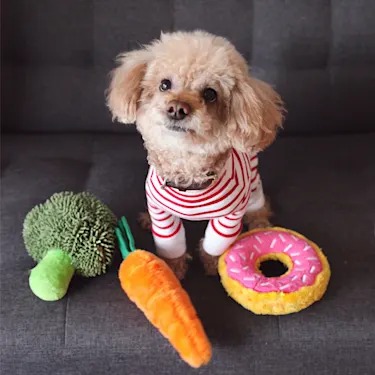
Every dog household eventually adopts the same code language. You spell W-A-L-K. You mouth the word “dinner” silently across the kitchen. Somewhere along the way, your dog learned English — or at least the ten words that matter to them.
So here’s the question that launched a genuinely charming line of research: is that ordinary vocabulary, or is your dog one of the rare animals scientists now call a Gifted Word Learner? A study published in Nature’s Scientific Reports found that a few exceptional dogs can learn the name of a new object after hearing it just four times — a speed of word-learning previously assumed to be a human specialty. Most dogs, including very smart ones, never do this at all. And the difference turns out to be one you can test on your own living room floor.
The two dogs who started it
The study followed two overachievers: Whisky, a Border Collie with 59 toys she knew by name, and Vicky Nina, a Yorkshire Terrier with a 42-toy vocabulary. Researchers first verified those vocabularies the careful way — asking each dog to fetch specific toys while both the owners and experimenters stayed out of view of the toys, so nobody could unconsciously steer the choice.
Then came the exclusion test: one brand-new toy placed among familiar ones, requested by an unfamiliar name. Whisky never missed, pulling the novel toy in trial after trial; Vicky Nina managed it in a bit over half of hers. But exclusion is a logic shortcut — the dog can reason “new word, must be the new thing” without learning anything. The real test came next.
Each dog was shown a new toy, told its name, and allowed to play with it — the name repeated just four times. Then the researchers put out only two new toys, so exclusion couldn’t help. Both dogs still chose correctly more often than chance. That’s genuine, rapid word-learning. The catch: the new names decayed quickly, fading badly within ten minutes and almost entirely within an hour without reinforcement. Even for gifted dogs, fast learning needs follow-up.
When twenty volunteers ran the same procedure with their own dogs, not one of the twenty matched it. Whatever this ability is, it’s rare.
Run the test yourself
The beauty of the study is that it’s fully replicable at home; the how-to steps above walk you through the same sequence the researchers used. Two tips make your results honest. Keep the toys out of your own sight when you ask, because dogs are world-class readers of unconscious human glances. And use play as the teaching medium — both study dogs learned through games and social interaction, not drills.
If your dog flunks this, you haven’t learned anything bad about them. Mapping human words onto objects is a strange, specialized skill — most dogs never develop it, including plenty who are brilliant at reading your moods, your routines, and your pockets. Think of it as a party trick lottery, not an IQ score.
Why Border Collies keep winning this game
The breed pattern in this research is hard to miss. The famous vocabulary champions are disproportionately Border Collies: Rico, who demonstrated knowledge of 200 object names in a landmark 2004 study, and Chaser, who learned 1,022 — the largest tested vocabulary of any animal. Collies are purpose-bred to hang on human cues and work relentlessly for handler approval, which stacks the deck. Meanwhile sighthounds like Salukis and Greyhounds — bred to chase things, not consult humans about it — may show little interest in toys or fetching in the first place.
Motivation, not raw intellect, is doing a lot of the work. Both study dogs had been informally but intensively engaged in name-games their whole lives, a running history of positive reinforcement that taught them names were worth attending to. Any dog can learn tasks and even object names with enough patient play; the willingness and the ceiling vary enormously by breed and by individual. An Afghan Hound is not going to fetch named toys for an hour, and that is a lifestyle choice, not a deficit.
What newer research adds
The scientists behind the original study kept going, and the follow-ups are wild. Their Genius Dog Challenge project spent five years searching worldwide and turned up only around 40 confirmed Gifted Word Learner dogs — that’s the global roster, which tells you how rare the trait is. A 2023 citizen-science study of 41 of these dogs mapped what they share in common.
The memory finding is the showstopper: a study published in Biology Letters in 2024 showed that gifted dogs who learned toy names retained them for at least two years, demolishing the idea that their fast learning is shallow learning. And in early 2026, researchers reported something even stranger — some of these dogs pick up new object names by eavesdropping, learning words just from hearing their families talk, no training session involved.
So run the test. The odds say your dog will fail it, stare at you, and bring the wrong toy with total confidence. Love them anyway. But if they pass twice — the researchers would genuinely like to hear from you.
References
- Word learning dogs (Canis familiaris) provide an animal model for studying exceptional performance — Scientific Reports (Nature)
- Word learning in a domestic dog: evidence for “fast mapping” (Rico) — Science
- Border collie comprehends object names as verbal referents (Chaser) — Behavioural Processes
- Dogs with a vocabulary of object labels retain them for at least 2 years — Biology Letters
- Genius Dog Challenge — ELTE Department of Ethology
- Gifted dogs can learn words by eavesdropping on family conversations — U.S. News (Jan 2026)
Dr. Nair is a veterinarian focused on diet and feeding. She covers everyday nutrition, treats, and the many "can they eat this?" questions owners ask, grounding each answer in what is actually safe and sensible for dogs and cats.
Meet our experts ↗Keep reading
 TrainingYour Dog Picked the Person Who Ignores It. Here's Why.Dr. Priya Nair · 7 min
 TrainingYes, Dogs Get Angry. No, That's Not Why They Bite.Dr. Amara Solis · 8 min
 TrainingYour Female Dog Humps. It's Normal, and It's Usually Not About SexDr. Lena Park · 7 min
 TrainingYour Dog Doesn't Know Its Name. It Knows What the Name Predicts.Dr. Amara Solis · 6 min
 TrainingYour Dog Puts Up With Your Kisses. That's Not the Same as Loving ThemDr. Nina Kohl · 5 min
 Training'Ball-Crazy' Isn't a Personality. It's Usually a Symptom.Dr. Priya Nair · 9 min