


40 Sled Dogs, No Phones: What a Norwegian School Uses to Grow Up Its Teens
In the documentary Folktales, Gen Z students trade their smartphones for a pack of huskies above the Arctic Circle. The dogs, it turns out, are the whole curriculum.
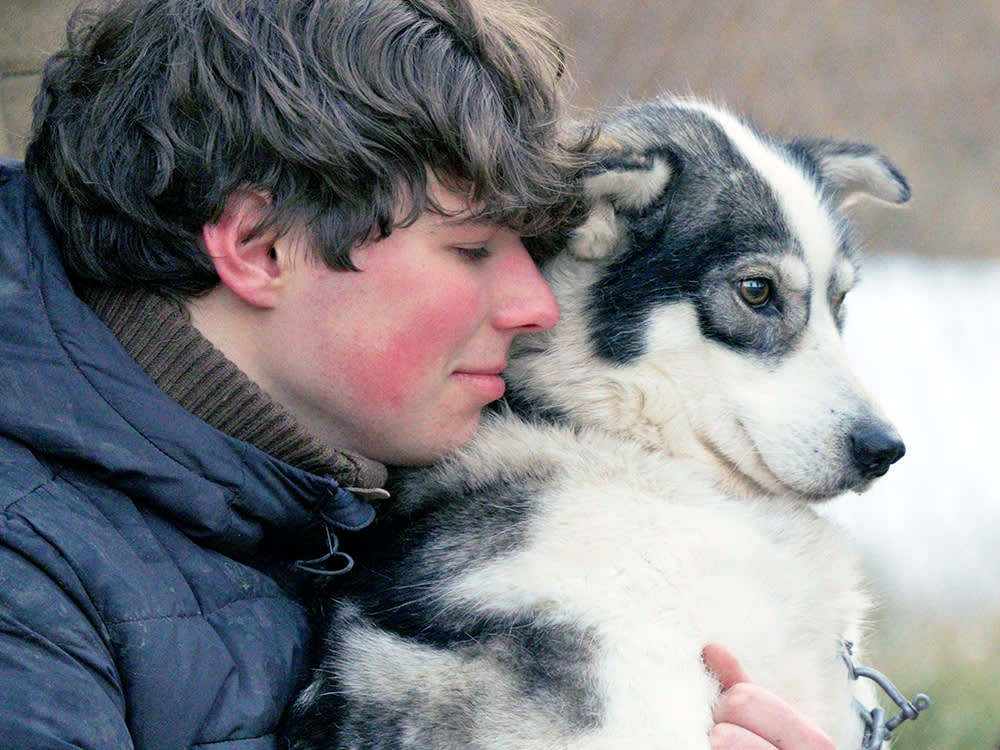
“Dogs are man’s best friend” is such a worn-smooth cliché that we’ve stopped hearing it. The documentary Folktales, from directors Heidi Ewing and Rachel Grady, takes the phrase apart and looks at what’s actually inside it, and it does so by dropping a group of teenagers into the Arctic with 40 sled dogs and a lot of silence.
The film opened in U.S. theaters on July 25, 2025. It’s set at Pasvik Folk High School in northern Norway, where students spend nine months learning self-reliance the hard way: they surrender their smartphones and fill their days with classwork and mandatory outdoor ordeals like overnight camping in the snow and, above all, dog sledding. The result is quieter and stranger and more moving than a logline about huskies suggests, because the movie isn’t really about dogs. It’s about what the dogs do to the humans.
The school almost too good to be true
The folk high school (folkehøgskole) is a genuinely Norwegian institution, and to American eyes it barely computes. Grady has said the concept sounded fake to her at first: a school year with no degree at the end, no exam scores, no résumé line, whose entire point is to help a young person build character and figure out who they are before adult life swallows them. It’s affordable and widely attended, not a boutique for wealthy kids, and it exists in a country that also offers free college. The directors first heard about these schools through Blair Braverman’s memoir “Welcome to the Goddamn Ice Cube: Chasing Fear and Finding Home in the Great White North,” written by a dog sledder who attended one herself.
Ewing and Grady chose Pasvik less for its students, whom they couldn’t know in advance, than for its faculty, vivid personalities and natural storytellers who also seemed, to the directors, like genuinely decent people. And for the dogs, which Grady has flatly called the best. They rolled the dice, as she’s put it, and wound up at the literal edge of the map, filming an observational movie where you wait, and wait, and are occasionally handed a moment of grace.
The dogs are the lesson
Here’s the thing a pack of 40 dogs teaches a self-absorbed teenager that no adult lecture can: it is not about you. The animals have to be fed whether or not you’re tired. Their health has to be checked, their paws and claws inspected, their needs met when it’s dark and brutally cold and you would rather be anywhere else. They are counting on you, full stop. Grady, herself a dog owner, has framed the film’s central takeaway simply, that caring for the dogs forces these kids to check some of their selfishness at the door, because a creature is depending on them and doesn’t care about their mood.
And the dogs give it right back. One of the Pasvik instructors, Iselin, returns again and again in the film to a plain observation: the dogs offer the students so much. A dog looks at you like you are its favorite thing in the entire world and starts wagging, and, as the movie quietly points out, almost no one in a teenager’s life does that. The exchange the students learn is the oldest one there is. You receive that unguarded devotion, and the thing you’re meant to do with it is give it back.
Running under all of this is a theme about disconnection, from nature, from wildlife, from the present tense, and how much a person changes when they tune back in. Dogs, in the film’s telling, are experts at exactly the thing the students are failing at: being fully here. A dog lives entirely in the moment. That is its gift, and it turns out to be contagious.
Grief, on a nine-month clock
Loving an animal like family comes with a cruel clause: they don’t live long. At a kennel of 40 dogs, that math is relentless, and the instructors, who train these dogs and know them intimately, absorb the loss of one or two or three every year. The film doesn’t flinch from it. One student, Hege, learns that a dog she has bonded with is dying of cancer and has to say goodbye.
What makes the sequence land is what Hege carries into it. She lost her father suddenly and violently and never got to say goodbye to him, a rupture that breaks something in a person. With the dog, she gets the goodbye she was denied. None of this was planned; observational filmmaking means you sit in the cold and wait, and occasionally something profoundly human happens in front of the lens. Watching a teenager work through unbearable grief by way of a dying sled dog is, in its strange way, the most hopeful thing in the movie.
What it’s actually like to film a dog team
For the record, the dogs were the easy part. Grady has joked that Gen Z, a generation that has been filming and curating itself since birth and is understandably protective of its image, was a thousand times harder to shoot than the animals, who could not care less about the camera. The genuinely difficult challenge was capturing the sledding itself. The crew learned it the way the students did, by doing it wrong dozens of times with different cameras, mounts, and rigs until they had enough usable footage to build a film.
A few things surprised them. Sledding is not fast, the dogs run maybe 12 miles an hour, not the 40 you might picture, but it is slippery and hard to steer, and people fall, and dogs tire, and the whole thing unfolds in a kind of slow motion. And a sled team isn’t a fixed lineup; you rebuild it constantly, pairing dogs by temperament, a strong one who gets distracted next to a smaller one who’ll nip its heels to keep it honest. You are, Grady realized, assembling a team exactly the way you would with people.
What a dog can teach a nervous system
Ask Grady whether the experience changed her and the answer is unqualified: yes. The crew was doing something hard in order to film kids doing something hard, life imitating art at 30 below. But the part that stuck with her was the place itself, no sound pollution, no light pollution, an inky-black quiet where the snow absorbs everything into a kind of blanket. She’d lived in cities her whole life and hadn’t understood what that does to a person’s central nervous system until she was somewhere with none of it. Her body, she said, essentially asked what that other life had been.
That is the quiet argument of Folktales. We have engineered most of the stillness and most of the animals out of our days, and we feel the absence without being able to name it. Hand a distracted teenager a smartphone and they disappear into it. Hand them a sled dog that needs them at 6 a.m. in the dark, and they come back.
References
Jordan Ellis is a certified professional dog trainer with a decade of experience working with rescue organisations and private clients. They specialise in anxiety, reactivity, and positive reinforcement methods, and review all training and behaviour content at The Pet Times.
Meet our experts ↗Keep reading
 LivingThe 'Dog in the Bed' Fight Is Never Really About the DogJordan Ellis · 6 min
 LivingInside the 'Soho House for Dogs,' Where a Dog Park Costs $1,400 a YearSasha Ford · 6 min
 LivingThe Filthiest Dog Movie Ever Made Is Also the Most Honest About DogsSasha Ford · 5 min
 LivingTraining Service Dogs Slowed These Veterans' Aging. At the Cellular Level.Dr. Nina Kohl · 4 min
 LivingA Comedian Built a Movement Around the Dogs Nobody WantedLeila Torres · 5 min
 LivingA Dog Was Surrendered for Being 'Gay.' The Couple Who Adopted Him Had Heard That One Before.James Okafor · 4 min