


A $225 Spay Surgery in Brooklyn: Inside the Clinic Flatbush Cats Willed Into Existence
In a city where fixing a cat can cost $2,000, a scrappy nonprofit built its own high-volume, low-cost vet clinic in central Brooklyn. Here's why the unsexy work of pouring concrete matters more than another adoption drive.
Anyone can hold an adoption event. Building a veterinary clinic from bare walls, during record inflation, a nationwide vet shortage, and New York City construction prices, is a different order of stubborn. That’s the thing Flatbush Cats decided to do, and in August 2023 the payoff arrived: a brand-new, low-cost, high-volume spay/neuter and basic-care clinic opened its doors on Flatbush Avenue, a few blocks north of Brooklyn College.
For a nonprofit built on the idea that you can’t rescue your way out of a street-cat crisis, the clinic wasn’t a side project. It was the whole thesis made physical. Founder Will Zweigart had spent years arguing that the missing piece in animal welfare isn’t more foster homes, it’s cheap, accessible surgery at volume. A building where a cat gets fixed for a couple hundred dollars is that argument, poured in concrete.
Why a clinic, and why now
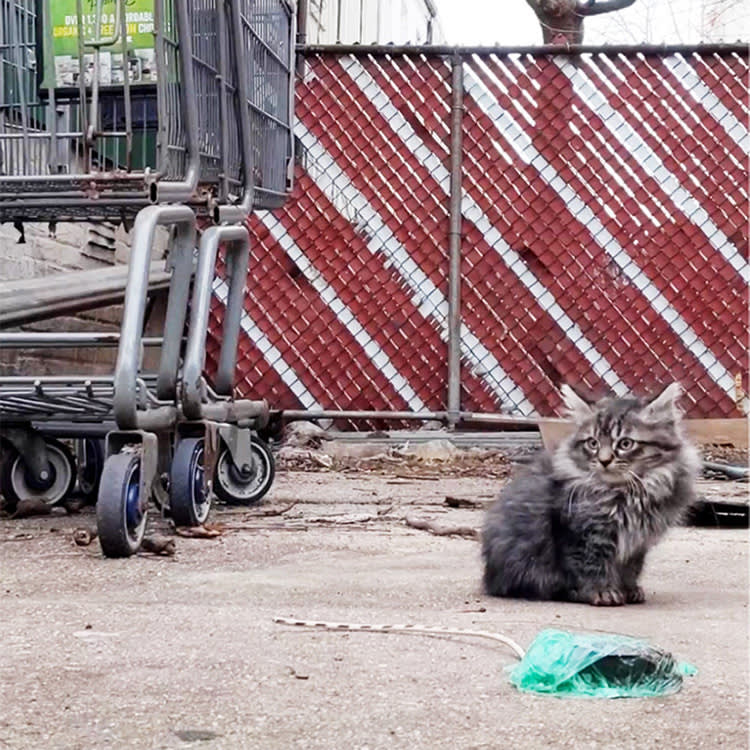
Zweigart moved to Flatbush in 2017 and, alarmed by the feral cats he found on every block, started Flatbush Cats to help them. He describes finding three colonies of 10 to 20 cats on almost any street he walked. The scale is what pushed him past rescue-and-adopt and toward trap-neuter-return, the practice of humanely trapping free-roaming cats, sterilizing and vaccinating them, and returning them so they never reproduce. TNR, he’s fond of pointing out, isn’t a problem you can adopt your way out of, because the fun, rewarding work of fostering kittens does nothing to slow the rate at which new kittens are born. Fewer births each year is the only lever that actually moves the total.
But TNR runs on surgery, and surgery in New York had become a chokepoint. Even before the pandemic, spay/neuter appointments for community cats were hard to secure. Then COVID-19 shuttered many nonprofit and low-cost providers, feral populations swelled, and pet owners who’d depended on affordable care were left stranded. A clinic of its own was Flatbush Cats’ answer to a bottleneck that no amount of volunteer trapping could fix on its own.
Pricing built to undercut a broken market
The numbers are the point. Basic spay/neuter surgery in the city can run pet owners anywhere from $600 to $2,000, a range that quietly prices a lot of families out of doing the responsible thing at all. Flatbush Vet was built to come in well under even the low end of that, with cat spay/neuter procedures landing around $225. The goal was never to be a boutique clinic for people who could already afford options. It was to be the option for people who couldn’t.
Getting there took a small army of small donors. The roughly 3,700-square-foot, multi-level facility was funded by about $2 million raised from more than 5,000 donors around the world, a fundraising story that says as much about how many people wanted this to exist as it does about what it cost to build.
The surgeon who volunteered her way in
A high-volume spay/neuter clinic lives or dies on the person holding the scalpel, and Flatbush Cats partnered with a veterinarian who came to the work by choice, not obligation. Dr. Casey Singh spent her first three years out of veterinary school in emergency medicine, at a facility open around the clock, work she describes as relentless. What kept her going through it was volunteering on the side, performing spay/neuter surgeries for a local TNR group. The thing she did for free in the margins of an exhausting job turned out to be the thing she wanted to do full time.
That’s a fitting origin for a clinic like this one, where the whole premise is that access to care shouldn’t depend on luck or income.
What’s new since it opened
The clinic didn’t just open, it scaled. Flatbush Vet now performs on the order of 7,500 spay and neuter surgeries a year, serving both TNR volunteers working the neighborhood’s colonies and low-income pet owners who’d otherwise have nowhere affordable to turn. The early goal of thousands of surgeries in the first year didn’t turn out to be optimistic; it turned out to be a floor.
The bigger takeaway is a template. A neighborhood nonprofit identified the exact bottleneck strangling its mission, refused to wait for someone else to fix it, and built the fix itself, brick by expensive brick. It’s the unglamorous version of animal rescue, and it’s the version that changes the math for an entire borough.
References
Nina Vasquez writes about life at home with pets and the relationships at the heart of it. Her work covers day-to-day living, people-and-pet stories, and the products that fit into a real household, with a warm, grounded take on everyday pet ownership.
Meet our experts ↗Keep reading
 LivingYou Can't Adopt Your Way Out of a Cat Crisis. This Brooklyn Nonprofit Proved ItLeila Torres · 7 min
 LivingA Guy Who Mows Lawns for Free Accidentally Saved a Cat SanctuaryNina Vasquez · 4 min
 LivingKitten Season Never Ends Anymore. Blame the Vet Bill, Not the Weather.Leila Torres · 8 min
 LivingTrapping the Cats Was Never the Hard PartJames Okafor · 8 min
 LivingOne Woman, a 2002 Camry, and Brooklyn's Cats Nobody Else Will SaveJames Okafor · 6 min
 LivingThe Only Part of TNR People Fight About Is the Part That WorksLeila Torres · 7 min