


The Real Ferns Are Safe for Cats. It's the Fakes That Aren't
True ferns are safe for cats. The danger is the lookalikes that borrow the name — asparagus fern, and the deadly sago palm. Here's how to tell them apart.

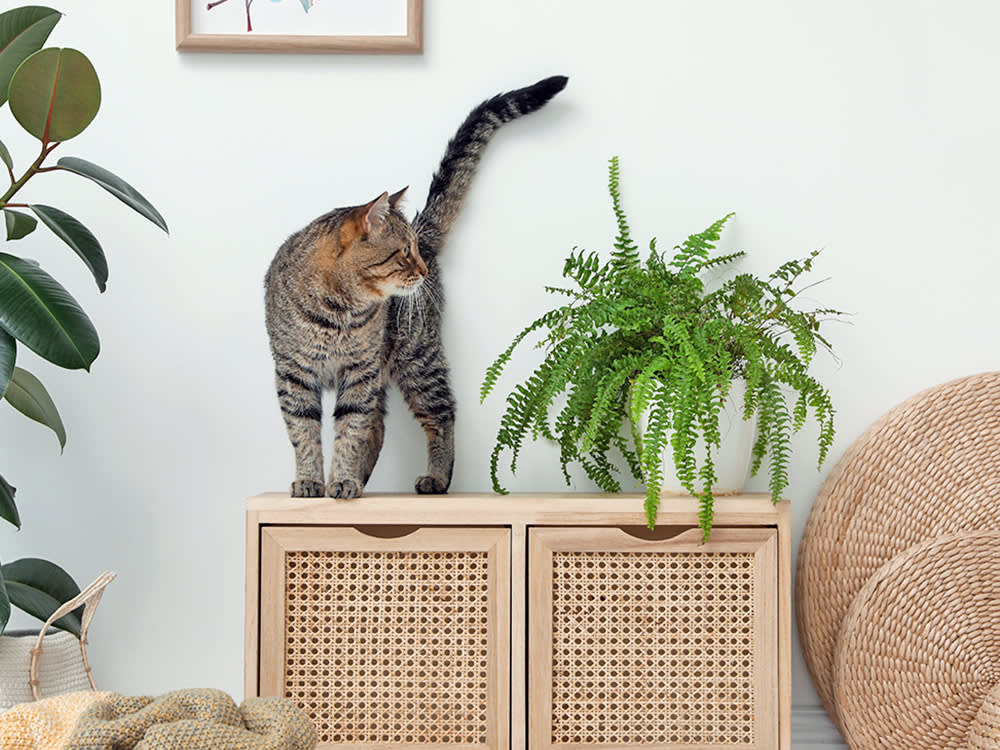
If you have ever stood in a plant shop holding a fern and quietly wondering whether it would land your cat at the vet, here is the reassurance you came for: real ferns are safe. The catch is that “fern” is one of the least reliable words in the houseplant world. Several plants wear the name without belonging to the family at all, and a couple of them are the actual reason this question keeps getting asked. The plant most likely to hurt your cat is not a fern. It is an impostor counting on you not to notice.
So the useful skill is not memorizing a list of safe ferns. It is learning to spot the fakes.
The real ferns are genuinely fine
A true fern is a member of the fern family, and true ferns contain no compounds that poison cats. A cat can brush past one, bat at the fronds, or even take an exploratory bite without any toxic risk. The common houseplant ferns almost everyone owns fall squarely in this safe group: the Boston fern, the staghorn fern, the bird’s nest fern, and the delicate maidenhair fern.
That does not mean unlimited grazing is a good idea. Any plant eaten in real quantity can give a cat a stomach ache, because raw plant fiber is hard on a feline digestive system that evolved to run on meat. A few nibbles of a Boston fern is a non-event. A cat who strips half the plant may vomit it back up. The danger there is the volume, not the fern.
The lookalikes are where cats get hurt
Here is the part the reassuring headlines tend to skip. A handful of popular plants carry “fern” in their name or simply resemble one, and they are not true ferns at all. Two are worth committing to memory.
The asparagus fern, also sold as lace fern or Sprengeri fern, is not a fern. It belongs to the asparagus family, and the ASPCA lists it as toxic to cats. Repeated contact with the foliage can cause skin irritation, and the small berries it produces can trigger vomiting, abdominal pain, and diarrhea if a cat eats them. It is feathery, bright green, and sits on shelves right next to the safe ferns, which is exactly how it fools people.
The far more serious impostor is the sago palm, sometimes labeled “fern palm” or “cycad.” It is not a palm and not a fern, and it is one of the most dangerous houseplants a cat owner can bring home. Every part of the plant is toxic, the seeds most of all, and ingestion can cause liver failure. This is not an upset-stomach plant. This is a call-your-vet-immediately plant.
The mistake I see is people trusting the word on the tag instead of the plant. A real fern is harmless. But sago palm gets sold under names that sound just as innocent, and it can put a cat in liver failure. When a plant’s identity is even slightly uncertain, look up the scientific name before it comes through your door.
The reliable move is to know a plant’s botanical name and check it against the ASPCA’s toxic and non-toxic plant list before you buy. The common name will not protect your cat. The scientific name will.
If your cat eats something you can’t identify
With a confirmed true fern, a small bite rarely needs more than a watchful eye. The problem is that “I think it was a fern” is not the same as knowing. If you are unsure what your cat ate, or if the plant might be one of the lookalikes rather than the real thing, treat it as urgent.
Call your veterinarian or the ASPCA Animal Poison Control Center at (888) 426-4435 right away. Bring a piece of the plant or a clear photo, because a fast, confident identification changes everything about how the situation is handled. A true fern earns a shrug. A sago palm earns an emergency visit.
Signs of plant poisoning to watch for
Symptoms range from mild to life-threatening depending on the plant and the amount eaten. Watch for:
- Vomiting or diarrhea
- Drooling
- Abdominal pain
- Lethargy
- Loss of appetite
- Mouth or tongue irritation
- Difficulty swallowing
- Tremors or seizures
With sago palm specifically, the early signs can be vomiting and lethargy, and the liver damage may not become obvious until a day or more later, which is why waiting to “see if it passes” is the wrong call.
How vets handle it
Treatment depends entirely on the toxin and the dose. Inducing vomiting is difficult in cats and is not always appropriate, so vets often reach for activated charcoal to limit absorption. Mild cases get supportive care for nausea and digestive upset. Serious exposures — a sago palm being the classic example — can mean hospitalization, intravenous fluids, and repeated bloodwork to track liver and kidney function.
Building a cat-safe plant shelf
The most reliable prevention is simply not keeping the dangerous lookalikes in the house. But you do not have to give up greenery to keep a cat safe. Pair confirmed-safe plants with smart placement: a room with a door that closes, hanging planters set genuinely out of reach, or garden fencing if your cat goes outside.
If you want to decorate without second-guessing, these are reliably cat-safe choices:
- True ferns (Boston, staghorn, bird’s nest, maidenhair)
- Bamboo
- Spider plant
- Money tree
- Orchid
- Mosaic plant
- Friendship plant
- Ponytail palm
And these common plants are toxic to cats and worth keeping out of the house entirely:
- Asparagus fern (the impostor)
- Sago palm (the dangerous one)
- Aloe
- Ivy
- Foxglove
- Bird of paradise
- Peony
- Periwinkle
- American holly
- Amaryllis
- Gardenia
- Azalea
- Lily of the valley
- True lilies (especially dangerous — even pollen can cause kidney failure)
The bottom line
Ferns get a worried reputation they do not deserve. The real ones are safe, and the plant that actually threatens your cat is usually the one borrowing the name. Learn to recognize asparagus fern and sago palm, check the botanical name on anything you are unsure about, and keep the ASPCA poison line saved in your phone. Do that, and you can fill your home with green without filling your evenings with worry.
References
- “Toxic and Non-Toxic Plant List — Cats.” ASPCA Animal Poison Control Center, www.aspca.org/pet-care/animal-poison-control/cats-plant-list.
- “Toxic and Non-Toxic Plants: Asparagus Fern.” ASPCA, www.aspca.org/pet-care/aspca-poison-control/toxic-and-non-toxic-plants/asparagus-fern.
- “Toxic and Non-Toxic Plants: Sago Palm.” ASPCA, www.aspca.org/pet-care/aspca-poison-control/toxic-and-non-toxic-plants/sago-palm.
- “Animal Poison Control.” ASPCA, www.aspca.org/pet-care/animal-poison-control. Emergency hotline: (888) 426-4435.
Common questions
Which 'ferns' are actually dangerous?
The plants that borrow the name but aren't true ferns. Asparagus fern (a member of the asparagus family) irritates skin and upsets the gut, and sago palm — sometimes sold as 'fern palm' — is genuinely dangerous and can cause liver failure even in small amounts.
What should I do if my cat eats a plant I can't identify?
Call your vet or the ASPCA Animal Poison Control Center at (888) 426-4435 right away, and bring a piece of the plant or a clear photo. With a true fern you can usually relax; with an unknown plant, fast identification is what keeps a scare from becoming an emergency.
Not a substitute for your vet. Our guidance is educational. For urgent symptoms, contact a vet or emergency clinic right away. Editorial standards
Dr. Chen is a small-animal veterinarian who leads health and safety coverage at The Pet Times. She writes and reviews the bulk of our illness, condition, and safety content, translating clinical guidance into clear, practical advice owners can act on at home.
Meet our experts ↗Keep reading
 Health & WellnessNot All Tulip Trouble Is Equal: A Cat Owner's Risk MapDr. Amara Solis · 7 min
 Health & WellnessThe Daisy Problem Is a Naming Problem: Which 'Daisies' Actually Hurt CatsDr. Mara Chen · 6 min
 Health & WellnessYour Indoor Cat Can Still Get Fleas. Here's How They Sneak InDr. Mara Chen · 7 min
 LivingWhether a Cat Tolerates Water Is a Coat Question, Not a Willpower OneDr. Ravi Mehta · 8 min
 Food'Freeze-Dried' Tells You Nothing About Your Cat's Food. Two Labels Do.Dr. Priya Nair · 8 min
 Health & WellnessCats Rarely Get Lyme. They Get Something Far Worse.Dr. Amara Solis · 8 min