


Your Dog Handles the Clock Change Better Than You Do. Unless They Work.
A study found most pet dogs shrug off the daylight saving time switch, while working sled dogs needed about a day to reset. The dividing line isn't the dog. It's how rigid their daily routine is.

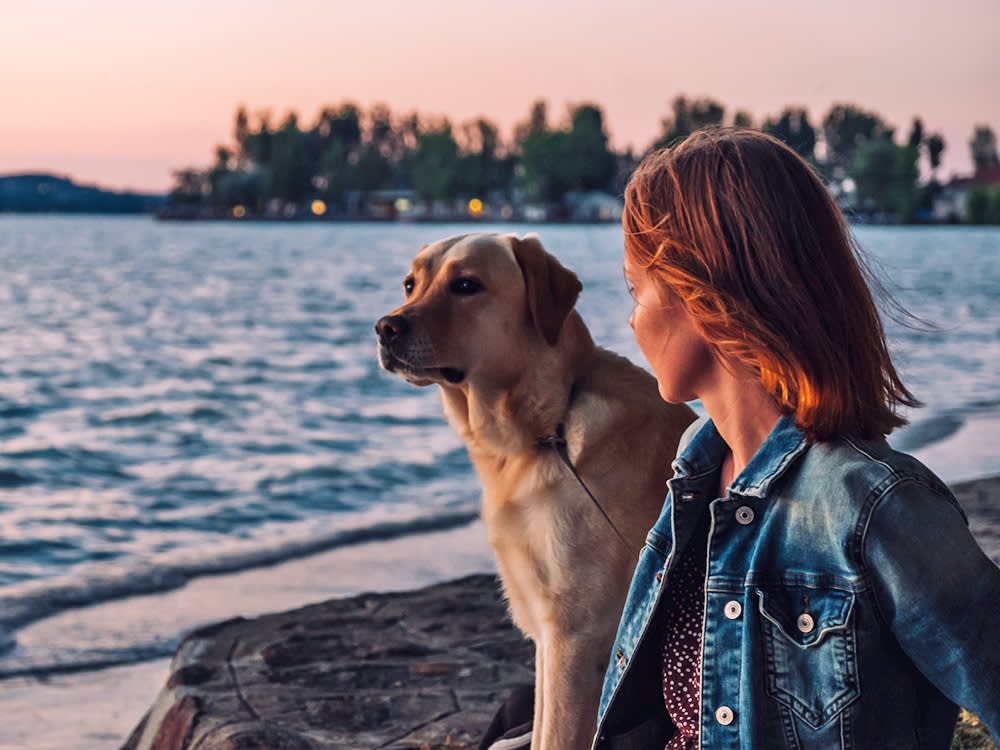
Twice a year, we drag our dogs through a time change they never agreed to. We lose an hour in spring, gain one in fall, and spend the following week groggy and irritable. It is easy to assume our dogs feel the same jolt, since their whole day, when they eat, when they walk, when their person comes home, runs on our schedule.
A study published in the journal PLOS One pokes a useful hole in that assumption. The surprising finding is not that dogs adjust to daylight saving time. It is which dogs have to adjust at all, and why. The answer says less about the dogs than about the shape of their days.
What the researchers actually did
A team led by Lavania Nagendran at the University of Toronto set out to fill a real gap: plenty of research has looked at how the clock change affects human health, from car crashes to stroke risk, but almost none had asked what it does to the companion animals living on our schedules.
To find out, the researchers strapped motion-sensing accelerometers, essentially fitness trackers, onto 54 dogs and their humans and recorded activity around a fall daylight saving transition. Crucially, they split the dogs into two groups: 29 companion dogs living pet lives, and 25 working sled dogs. To keep breed out of the equation, every dog in the study was a Husky or a Malamute, so any difference between the groups came from lifestyle, not genetics.
Then they compared each dog’s activity in the week before the switch with the three days after it, focusing on the sensitive window around sunrise and the moment a handler or owner arrived.
The split-screen result
The two groups behaved differently, and the gap is the whole story.
The working sled dogs noticed. On the morning of the switch, they were significantly more active before their handlers showed up, essentially awake and ready on the old schedule while the humans ran an hour behind the dogs’ internal clock. Within two days, they had reset and returned to their normal pre-switch activity levels.
The companion dogs, by contrast, barely registered it. As a group they showed no meaningful difference in morning activity before and after the transition. Their people had shifted the clock, and the pets simply went along with it.
There was one exception worth flagging for anyone with a gray muzzle at home. Senior companion dogs were less active the morning after the change, a small sign that older dogs may feel abrupt schedule shifts more than younger ones do.
The dogs who struggled weren’t more sensitive animals, they were animals living on a tighter schedule. A sled dog’s day is built around precise arrival times, so a one-hour shift is a real disruption. A pet whose routine has some natural give just rolls with it. Flexibility in the routine is what buffers the change.
Why the flexible dog wins
The mechanism here is intuitive once you see it. A working dog’s life is metronomic. Handlers arrive at set times, work happens on a schedule, and the dog’s body anticipates all of it. Move the reference point by an hour and the dog is briefly out of sync with the world it has learned to predict.
A typical pet’s day is looser. Meals drift by a few minutes, walks happen whenever the leash comes out, the human’s arrival home varies. That built-in slack means an hour’s change is well within the normal noise of the dog’s day, so there is nothing sharp to adjust to.
This reframes the common worry. The question is not “is my dog sensitive to the time change?” It is “how rigid is my dog’s routine?” The more clockwork the schedule, the more a sudden shift will land, and working dogs, service dogs, and any pet on a strict feeding-and-medication timetable sit at the sensitive end.
What to actually do about it
For most pet owners, the honest answer is: not much. Your dog will likely adjust faster and with less complaint than you will. But two groups are worth a little planning.
If you have a senior dog, be gentle around the switch. Older dogs showed the clearest post-change dip, so give them a few extra days of patience and do not pile other changes on top of the time shift.
If your dog is on a strict schedule, whether that is a working role, a service job, or medications that must land at set intervals, ease the transition instead of imposing it all at once. In the days before the change, nudge feeding, walks, and medication times by ten or fifteen minutes at a stretch, so the dog glides to the new clock rather than jumping to it. The study focused on a fall transition, but the same logic applies to the spring one.
The broader lesson outlasts daylight saving. A little natural flexibility in your dog’s daily routine is not sloppiness, it is resilience. A dog whose day has some give handles disruptions, a trip, a houseguest, a schedule change at work, more easily than one wound to a rigid clock.
What newer research adds
This study is part of a wider and still-growing effort to measure companion-animal welfare with wearable sensors rather than owner guesswork. Accelerometer-based tracking is now being used to study canine sleep, activity, and stress in the home, giving researchers objective data on questions that used to rely entirely on what owners reported.
The daylight saving findings drew attention precisely because they pushed back on a tidy assumption, that our routine disruptions must be our dogs’ disruptions too, and showed the reality is conditional. As of now, no follow-up has overturned the core result: most pet dogs handle the twice-yearly clock change with little trouble, and the dogs who need help are the ones whose routines leave no room to absorb it.
References
Dr. Kohl is a board-certified veterinary dentist with a particular interest in preventive oral care. She reviews all dental health content at The Pet Times and contributes practical guides on home dental routines, professional cleaning, and oral disease prevention.
Meet our experts ↗Keep reading
 TrainingYour Dog Is Basically You. But Not for the Reason You Think.Dr. Nina Kohl · 6 min
 TrainingYour Dog Isn't Being Dominant. You Trained It to Steal the Bed.Dr. Mara Chen · 7 min
 TrainingYour Dog Lives in a Different World Than You. Here's the ScienceMarcus Webb · 11 min
 TrainingYour Dog Doesn't Miss How the Toy Looked. They Miss How It Felt.Dr. Ravi Mehta · 4 min
 TrainingYour Dog Isn't Trolling You. They're Playing, or Trying to Tell You Something.Dr. Nina Kohl · 7 min
 TrainingCats Don't Own the Loaf. Here's Why Your Dog Tucks Its PawsJordan Ellis · 5 min