


Cats Don't Own the Loaf. Here's Why Your Dog Tucks Its Paws
The 'dog loaf' is real, weirdly common, and barely studied. Here's what the tucked-paw pose actually signals, how it differs from the donut and the sploot, and the one version worth a second look.
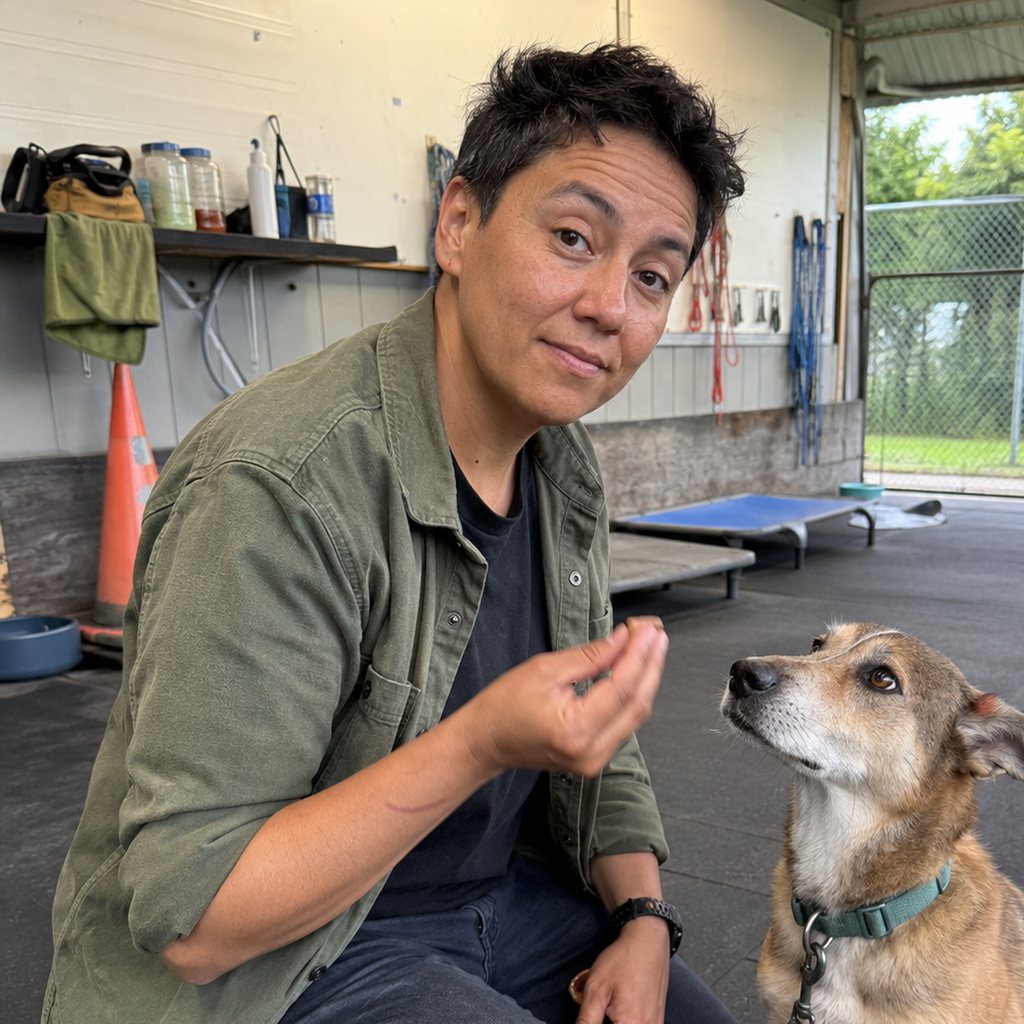
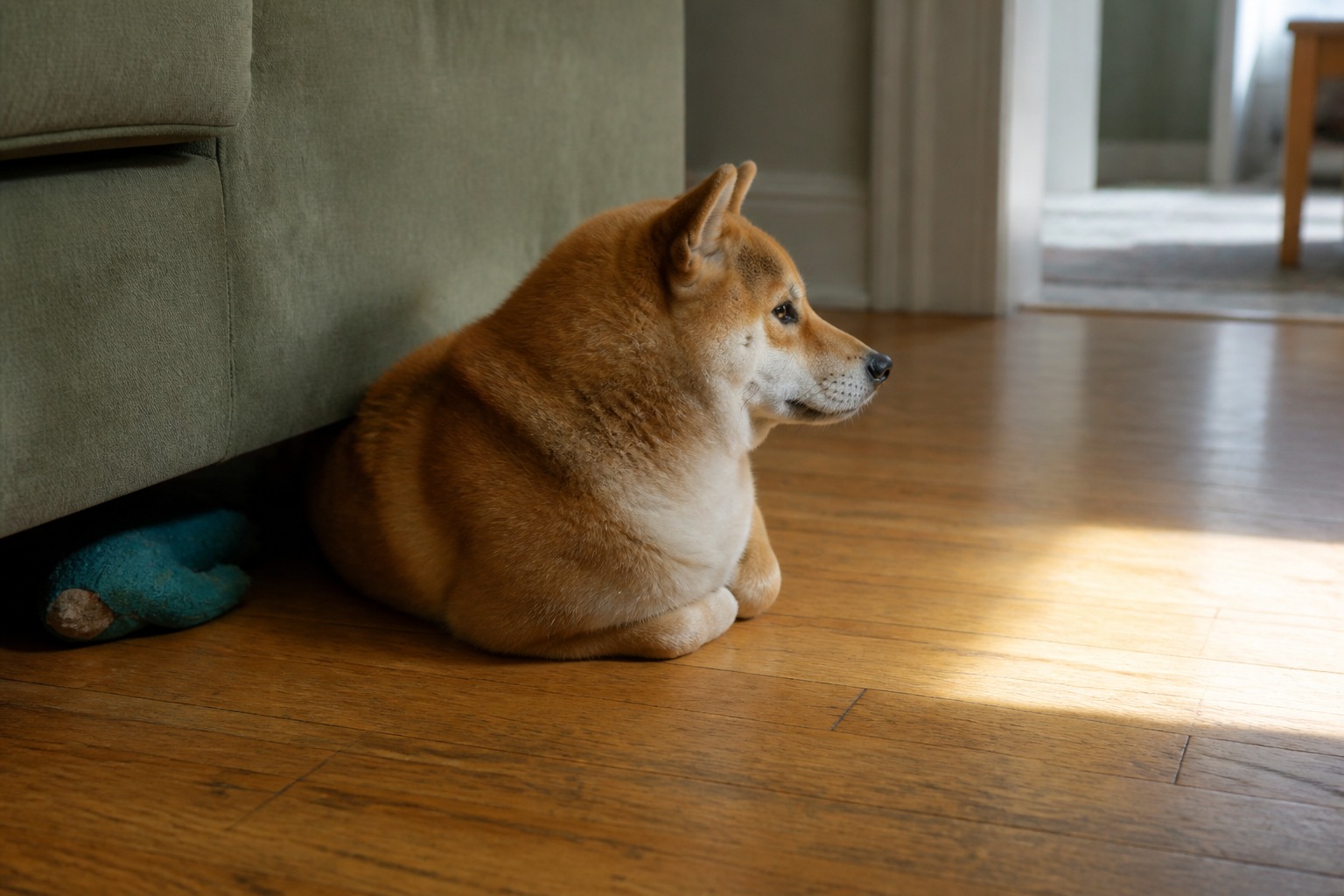
You already know the cat loaf: paws folded away, body squared off, the whole animal reshaped into something you could theoretically slice and toast. What fewer people expect is that dogs do it too. Big ones included. A fluffy retriever settled into a full loaf really can pass, at a glance, for an oversized brioche.
It’s one of the more charming things a dog does, and also one of the least explained. So here’s what’s actually going on, what the pose is telling you, and the single variation that’s worth a closer look instead of a photo.
What counts as a loaf (and what doesn’t)
A true loaf has a specific shape, and it’s worth pinning down because dogs have a whole catalog of resting positions that get mixed up.
In a loaf, the front paws are tucked so far under that they become invisible. The back legs are pressed tight against the body, so on a fluffy dog they nearly disappear too, and the tail is stashed away just as thoroughly. What you’re left with is essentially a head and a torso. A dog that’s really committed to the bit will even draw its neck in and close its eyes, until you can barely find the face in all that compact fluff.
The loaf is not the donut, where a dog curls nose-to-tail into a tight circle, usually to trap warmth. And it’s not the sploot, the legs-out-behind stretch that’s the opposite of tucked. The tucked-paw loaf sits in its own category: upright, square, and self-contained.
Why the honest answer is “we’re not totally sure”
Here’s a fact that surprises people: there’s almost no formal research on why dogs loaf. Canine cognition is a busy field these days, but nobody has trained the microscope on paw-tucking specifically. What exists is educated inference from what we do know about dog behavior and body mechanics, and it’s worth being upfront that we’re in best-guess territory, not settled science.
Some dogs may simply pick it up from a housemate cat. Others seem to arrive at it on their own, with no feline tutor in sight. Both can be true in the same household.
What the pose most likely means
Strip away the mystery and a few sturdy explanations remain, all of which point in a reassuring direction.
The biggest one is comfort and trust. Tucking every paw under your body is not a position you can bolt out of. A dog in a loaf has, in effect, put away its landing gear. Choosing that means the dog feels safe enough not to need a quick exit, which is why loafing so often shows up in a relaxed dog on home turf.
There’s very likely a warmth angle too. Folding the paws and tail against the body reduces the surface area exposed to cool air and tucks the least-insulated parts, the paw pads, out of the draft. It’s the same logic behind the donut curl, just in a tidier package. Don’t be shocked to see more loafing when the floor is cold.
And sometimes a loaf is just a comfortable way to rest that happens to keep the dog semi-alert, chin up, eyes open, ready to track what you’re doing without fully committing to a nap. It’s the canine equivalent of sitting up on the couch rather than sprawling flat.
When a dog tucks all four paws to settle in, I read it as a good sign, a dog telling you it feels secure. What I’d separate out is a dog that keeps one paw or one leg pulled in and protected while the rest of the body looks normal. Comfort is symmetrical and loose. Guarding a single limb is neither, and that’s the version I’d flag.
The one loaf worth a second look
Almost every loaf is exactly what it looks like: a cozy dog being cozy. But the pose is worth knowing well enough to catch its impostor.
If a dog is habitually tucking or holding one specific paw or leg, avoiding putting weight on it, seeming stiff or reluctant getting up, or favoring a side, that’s a different story than a whole-body loaf. Protecting a single limb can be a quiet sign of soreness, an injury, or joint pain, and dogs are good at masking that until you learn to look for it. The tell is symmetry. A genuine loaf is balanced and loose all over. A dog nursing one leg is neither.
If you’re seeing that pattern, it’s worth a mention to your vet, especially in an older dog or one who’s slowed down lately.
Bottom line
The dog loaf is real, it’s common across sizes and breeds, and the science is thin enough that anyone claiming a single definitive reason is guessing. The best read is the simplest: a dog folds its paws away when it feels safe, comfortable, and maybe a touch chilly. Enjoy it, photograph it, and just keep half an eye on the difference between a dog that’s tucked because it’s content and one that’s tucked because something aches.
References
- American Kennel Club. “Why Do Dogs Sleep in Certain Positions? Dog Sleeping Positions Explained.” https://www.akc.org/expert-advice/health/dog-sleeping-positions/
- Bradshaw, J. Dog Sense: How the New Science of Dog Behavior Can Make You a Better Friend to Your Pet. Basic Books, 2011.
- VCA Animal Hospitals. “Body Language of Dogs.” https://vcahospitals.com/know-your-pet/the-body-language-of-dogs
Common questions
What is a dog loaf?
It's when a dog lies down and tucks all four paws underneath its body so they disappear, leaving a compact head-and-torso shape that looks a bit like a loaf of bread. On a fluffy dog, the legs and tail vanish almost completely.
Is loafing a sign my dog is happy?
Generally, yes. Tucking the paws under the body is a relaxed, settled posture. A dog can't spring up quickly from a loaf, so choosing it usually means they feel safe and comfortable where they are.
What's the difference between a loaf and a donut?
A loaf is upright and compact, with paws tucked and the body squared off. A donut is a curl, where the dog wraps nose-to-tail into a tight circle, often to conserve heat. Different shapes, slightly different reasons.
When should I worry about how my dog is lying?
Watch for a dog that tucks or guards one specific paw or leg, avoids putting weight on it, or seems stiff getting up. That's less about coziness and more a possible sign of pain worth mentioning to your vet.
Jordan Ellis is a certified professional dog trainer with a decade of experience working with rescue organisations and private clients. They specialise in anxiety, reactivity, and positive reinforcement methods, and review all training and behaviour content at The Pet Times.
Meet our experts ↗Keep reading
 TrainingYour Dog's DNA Isn't the Whole Story. The Part You Can Actually Change Is.Dr. Mara Chen · 5 min
 TrainingOne Dog Licking Another's Ears Is Usually Fine. Two Things Make It Not.Dr. Ravi Mehta · 7 min
 TrainingYour Nervous Dog Might Be Reading You. The Science Says the Stress Runs Both Ways.Dr. Nina Kohl · 6 min
 TrainingYour Dog Doesn't Need a Bad Memory to Be Terrified of the VacuumDr. Priya Nair · 9 min
 Health & WellnessYour Dog Isn't Being Dramatic About Their PawsDr. Amara Solis · 6 min
 TrainingYou Didn't Make Your Puppy Shy. Biology Did, Before They Were Born.Dr. Amara Solis · 5 min