


10 Dogs With Noses So Good They Have Day Jobs
A Bloodhound can have three times the scent receptors you'd expect, but raw receptor count is only half the story. Here are ten breeds whose noses are elite enough for real work, grouped by the job they were built to do, plus how a dog's nose actually pulls it off.

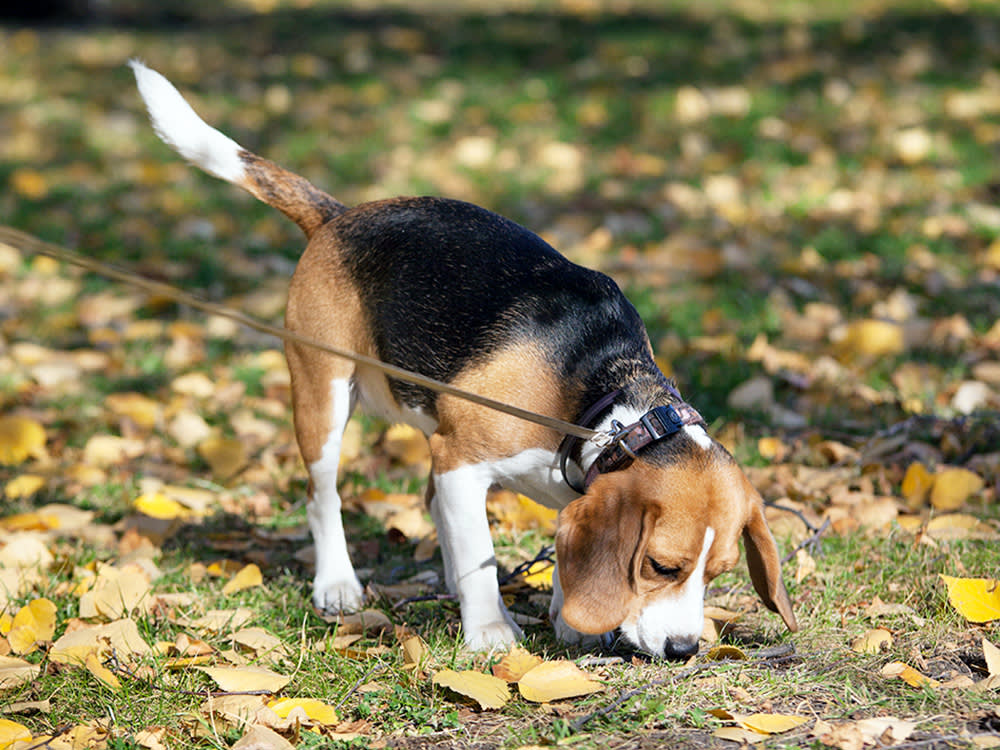
Of all the things dogs do better than us, smell is the one that is almost hard to believe. Where a person has five or six million scent receptors, an average dog has around 100 million, and the elite scenting breeds carry up to 300 million. Watch a dog work a trail and you will see the nostrils flaring and twitching independently, funneling air into a dedicated smelling chamber that reads scent particles in staggering detail.
But here is the part that gets flattened in most “best nose” rankings: receptor count alone does not make a working dog. Nose architecture matters, and so does drive, the deep, almost compulsive desire to put the nose down and solve the puzzle. A dog with a world-class nose and no interest in using it is just a dog. The breeds below pair the hardware with the wiring, which is why humans have handed them actual jobs, from search-and-rescue to detecting disease. They are grouped here not by rank but by the kind of work their noses were built for.
The pure trackers
These are the trail specialists, bred to lock onto a scent and follow it to the end, however old and faint.
Bloodhound. The gold standard. A Bloodhound’s droopy skin and enormous ears are not decorative, they trap and stir scent particles up toward the nose. With roughly three times the scent receptors of an average dog and outsized brainpower devoted to analyzing smell, a Bloodhound can trail a scent days old and at real speed, which is why its nose is admissible as evidence in many courts.
Basset Hound. A Bloodhound’s low-slung cousin in spirit, the Basset carries an impressive 300 million or so scent receptors on a short, sturdy frame that keeps the nose skimming the ground. Its calm, methodical temperament is the ideal trailing personality, working a scent slowly and thoroughly rather than racing through it.
Bluetick Coonhound. Bred to chase raccoons through thick, tangled country, the Bluetick is a powerful, determined tracker with deep American roots, descended from English and European hounds brought over in the 1700s. Frontiersmen used them for night hunting, and their instinct to bay while trailing let handlers find them in the dark. Their standout skill is “cold-nose” talent, the ability to follow an old, degraded scent trail, and they still turn up in hunting as well as military and law-enforcement work.
The detectives
Smaller, tireless noses that excel at picking a target smell out of a crowded, distracting environment.
Beagle. The Beagle is a beloved family dog and a relentless nose on legs, which is why, when one bolts, they are not running from you, they are running toward a scent. Bred specifically for scent work and gifted at detecting faint odors, Beagles staff the U.S. Customs and Border Protection “Beagle Brigade” at airports and cargo facilities, where their long ears literally drag along the ground and kick scent particles back up to the nose.
English Springer Spaniel. A newer name on most “best nose” lists but a heavy hitter in the field, the Springer is a favorite of professional detection programs worldwide. Compact, athletic, and endlessly enthusiastic, they are widely deployed to sniff out explosives, narcotics, and even wildlife contraband, and they feature in medical-detection research. Their combination of a fine nose, boundless work ethic, and biddable temperament makes them one of the most versatile detection dogs going.
The all-purpose working noses
Big, athletic breeds that pair a strong nose with the stamina, trainability, and desire to please that long jobs demand.
German Shepherd. The poster dog of working breeds, bred for agility, power, and endurance, with a tireless work ethic. A Shepherd may not top the receptor charts, but at roughly 225 million receptors it still more than doubles the average dog, and it pairs that with a highly developed scent-processing brain that lets it analyze and recall even a whisper of a smell. That is why they anchor police, military, and search-and-rescue units.
Labrador Retriever. Originally bred to work alongside Newfoundland fishermen, the Lab brings a superb nose, a weather-resistant coat, and a retrieving drive, all wrapped in an eagerness to please. Today the same traits make them among the most versatile scent dogs alive, aiding search-and-rescue, detecting explosives and narcotics, tracking missing people, and alerting to medical events like seizures.
Golden Retriever. A Golden will happily be your couch companion, but give it a job and the nose switches on. Bred in Scotland to fetch shot birds from field and lake alike, Goldens combine natural intelligence with a deep desire to please, which makes them dependable partners in search-and-rescue, medical assistance, and tracking.
Belgian Malinois. If you have seen footage of a military dog parachuting with its handler or clearing a building, it was very likely a Malinois. Leaner and more intense than a Shepherd, the Malinois has become the go-to breed for elite police and military detection worldwide, prized for a razor-sharp nose paired with almost boundless energy and focus. This is not a casual family pick, it is a working dog that needs a working dog’s life, but as a nose-with-a-mission there are few equals.
The small but mighty
Dachshund. Do not let the size fool you. Bred in Germany to track badgers and other burrowing animals underground, the Dachshund packs a surprising number of scent receptors into a tiny frame and can stay locked on a scent well past the point where most small dogs lose it. Take one on a walk and you will feel yourself towed in six directions as that nose hoovers the ground. Feisty, driven, and endlessly curious, they are a scent hound in a pocket-sized package.
How the nose actually works
The magic is in the plumbing. A dog’s nasal cavity splits the incoming air, routing some for breathing and some for smelling, so the scent stream gets analyzed on its own. That smelling air passes over the turbinates, a labyrinth of scent-receptor-covered tissue that captures and reads the continuous flood of odor molecules. Dogs also have a second scent organ, the vomeronasal organ, tuned to pick up chemical signals a regular nose would miss.
Then there is the mechanics of sniffing. At rest a dog takes about 15 breaths a minute, similar to a person, but that rate roughly doubles the moment they start walking and investigating. On an active trail, a dog can fire off as many as 200 short, rapid inhalations and exhalations, pulling in fresh scent with every burst. Good working dogs learn to run the “scent cone,” starting wide and slowly narrowing in on the source, which is part of why scent work is such superb enrichment: the dog is using nose and brain at once, and that combination builds confidence and settles them.
How experts measure a super-nose
Scientists gauge canine olfaction with scent-detection trials, tracking exercises, hidden-food searches, and tests of whether a dog can tell very similar odors apart. On-the-job dogs in rescue units and customs screening are scored on accuracy and speed. The most striking measures come from medical-detection programs, where dogs are trained to sniff out diseases including cancer, Parkinson’s, diabetes, and even COVID-19, results that keep redrawing the map of just how sensitive a trained nose can be.
What’s new since this was written
The formal world of nose work has grown up fast. The American Kennel Club launched a competitive Scent Work sport that has surged in popularity, letting any dog, purebred or mixed, earn titles for finding target odors, and it has become a mainstream way to give a scent breed a legitimate outlet at home. On the research side, university programs such as the Penn Vet Working Dog Center continue to formalize how medical-detection dogs are trained and tested, moving disease-detection from novelty toward genuine tool.
There is a practical footnote for anyone importing or traveling with a working breed, too. As of August 1, 2024, the CDC updated its rules for dogs entering the United States, now requiring dogs to be at least six months old, microchipped, and appear healthy, with documentation that varies by where the dog has been. It is a reminder that a great nose comes with real-world paperwork if that nose crosses a border.
However you use it, the lesson is the same across all ten breeds: a dog’s nose is not a party trick, it is how they read the world. Give it something to do, and you will have a happier, steadier dog.
References
- American Kennel Club. “AKC Scent Work.” AKC Sports.
- Penn Vet Working Dog Center. “Detection and Research.” University of Pennsylvania School of Veterinary Medicine.
- Centers for Disease Control and Prevention. “Bringing a Dog into the United States.” CDC Importation.
Common questions
Which dog has the single best sense of smell?
The Bloodhound is the usual answer. Its nose carries roughly 300 million scent receptors, about three times the average dog, plus more brain devoted to processing smell, and it can follow trails several days old. Basset Hounds run a close second on receptor count, and Beagles are famous for detecting very faint odors.
How far away can a dog smell a person?
Most dogs can pick up a person's scent from one to two miles away, and strong or fresh scents can carry farther, especially for the elite trackers. Humidity, terrain, and wind direction all change how far a dog can detect a distant scent.
What smells do dogs dislike most?
Many dogs are put off by citrus, vinegar, and strong artificial cleaning products, along with heavily perfumed products and mothballs. Because their noses are so sensitive, harsh scents can genuinely overwhelm them, so pet-safe sprays are the better choice at home. Lavender, by contrast, is one scent research suggests dogs find calming.
Can I give my scent-hound dog a job at home?
Absolutely, and you should. Hiding treats around the house, in cardboard tubes, or in a snuffle mat lets a dog work a scent puzzle, and it is some of the best enrichment you can offer. Dogs allowed to use their noses tend to be calmer, more confident, and easier to live with.
Marcus Webb writes about the gear, gadgets, and everyday choices that make life with a pet easier. His coverage runs from product picks to training and the causes worth paying attention to, always with an eye on what actually earns a place in your home.
Meet our experts ↗Keep reading
 TrainingYour Dog Can Smell You From a Block AwayDr. Ravi Mehta · 6 min
 Product PicksYour Dog Isn't Being Bad. He's Bored. 13 Puzzle Toys That Fix ItSasha Ford · 8 min
 TrainingYour Puppy's Evening Meltdown Isn't Extra Energy. It's Exhaustion.Dr. Amara Solis · 5 min
 TrainingRead the Human First: How to Greet a Dog You've Never MetMarcus Webb · 9 min
 TrainingYour Dog Doesn't Hate Intact Dogs. He Hates Being Surprised.Dr. Lena Park · 6 min
 TrainingYour Dog Guards Their Bowl Because They're Worried, Not BossyDr. Nina Kohl · 6 min