


The Cuddles Won't Keep You Sober. The 6 A.M. Walk Might.
The comfort of a dog gets all the credit in recovery. The real work is quieter: a living creature who forces a schedule onto days that would otherwise have none.

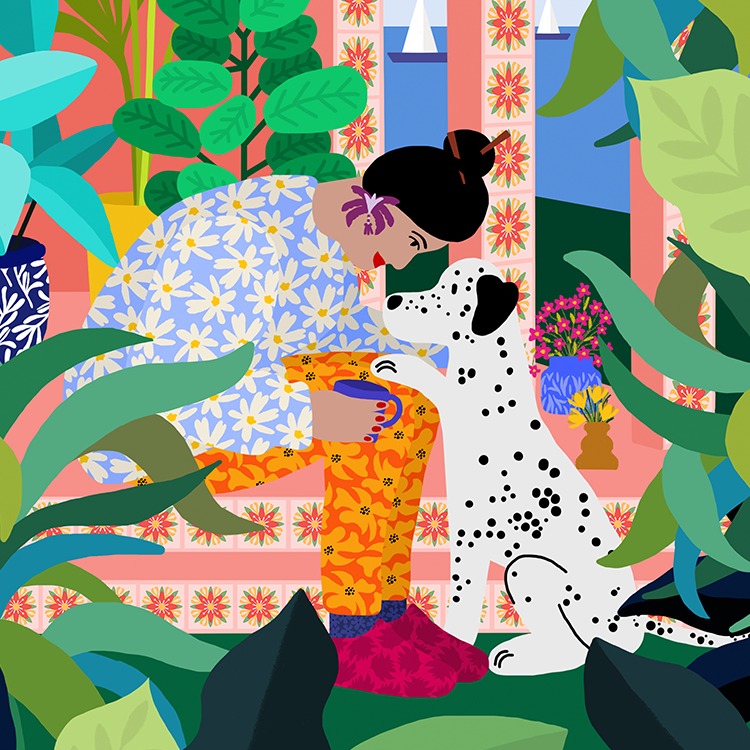
People who bring a dog into early sobriety usually expect the same thing: a warm, uncomplicated companion who will make the hard days softer. What they tend to get first is chaos. The puppy pees on the rug, cries in the crate, and turns a half-block walk into a forty-minute investigation of every fence post. The comfort everyone promised is somewhere in there, but it arrives buried under work.
That gap is the whole story, and it points at something recovery communities have quietly known for years. The reason a dog helps a person stay sober is not mainly the cuddling. It is the structure. A dog is a small, insistent argument against disappearing into yourself, and it makes that argument every single morning whether you feel up to it or not.
Early sobriety and a new puppy are the same problem
Getting sober asks you to build a life out of new habits: meetings, therapy, sleep, movement, showing up when you would rather hide. A new dog asks for the exact same thing, on the same brutal beginner’s timeline. Both require you to care for something outside yourself before you feel ready, on a schedule you do not control.
That overlap is why the early weeks can feel like a setback. You finally had a routine that worked, and now a five-pound animal has detonated it. It is common, and not shameful, to resent that, even while loving the dog. Trainers sometimes hear new owners describe a low, guilty flatness in those first weeks that rhymes with postpartum feelings. It passes. What it leaves behind is the thing that actually helps.
What a dog is really doing for a brain in recovery
Strip away the sentiment and the mechanism is almost boringly practical. A dog has to be fed, walked, and let out at fixed times, and that external clock does for you what willpower alone often cannot: it drags the day into a shape. Get up. Go outside. Come back. Do it again tomorrow. In recovery, where an empty, formless day is a genuine relapse risk, that imposed rhythm is protective.
There is a chemistry layer under it, too. Petting a dog is associated with a measurable drop in the stress hormone cortisol and a rise in oxytocin, the bonding hormone, which is one reason a few minutes with an animal can take the edge off acute anxiety. But the neurochemistry is the bonus. The load-bearing part is responsibility. When something warm depends on you to survive the day, you have a reason to get out of bed that has nothing to do with how you feel about yourself.
“What surprises people in recovery is that the dog helps most on the days they least want it to,” says Dr. Nina Kohl. “It is not the affection that saves the morning, it is that someone is standing by the door who does not care about your excuses. That external pull, gentle and relentless, is exactly the scaffolding an unstructured day is missing.”
The grief test
The bond often announces itself at the worst possible moment. Ask people when they realized the dog had become part of their sobriety, and a surprising number land on a loss: a death in the family, a hard anniversary, a night that could have gone badly. The dog does not fix any of it. It simply stays, close and unbothered by your falling apart, and that presence cracks something open.
That is worth naming because it reframes what you are asking the animal to be. Not a therapist. Not a cure. A steady, low-demand companion who keeps showing up. Sobriety is a one-day-at-a-time practice, and so, it turns out, is living with a dog: some days smooth, some days a mess, all of them survivable if you keep the routine.
Keep the dog a support, not a job
A few honest guardrails keep the relationship healthy on both ends. Adjust your expectations before the dog arrives; a nervous or high-energy animal will not slot neatly into your old life, and pretending otherwise breeds resentment. Get help early with training, because twenty focused minutes a day of basic cues does as much for your sense of competence as it does for the dog’s manners. And build a routine you can actually keep on a bad day, not an ideal one, so that when the day is bad the routine still runs.
What newer research adds
The science on animals and mental health has firmed up in recent years, and it lands on the unglamorous parts. Reviews of human-animal interaction consistently tie pet companionship to lower stress and reduced loneliness, and clinicians who work in addiction increasingly point to the same lever this piece is built on: the daily caretaking routine that a pet forces onto a person’s day. The takeaway from the current research is not that a dog is treatment. It is that a dog is a powerful support that works best alongside the real work, the meetings, the therapy, the medication where it applies, rather than in place of any of it.
There is one caution the newer literature adds. A dog that becomes your only coping tool is a fragile plan, because pets get sick, need boarding, and eventually die. The healthiest version keeps the animal as one strong strand in a wider net of support, not the whole net.
This piece touches on addiction and recovery, which are sensitive subjects. If you are struggling with substance use or your mental health, help is available, and a good next step is talking with your doctor or a qualified professional.
References
- Powell, L., et al. “The Physiological Function of Oxytocin in Humans and Its Acute Response to Human-Dog Interactions.” Frontiers in Veterinary Science. www.frontiersin.org
- Human Animal Bond Research Institute (HABRI). “The Health Benefits of Companion Animals.” habri.org
- National Institute on Drug Abuse. “Treatment and Recovery.” nida.nih.gov
Sara Lim leads our Product Picks coverage, testing and comparing the things pets and their owners actually use. From everyday essentials to home-and-style finds, she focuses on honest, useful recommendations rather than hype.
Meet our experts ↗Keep reading
 LivingThe One Thing Anna Wintour Doesn't Control Is Her DogsNina Vasquez · 5 min
 Health & WellnessHer Dog Collapsed on the Sidewalk. What Looked Like a Stroke Usually Isn't.Dr. Ravi Mehta · 8 min
 LivingThe Rescue Dog Who Became a Fashion Label's North StarLeila Torres · 5 min
 LivingThe Co-Working Shakeout Had a Survival Trait: Letting the Dog InJames Okafor · 6 min
 LivingYour Dog Isn't a Character Judge. But Their Cold Shoulder Still Means Something.Sasha Ford · 6 min
 Health & WellnessYou and Your Dog Are Swapping Microbes. It Might Be Good for Both of You.Dr. Mara Chen · 6 min