


Your Dog Isn't Catching Your Sadness. They're Catching Something Trickier
Dogs can smell your stress and read your face better than most people can. But 'my sadness makes my dog sad' gets the science slightly wrong, and the difference changes how you take care of both of you.

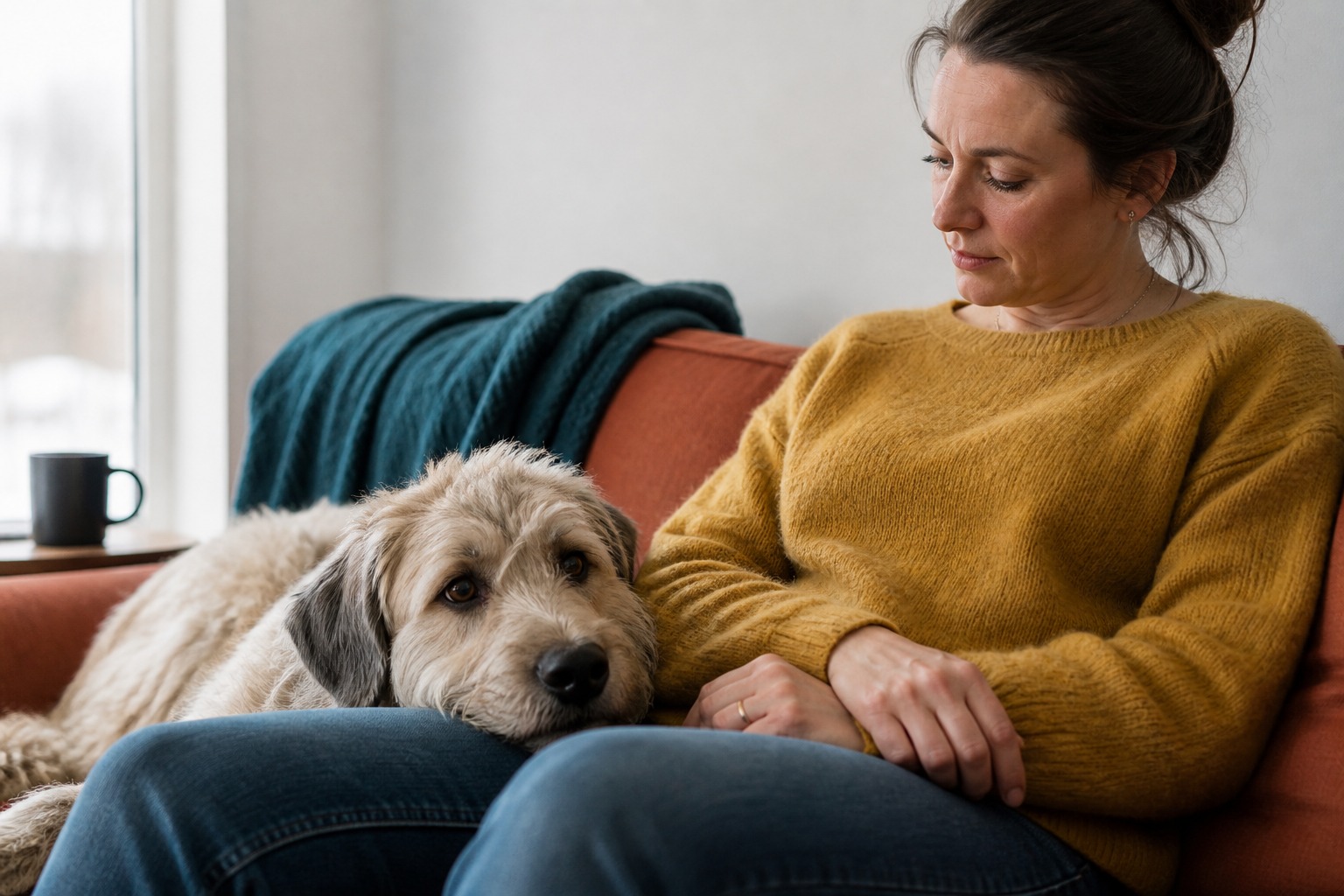
There is a particular comfort in coming home to a dog on a bad day. Whatever went sideways, the reply-all you cannot unsend, the glass door you walked straight into, the grief you are carrying, none of it registers as a demerit to the creature waiting at the door. And on those days it is natural to wonder about the flip side of that devotion: if your dog is so tuned in to you, does your sadness pull them down too? When the bad day stretches into a bad month, are you dragging your dog into the fog with you?
The answer is reassuring, but only if you get the mechanism right, and most people get it slightly wrong. Your dog is extraordinarily good at detecting how you feel. What they mostly do with that information is not “feel sad because you are sad.” It is something a little different, and understanding the difference is what lets you protect your dog without adding guilt to whatever you are already going through.
Dogs read you at a level that should honestly be flattering
Start with what is not in doubt: dogs are remarkable emotional detectors. They read the person in front of them and register the difference between a good day and a bad one, between tension and ease, worry and contentment. They are keen observers of the smallest physical changes, a tightening in your body, a shift in your facial expression, and they log those cues constantly.
They are not only watching, either. Dogs can literally smell human stress through cortisol, the stress hormone, which means that when you are quietly gnawing on a worry, your dog is picking it up on a channel you cannot even perceive. And the effect compounds over time: research on long-term dog-human pairs has found that their stress levels tend to sync, so the longer you have been together, the more your baseline arousal and your dog’s track one another. In a real sense, you and your dog are running partly linked emotional weather systems.
But “reading” your emotion is not the same as “sharing” it
Here is where the popular framing bends the science. It is tempting to leap from “my dog knows I’m sad” to “my dog is sad with me,” but that extra step is not well supported, and the honest version is more interesting.
What has actually been studied most is stress, not sadness, and dogs mirror our stress and anxiety far more readily than they mirror sadness specifically. When it comes to genuine sadness, the better description is not that your dog feels blue alongside you. It is that they become aware of your state and, often, want to comfort you. Many dogs respond to a down owner by cuddling or nuzzling closer, which is a response to your feeling, not a copy of it.
There is a second, quieter mechanism doing a lot of the work, and it is behavioral rather than emotional. Dogs keenly observe our body language and then match our activities. If your sadness makes you less active, your dog will likely become less active too. If you are sleeping more, they are probably sleeping more, not because they have caught your mood but because they are following your lead. So the dog who seems mopey when you are low may be reflecting your changed behavior, an environmental shift, rather than experiencing your emotion from the inside. Sometimes the response is even more oblique: a dog who senses you are off might grab a toy and chew it intently, which is a sign they are a little unsettled, not a sign they are grieving.
I hear ‘my sadness is making my dog depressed’ a lot, and I try to loosen the guilt in it. Your dog isn’t sitting in your sadness with you. They’re noticing you slowed down, and they’re slowing down to stay close. That’s companionship, not contagion, and it means the fix is gentler than people fear.
How to tell if your dog is genuinely off
Even if “sad” is not quite the right word, dogs absolutely have shifting emotional states, and they can get out of sorts for plenty of reasons. Signs that a dog is not their usual self include a sudden drop in energy, a lack of appetite, sleeping more than normal, panting, withdrawing, or becoming unusually clingy. Because they may be mirroring your behavior specifically, you might also see them napping more, seeming a little lethargic, whining, sighing deeply as they settle, or getting into mischief simply because they are under-stimulated and bored.
The useful move is not to panic-diagnose canine depression, but to notice the change and ask what in the environment shifted, starting with your own routine. And it is worth remembering that dogs are individuals. Not every dog gets pulled down when their person is low; some sail along cheerfully regardless, and that is not a sign they do not love you.
Taking care of your dog starts with taking care of you
Here is the uncomfortable implication, and it lands like something a therapist would say, because it more or less is: the most useful thing you can do for the dog may be to attend to yourself. Your dog is reading your state and taking cues from your behavior. So the shortest path to a settled dog runs through a steadier you, or failing that, through an honest reckoning with the fact that you are not steady right now.
Two concrete things help. First, protect your dog’s routine as much as you can. Predictable feeding, walks, and rhythms keep a dog feeling safe and secure even when you are wobbling, because so much of their sense of okay-ness is built on knowing what comes next. Second, take care of yourself in whatever form that takes, journaling, long walks (which conveniently double as dog enrichment), leaning on people, or getting professional support when you need it. Working through your own sadness is, indirectly, one of the best things you can do for your dog, because it keeps them from absorbing the ambient tension.
And give yourself real permission here. If you are in a genuinely rough stretch, it is okay not to be your usual self. Your dog is not asking you to perform cheerfulness on their behalf. Grinding through a bad day purely to keep the dog entertained mostly just loads more stress onto you, and there sits an animal built to detect exactly that. As long as their core needs are met, adequate food, regular exercise, and positive interaction, a temporary dip in your energy will not damage them. If you cannot manage the usual long walk, it is completely reasonable to ask a friend or neighbor to help for a while.
And if you want to give the dog something extra while you’re in the thick of it, choose things they can run without you: a chew that will occupy them for an hour, a puzzle feeder, a snuffle mat seeded with treats. These give your dog a satisfying job that does not depend on your energy level, which is exactly the point.
The bottom line
Your dog knows when you are hurting. They can read your face, smell your stress, and feel the rhythm of your days change. What they are far less likely to be doing is sitting inside your sadness and feeling it as their own. They are noticing, matching, and often trying to comfort, which is a gift, not a burden they have inherited from you. So set down the guilt. Keep their routine steady, take care of yourself with the same seriousness you would want for a friend, and let your dog do the thing they are quietly best at: staying close while you find your way back to a better day.
References
- Sundman, A.-S., et al. “Long-term stress levels are synchronized in dogs and their owners.” Scientific Reports, 2019. nature.com
- “Dogs can discriminate emotional expressions of human faces.” Current Biology / Royal Society research on canine emotion recognition. royalsocietypublishing.org
- “Dogs may recognize and respond to human stress via chemosignals (odor).” Scientific Reports, 2024. nature.com
Dr. Nair is a veterinarian focused on diet and feeding. She covers everyday nutrition, treats, and the many "can they eat this?" questions owners ask, grounding each answer in what is actually safe and sensible for dogs and cats.
Meet our experts ↗Keep reading
 LivingIs Your Dog Really Jealous, or Just Afraid of Missing Out? The Science Is Messier Than the Headlines.Dr. Nina Kohl · 5 min
 LivingYou're Not Soft for Loving Your Dog This Much. You're Wired for It.Dr. Mara Chen · 6 min
 Training'Gentle Parenting' Your Dog Isn't Permissive. That's the Part People Get Wrong.Dr. Nina Kohl · 9 min
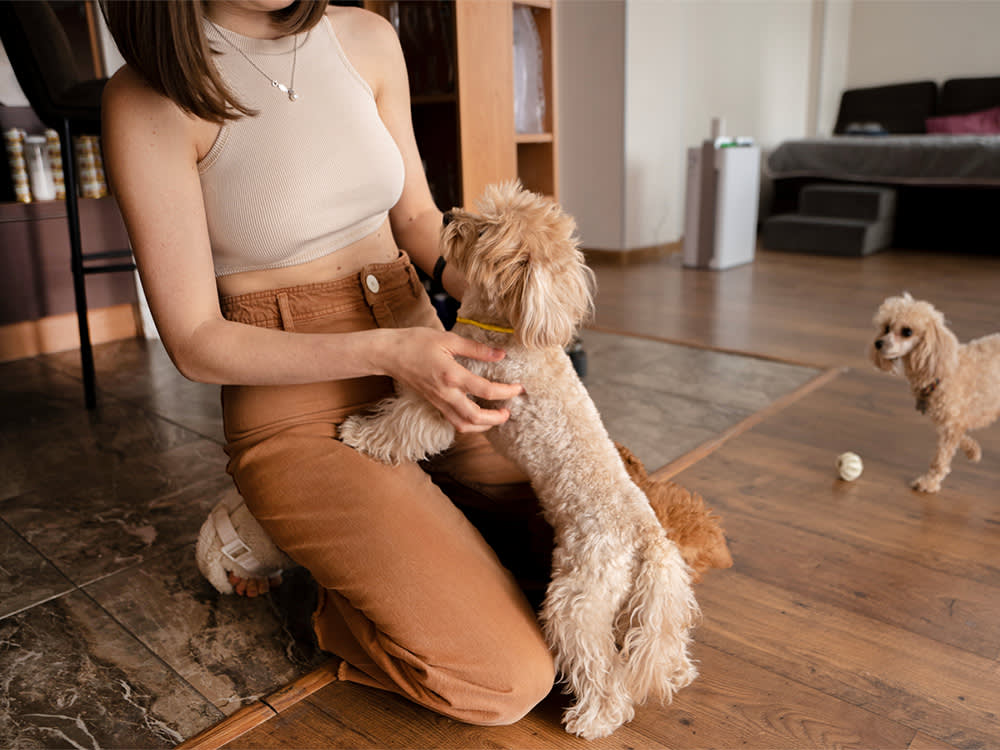 Training'Imprinting' Is the Wrong Word for What Your Dog FeelsDr. Ravi Mehta · 8 min
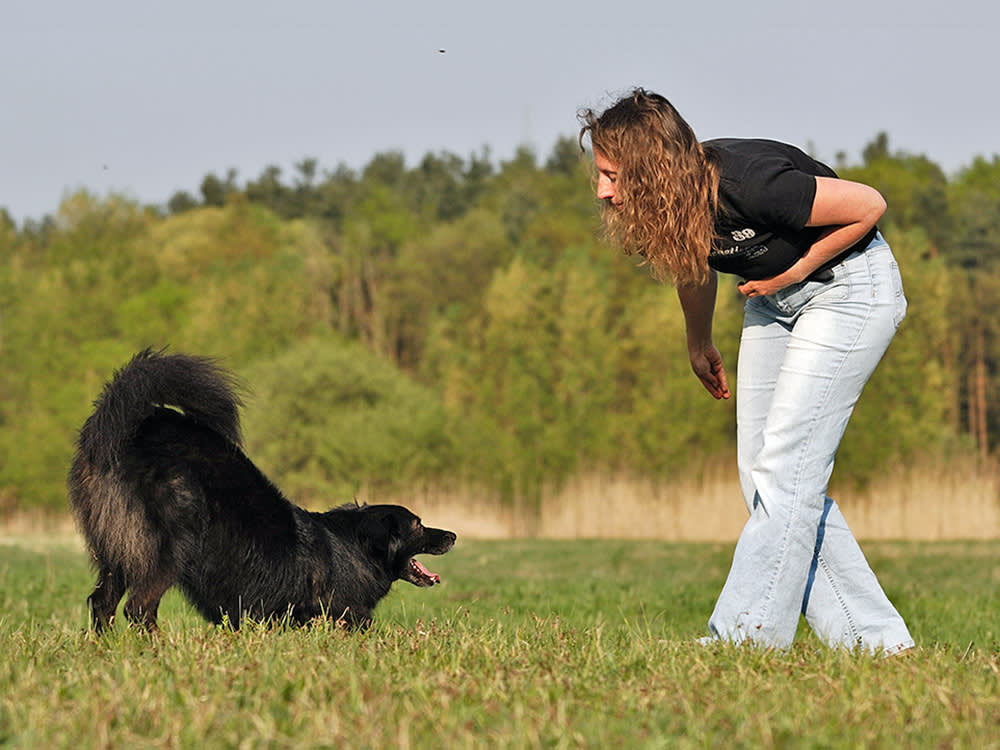 TrainingYour Dog Is Fluent in Play. You're the One Who Can't Read the RoomDr. Nina Kohl · 5 min
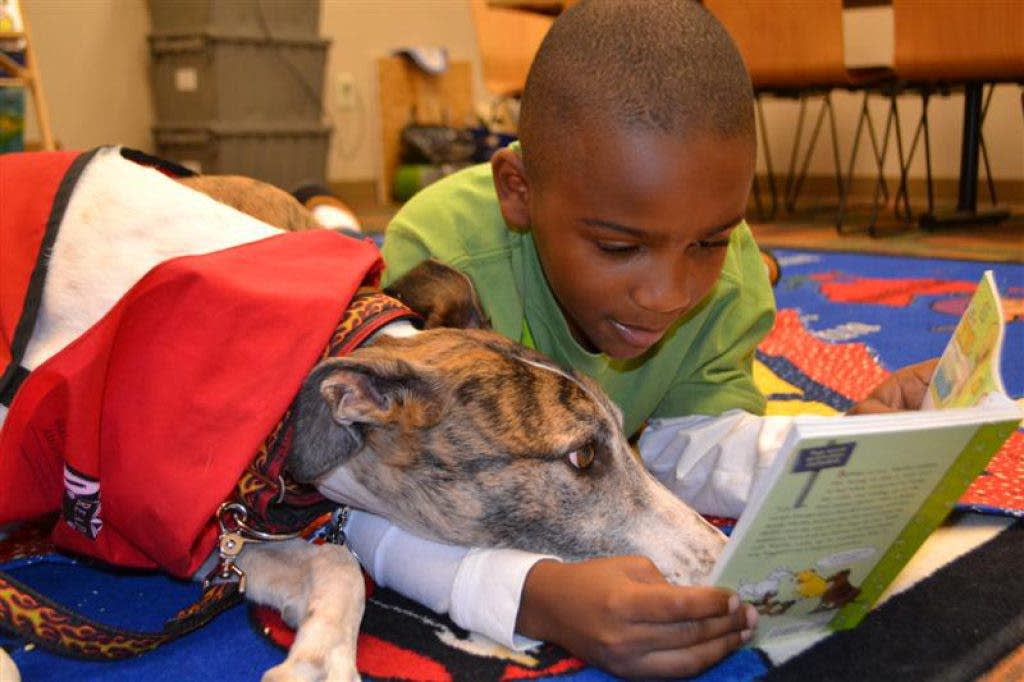 TrainingA Therapy Dog Isn't a Service Dog. Here's Where They Do Their Best Work.Sasha Ford · 7 min