


You Didn't Train Your Dog Wrong. They're Just Wired This Way.
There's a lie loose in the dog world that any dog can become any dog with enough training. It makes good owners feel like failures. The science, and any honest trainer, says otherwise: you can shape behavior, but you can't retrain a personality.
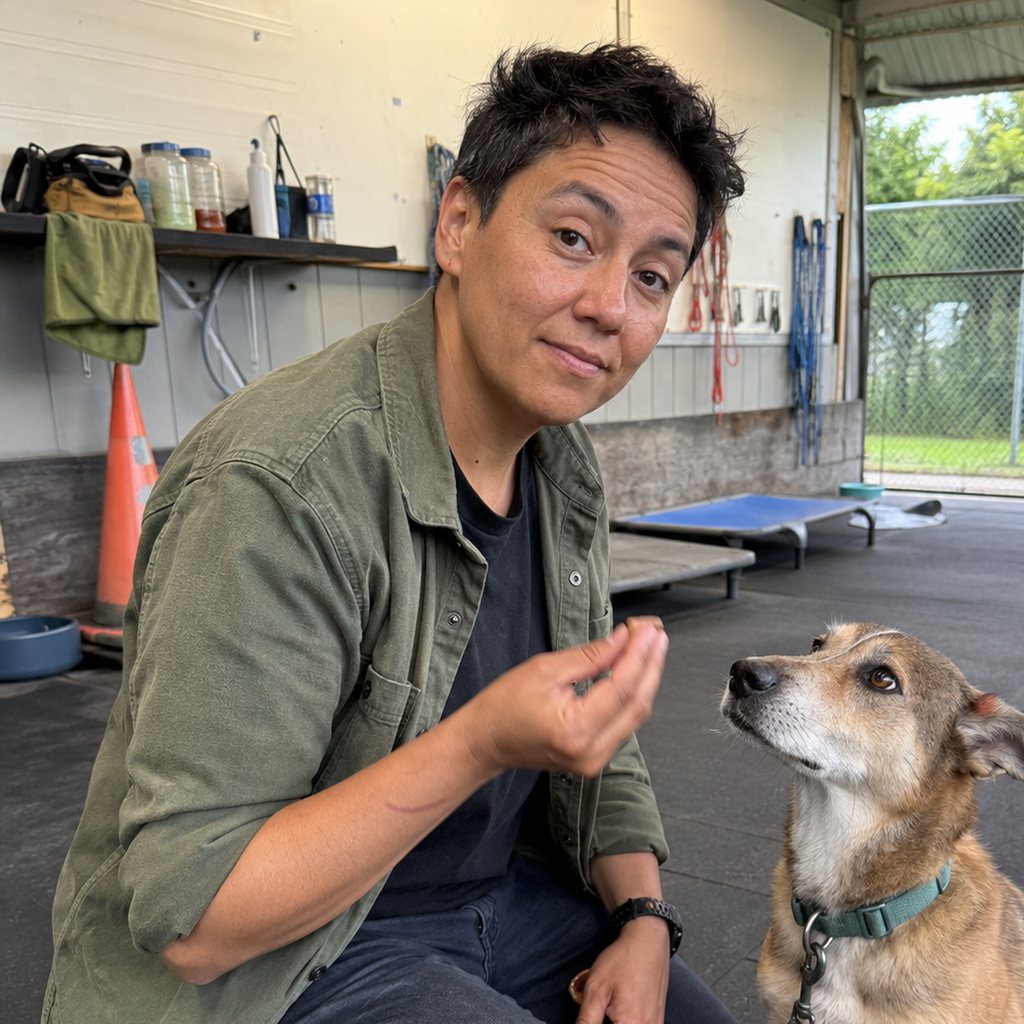
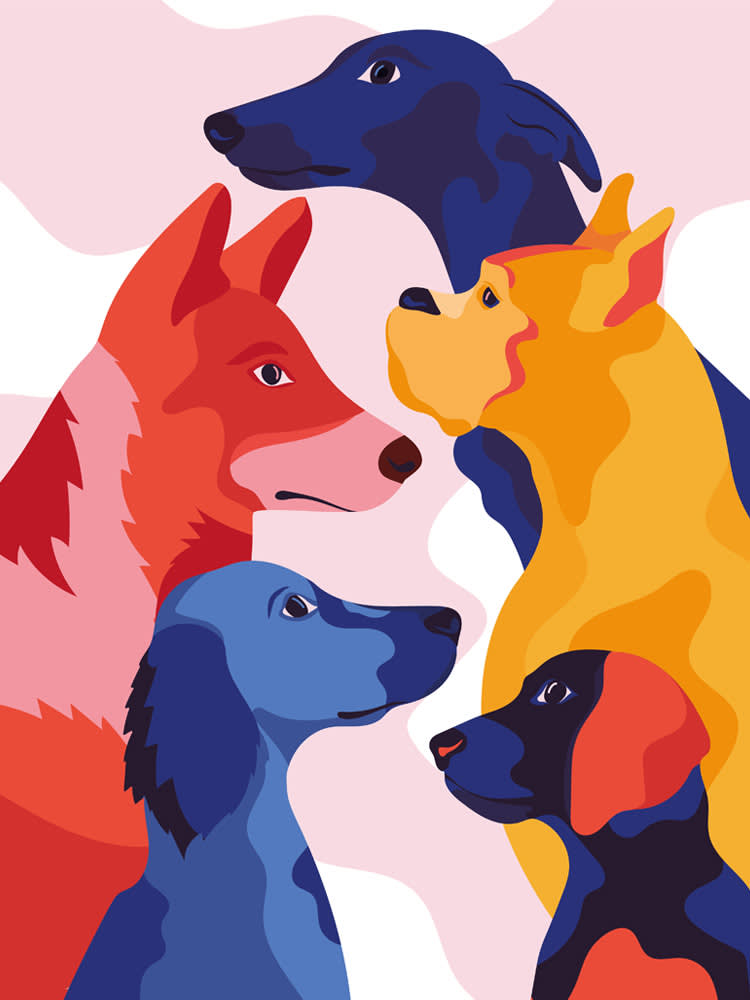
There is a quiet cruelty built into a lot of modern dog advice. It goes like this: if your dog still jumps on guests, still can’t handle the dog park, still loses their mind at the mailman, then you simply haven’t trained them enough. Train harder. Reinforce more. The right protocol will turn any dog into the calm, bombproof companion you pictured.
It is a comforting idea because it promises total control. It is also, in a strong form, false, and believing it does real damage. Because when a devoted owner does everything right and their dog is still, well, that dog, the message they absorb is that they failed. Usually they didn’t. They just met the limit of what training can do, which is a different and much more forgiving thing than personal failure. You can shape a dog’s behavior. You cannot retrain who they are.
Two dogs, same house, same effort
Almost every experienced trainer has watched the same natural experiment play out. An owner raises one dog with patience and skill, and that dog turns out to be a dream, the kind who makes the human look like a genius. Years later, the same owner brings home a second dog, applies the same patience and the same skill, and gets a completely different animal: mouthier, harder to settle, quicker to react, slower to learn certain things.
Nothing changed on the human’s side. What changed is the dog. And that gap, two dogs, one household, wildly different outcomes, is the clearest evidence there is that a huge part of who a dog becomes was already there before training began. The best owner in the world working with a dog who has serious impulse-control or fear challenges is not going to produce the same result as that same owner working with a naturally steady dog. That isn’t a knock on the owner. It’s just the range of dogs.
What the science actually found
For a long time this was trainer folk wisdom. Now there is hard data behind it, and it is worth knowing because it demolishes the “just train harder” myth from a completely different direction.
In 2022, researchers published a large study in the journal Science that sequenced the genomes of thousands of dogs and paired them with detailed owner surveys about behavior. The headline finding: breed explains only about 9 percent of the variation in a dog’s behavior. Nine percent. Knowing a single dog’s breed tells you very little about that individual’s personality. The behaviors we treat as breed destiny, the “aggressive” this, the “biddable” that, turned out to be mostly not hard-wired to breed at all. Physical appearance tracks breed closely. Behavior barely does.
Sit with what that means. If breed, the thing people treat as the master key to a dog’s temperament, accounts for less than a tenth of behavioral variation, then the rest of who your dog is comes from the individual: their own genetics, their early experiences, and the particular mix of the two that produced this specific animal in front of you. Your dog is not a Labrador-shaped outcome or a terrier-shaped outcome. Your dog is a sample size of one.
The most freeing thing I can tell a struggling client is that their dog’s baseline isn’t a grade on their parenting. I’ve trained naturals who’d have turned out lovely with almost no help, and I’ve trained dogs who fought me for every inch. The difference was in the dogs, not the owners. Once people stop blaming themselves for their dog’s wiring, they finally start working with the dog they have.
Training moves the needle. It doesn’t swap the dial.
None of this means training is pointless, and it is important not to overcorrect into fatalism. Training absolutely improves behavior. A reactive dog can learn to cope with more. A jumper can learn four-on-the-floor. A nervous dog can expand the list of situations they can handle. Those gains are real and worth every hour.
What training does not do is convert a dog with high arousal, poor impulse control, or deep fearfulness into a rock-steady service-dog temperament, no matter how much love and repetition you pour in. For every dog a professional can trust off-leash anywhere, there is another who can only earn that freedom in narrow, controlled situations. Tellingly, when veteran trainers name the dogs who taught them the most, they rarely mention the effortless straight-A students. They mention the hard ones. The individuals who refused to fit the formula are the ones who teach you that the formula has limits.
The cost of the myth, and the better goal
The “any dog, any outcome” myth does not just mislead. It hurts. It hands responsible, hardworking owners a sense of failure they did not earn, and it can push people to keep grinding a dog through experiences that dog genuinely cannot handle, in the name of “fixing” them. Forcing a dog to white-knuckle a situation that overwhelms them rarely produces a calmer dog. It usually produces a more stressed one, and a more frustrated human.
The healthier goal is a two-parter. Yes, keep working to expand the range of things your dog can handle, because that expansion is real and valuable. But also accept the core of who your dog is rather than treating it as a defect to be trained out. A dog who cannot do big parties, off-leash forest walks, or being hugged by children is not a broken version of some better dog. They are a whole dog, with their own edges, and building a life that respects those edges is not giving up. It is the actual skill.
The bottom line
Behavior is trainable. Personality, mostly, is not. The science now backs what good trainers have always known: an individual dog’s temperament is shaped far more by that particular dog than by breed or by how flawlessly you followed a protocol. So if you have poured yourself into a dog who still isn’t the easy, unflappable companion you imagined, loosen your grip on the guilt. You probably trained beautifully. You just have a dog with their own wiring, and the best thing you can do for both of you is to train the dog you have, not the one the internet promised you could manufacture.
References
- Morrill, Kathleen, et al. “Ancestry-inclusive dog genomics challenges popular breed stereotypes.” Science, vol. 376, no. 6592, Apr. 2022. https://www.science.org/doi/10.1126/science.abk0639
- “Dog genetics suggest that behavior is more than just breed.” Broad Institute, 2022. https://www.broadinstitute.org/news/dog-genetics-suggest-behavior-more-just-breed
Jordan Ellis is a certified professional dog trainer with a decade of experience working with rescue organisations and private clients. They specialise in anxiety, reactivity, and positive reinforcement methods, and review all training and behaviour content at The Pet Times.
Meet our experts ↗Keep reading
 TrainingYour Dog Takes Their Bad Days to BedDr. Mara Chen · 7 min
 TrainingThe Tail Chase Is Cute Until You Can't Interrupt ItDr. Amara Solis · 7 min
 TrainingYour New TV Is Half the Reason Your Dog Won't Stop Barking at ItDr. Nina Kohl · 8 min
 TrainingThe 'Velcro Dog' Is Sweet Until It Isn't. Know the Difference.Dr. Ravi Mehta · 7 min
 TrainingThe Algorithm Rewards Bad Dog Training. Here Are 10 Tells.Dr. Mara Chen · 7 min
 TrainingYour Dog Isn't Holding a Grudge. Their Fear Memory Just Works DifferentlyDr. Amara Solis · 8 min