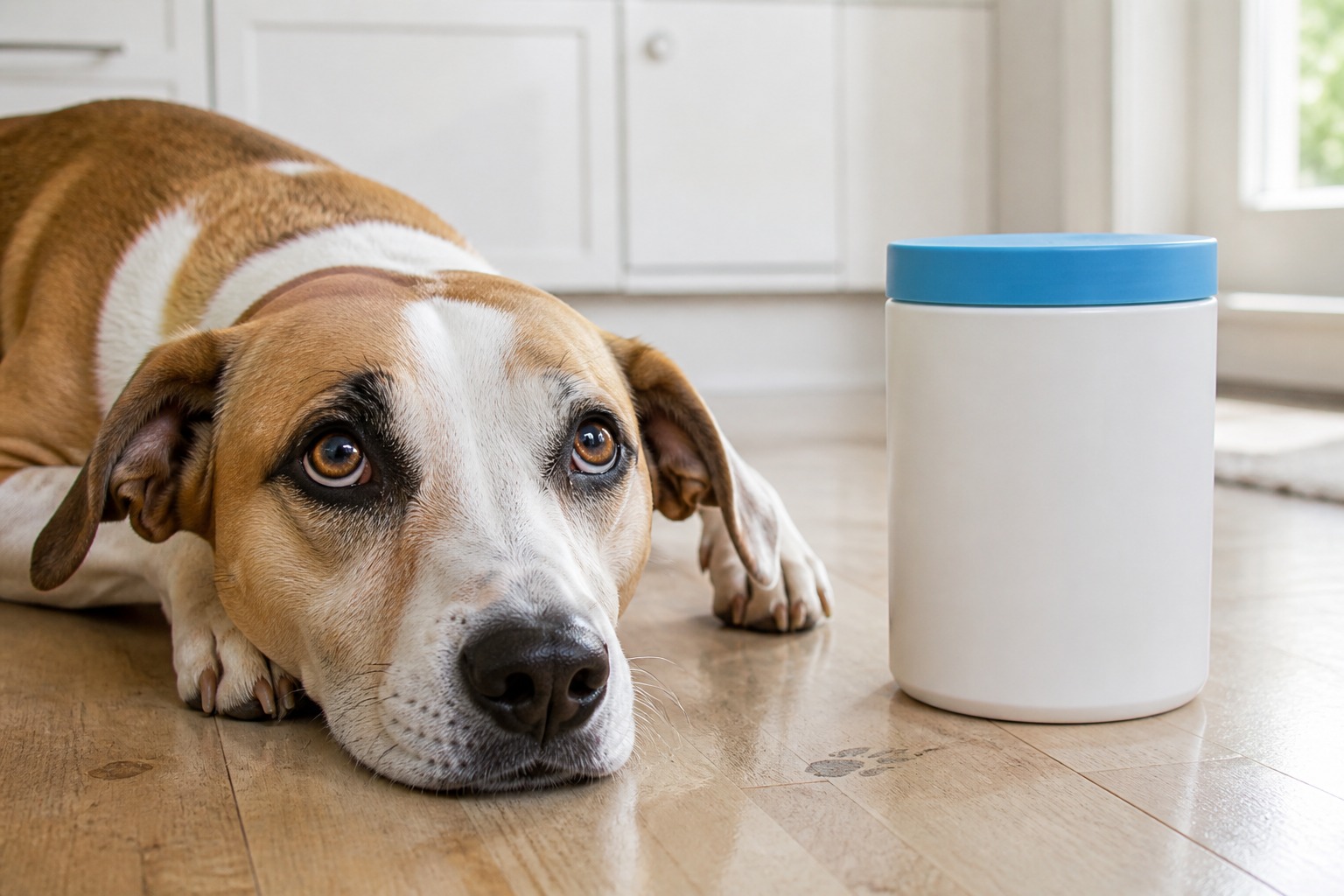

Microchipping your dog sounds a little alarming the first time you hear it described. The idea of putting a piece of technology inside a living creature naturally raises visions of surveillance and tracking. Set that image aside, because it is wrong. There is no 1984 here, no monitoring, no signal beaming your dog’s whereabouts to anyone. A microchip is a simple, low-tech tool with one job: to give a lost dog the best possible chance of getting back to you.
That job matters most on exactly the days you would not think to worry. Loud holidays like the Fourth of July send frightened, disoriented dogs bolting in search of safety, and shelters fill with strays in the days that follow. You can, and should, take steps to keep an anxious dog secure when the fireworks start. But if the worst happens and your dog slips away, a microchip is the thing that quietly does the work of bringing them home. And as you will see, it works far better than most owners realize, provided you handle one crucial detail.
So what actually is a microchip?
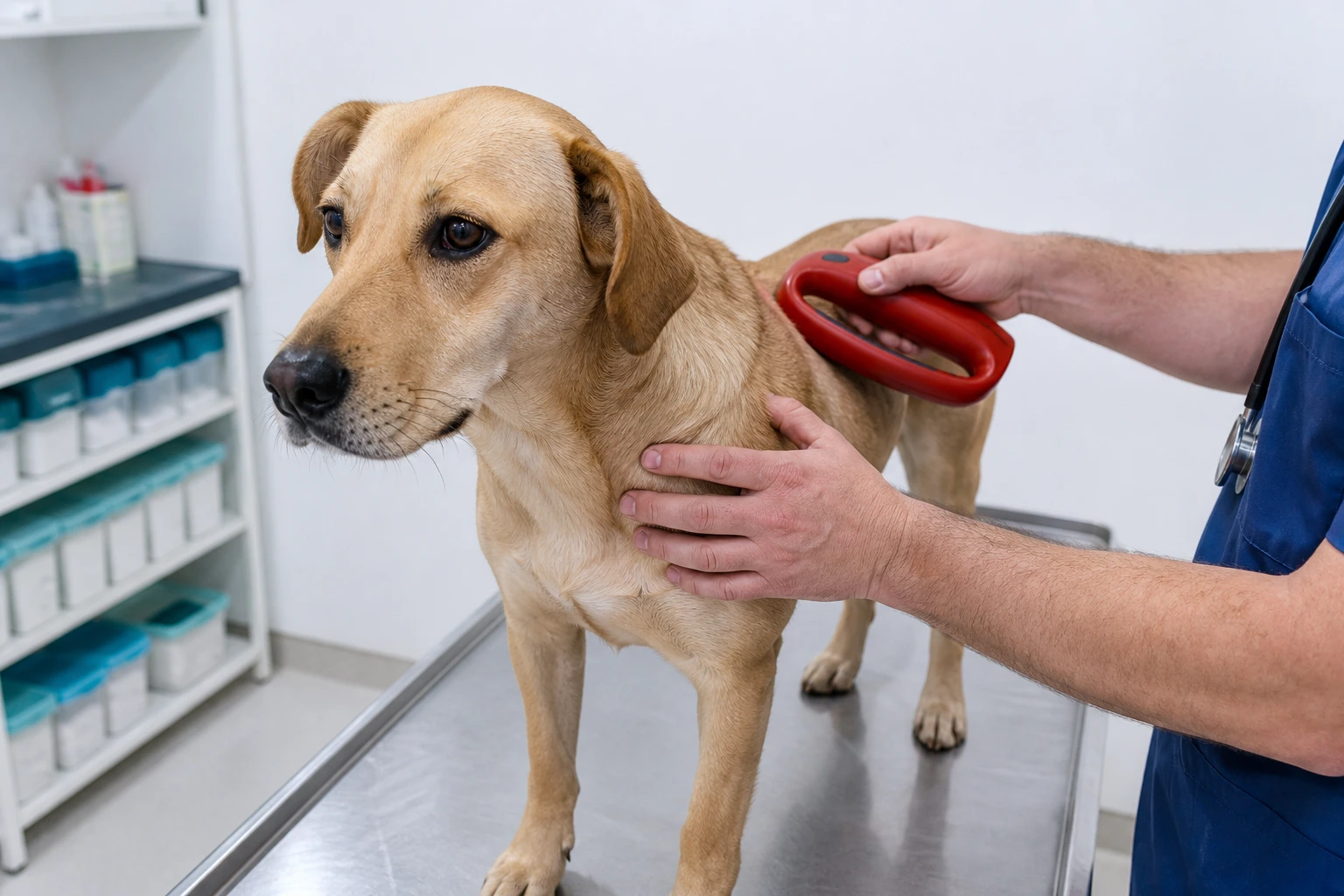
A microchip is a tiny capsule, about the size of a grain of rice, holding a radio-frequency identification transponder. A vet injects it under the loose skin at the back of your dog’s neck, and the whole thing feels about like a vaccination. To be crystal clear about what it is not: it is not GPS. It has no battery, needs no signal, and does not transmit anything. It simply sits there, holding an identification number that a scanner can read.
The American Kennel Club puts the GPS-versus-chip question well, noting that the two are complementary rather than interchangeable. A GPS device may tell you where your dog is, but it cannot hand your contact information to a stranger who has found your dog. The chip does precisely that.
Why it is worth it: the benefits
It brings them home. This is the whole point. Because the chip links to your contact details, almost any vet clinic or shelter can scan a found dog, pull up the number, and reach you. Microchipped dogs are meaningfully more likely to be reunited with their families than unchipped ones.
The information lives on a national database. Everything you register, phone number, address, email, sits in a national database, such as the American Animal Hospital Association’s Universal Pet Microchip Lookup Tool. So even if your dog decides to imitate a gap-year backpacker and turns up two states away, the trail still leads back to you.
It cannot be lost. Unlike a collar or a tag, a chip cannot slip off, break, or be pulled free. It stays put and can only be removed by a veterinarian. Wherever your dog ends up, any shelter, rescue, or vet can find and read it.
It protects against theft. Nobody wants to imagine their dog being stolen, but it happens, and cuteness has a cost. If you ever need to prove a dog is yours, the chip is decisive. One scan at a vet’s office, and you are on your way home with your pup.
It is quick and inexpensive. The procedure takes only a couple of minutes and averages around $50. There may be registration fees depending on the service you use, but they will not break the bank.
The one thing that makes or breaks it
Here is what a lot of guides skip, and it is the difference between a chip that works and one that does not: the chip is only as good as the contact information attached to it. This is not a small caveat. It is the single biggest reason chipped dogs still fail to make it home.
“The chip itself almost never fails. What fails is the registration behind it,” says Dr. Ravi Mehta. “I have scanned plenty of lost dogs, found a perfectly good chip, and hit a dead end because the phone number was from three moves ago. Register the chip the day it goes in, and update it every single time you change your address or your number. That five-minute task is what actually gets your dog home.”
The research backs this up bluntly. In a landmark study of more than 7,700 stray animals published in the Journal of the American Veterinary Medical Association, dogs without microchips were returned to their owners about 21.9 percent of the time, while microchipped dogs were returned 52.2 percent of the time, more than double the odds. But the same study found the usual reason a chipped animal did not get home was incorrect or missing owner information in the registry. Of the animals whose chips were traced to a registry, only about 58 percent were actually registered with usable details. In other words, the technology delivers, but only if you keep your end of it current.
What newer research adds
The core finding, that a registered chip roughly doubles a dog’s chance of getting home, has held up and shaped how shelters operate today. Many shelters and clinics now promote “check the chip” habits, scanning found pets thoroughly and reminding owners to keep registrations updated, precisely because the weak link was never the hardware but the paperwork. Some registries have also made it easier to update your details online and now send periodic reminders to confirm your information is current. The takeaway for you is simple and unchanged: getting your dog chipped is one of the highest-value, lowest-cost things you can do for their safety, and registering and maintaining that chip is what turns it from a good intention into a dog who actually comes home. If your dog is chipped but you cannot remember the last time you checked the registration, that is today’s five-minute project. If they are not chipped yet, ask your vet at the next visit.
References
- Lord, Linda K., et al. “Characterization of Animals with Microchips Entering Animal Shelters.” Journal of the American Veterinary Medical Association, vol. 235, no. 2, 2009, pp. 160–167, pubmed.ncbi.nlm.nih.gov/19601734.
- American Animal Hospital Association. “Universal Pet Microchip Lookup Tool.” AAHA, www.aaha.org/your-pet/pet-microchip-lookup.
- American Veterinary Medical Association. “Microchipping of Animals.” AVMA, www.avma.org/resources-tools/pet-owners/petcare/microchipping-animals.