


Your Kid Wants a Dog. The Data Says Give In, Especially for Daughters.
A study of 600 children found getting a dog measurably boosted daily activity, with the biggest jump in girls. Here's what the numbers actually showed.

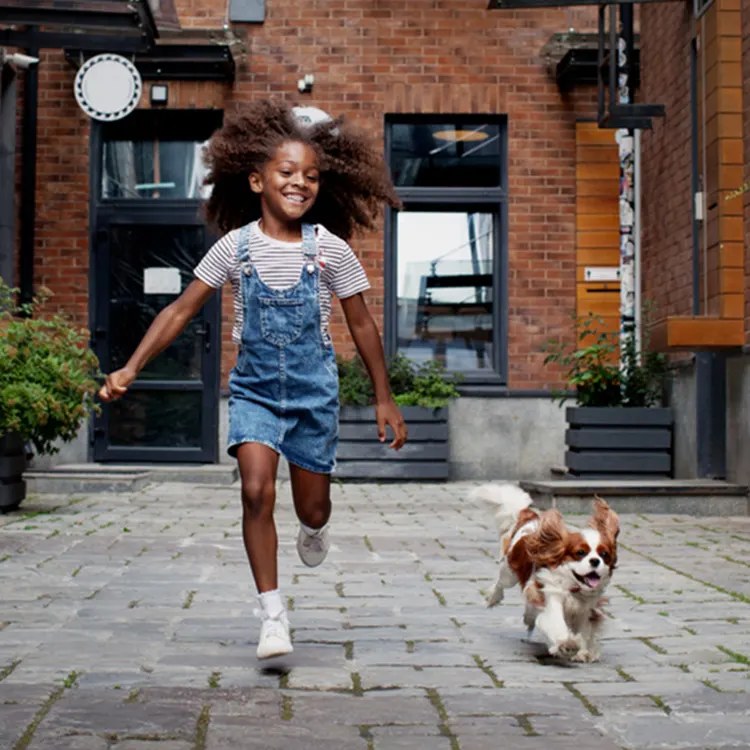
Every parent who has held the line against a dog knows the arguments by heart. She’s too young to care for it. You’ll end up walking it. Ask again when you’re older. It’s a reasonable position, right up until your kid produces actual scientific evidence. Because it turns out the pleading child has a study on her side, and if that child is a daughter, the study is pretty compelling.
The short version: getting a dog appears to make kids meaningfully more physically active, and the effect is strongest in girls. That’s not a warm anecdote. It’s a measured result, and the numbers are worth seeing before you say no again.
What the researchers tracked
The study, part of an Australian project called the PLAYCE cohort, followed 600 children over several years, from ages two to five at the start to five to eight by the end. Rather than rely on parents’ impressions alone, the researchers combined parent questionnaires with direct monitoring of the kids’ movement, capturing how fast they moved and how long they stayed active. That mix matters, because it turns “she seems to run around more” into hard data.
The design also had a natural experiment built in. The 600 kids fell into four groups: 204 who had a dog the whole time, 307 who never had one, 58 who got a dog partway through, and 31 who sadly lost one along the way. Watching what happened when a dog entered or left a child’s life is what makes the findings persuasive.
The numbers, and why girls stand out
The pattern was clean and symmetrical. Gain a dog, and a child’s activity rose. Lose one, and it fell. And the swing was biggest for girls.
Girls who gained a dog logged about 52 minutes more of light activity and play per day than before. Girls who lost a dog dropped roughly 62 minutes of that daily activity. That’s not a rounding error; it’s close to an hour of movement hinging on whether a dog is in the house. Boys benefited too, growing more active over the study overall, with a clearly larger increase among boys who had a dog than those who didn’t. But the standout headline is the girls.
Why does that matter more than it might sound? Because girls, on average, get less physical activity than boys and often fall short of what experts recommend for healthy development. A change that adds nearly an hour of daily movement lands hardest exactly where the gap is widest. For a generation of kids who can lose an afternoon to a screen without noticing, a dog is a surprisingly effective reason to put the phone down and go outside.
What’s striking about this is that it’s not exercise the kids are forced into, it’s play they choose. A dog turns ‘go get some activity’ into ‘go have fun,’ and that reframing is why it sticks, especially for girls who might dread a structured workout.
The bigger picture for kids and dogs
We’ve long known dogs are good for grown-ups’ health, but research on how they affect children’s health has been thinner, which is part of what makes this study useful. And physical activity is only one thread. Growing up with a dog has been linked to fewer allergies and to mental-health benefits, including lower anxiety, a real consideration at a time when childhood anxiety has been climbing. So while a dog is not a cure-all, the case for one keeps getting stronger the more researchers look.
None of this means every family should run out and adopt, or that a dog is the reason a kid should want one. (If health were the motivator, children would be demanding broccoli.) But when your daughter argues that a dog would be good for her, she is, it turns out, correct on the merits. The evidence is on her side.
What’s new since this was written
The PLAYCE findings have held up as part of a growing evidence base connecting pets to children’s development. Follow-on work from the same broad research effort has continued to link dog ownership and dog-related play with healthier movement patterns in young children, reinforcing that the effect isn’t a fluke of one dataset.
The practical takeaway for parents is worth stating plainly, though. The activity boost comes from involvement, not mere ownership, kids who actually walk and play with the dog are the ones who move more. A dog parked in the backyard won’t do it. If part of the goal is getting your child moving, build their participation into the deal from day one: their walk to help with, their game of fetch, their share of the fun. That’s where the 52 minutes come from.
References
- Longitudinal effects of dog ownership, dog acquisition, and dog loss on children’s movement behaviours: findings from the PLAYCE cohort study. International Journal of Behavioral Nutrition and Physical Activity, 2024.
- Pet Dogs and Children’s Health: Opportunities for Chronic Disease Prevention? Preventing Chronic Disease, CDC.
- How Much Physical Activity Do Children Need? Harvard T.H. Chan School of Public Health, The Nutrition Source.
Common questions
Why did girls benefit more than boys?
The study found the activity boost was especially pronounced in girls. Girls who got a dog added about 52 minutes of light activity and play per day, a striking jump. Boys got more active too, but the effect was largest for girls, who tend to be less active than boys overall.
What kind of activity did the dog encourage?
Mostly light-intensity movement and unstructured play, walking the dog, throwing a ball, chasing around the yard, rather than formal sports. Both girls and boys who got a dog logged several more bouts of spontaneous physical activity per week.
Are there other health benefits of a dog for kids?
Research links growing up with dogs to reduced allergy risk and mental-health benefits, including lower anxiety. The activity boost is one clear, measurable piece of a broader picture of how dogs support kids' wellbeing.
Claire Sutton writes about life with pets, from the first days home to the small daily routines that make a household work. Her reporting spans people-and-pet relationships, training basics, and the practical side of bringing a new animal into the family.
Meet our experts ↗Keep reading
 LivingYou're the One With Separation Anxiety. Here's the Way Out.Dr. Nina Kohl · 6 min
 Health & WellnessYou and Your Dog Are Swapping Microbes. It Might Be Good for Both of You.Dr. Mara Chen · 6 min
 LivingA Dog Costs More Than a Used Car. Where You Live Swings It by $10,000.Marcus Webb · 7 min
 LivingYour Dog Isn't Getting Sweeter in Winter. They're Getting Cold.Dr. Lena Park · 7 min
 LivingShe Came Home to a Box of Ashes. Her Sitter Had 118 Five-Star Reviews.Nina Vasquez · 6 min
 LivingHer Anxious Dog Became the Best Mental-Health Teacher She Ever HadClaire Sutton · 6 min