


Your Dog Listens Great at Home and Ignores You Outside. Here's the Fix.
A dog who nails every cue in the kitchen and goes deaf at the park isn't being stubborn. They're telling you exactly where your training stopped, and how to pick it back up.

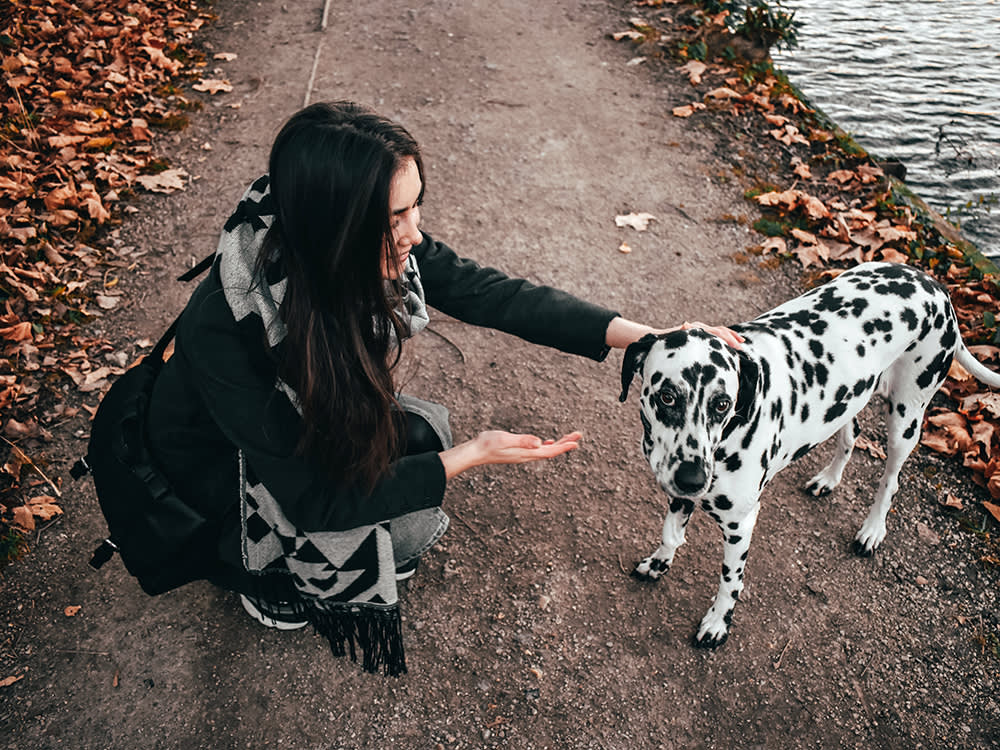
There’s a specific flavor of embarrassment reserved for the dog owner standing in a park, saying “come” for the fourth time, watching their dog sniff a fence post like it holds the secrets of the universe. At home, this same dog is a genius. Sit, down, stay, all flawless. Outside, they act like they’ve never met you.
It’s tempting to file this under stubbornness, spite, or selective hearing. It’s almost never any of those. A dog who performs at home and stalls in public is giving you a precise diagnostic readout: your training is real, but it only got as far as the easy room. Here’s how to read that and finish the job.
First, rule out that they genuinely can’t comply
Before you assume it’s a training gap, spend a week ruling out that it’s something else. A dog who has recently stopped responding, especially a senior, may not be ignoring you so much as failing to hear you. Age-related hearing loss and ear infections are common and easy to miss. Pain is the other quiet culprit: a dog with sore hips or a stiff back may hesitate on a “come” or a “sit” outdoors on hard ground, not because they’re defiant but because it hurts. If the change was sudden, or it’s paired with any other shift in behavior, appetite, or movement, get a vet to look before you drill any obedience.
When an adult dog suddenly stops responding to cues they used to know cold, my first assumption is never attitude, it’s access. I want to know whether the dog can still hear me, whether something hurts, and whether the word I’m using still means what I think it means. Fix those three things and most ‘stubborn’ dogs turn out to be perfectly cooperative.
Once a dog is healthy and can clearly hear you, everything below applies.
Behavior is an economy, and you set the exchange rate
A dog does a behavior as often as that behavior has paid off. That’s it. If “come” has been rewarded hundreds of times, it’s a reliable habit. If it’s been rewarded a dozen times, it’s a suggestion. Most home-only dogs simply have a thin payment history, and it’s thinnest exactly where it’s tested hardest.
So the fix starts with volume. Go back to basics and reward generously, at home first, for the cues you actually care about outside. You’re not bribing; you’re building the balance you’ll draw on later when a squirrel is offering a competing deal.
Train where it’s hard, not just where it’s easy
Here’s the trap: your living room is the easiest classroom on earth. Familiar smells, no distractions, nothing to chase. A dog can look perfectly trained there and have no idea how to do the same thing when the world gets loud. If you only ever practice at home, you get a dog who is brilliant at home.
The bridge is deliberately practicing in gradually harder places. Your front step. The quiet end of the driveway. A calm sidewalk. A busier one. Each new environment is essentially a new class the dog has to pass, and you make it passable by bringing the rewards up as the difficulty goes up. Skipping straight from the kitchen to a crowded dog park is like testing a kid on multiplication after teaching only the two times table.
Outbid the environment
Outside, you are not the only thing offering your dog something good. New smells, other dogs, kids, birds, and half a sandwich in the gutter are all competing for their attention, and they’re genuinely exciting. To win, you have to be worth more than the distraction in that moment.
That means your rewards have to scale with the setting. The dry biscuit that thrills your dog on the couch may be worthless next to a fascinating hydrant. As the environment gets harder, the pay has to get better: small bits of real protein, a little cheese, a piece of hot dog. Keep a couple of different high-value options on hand so you always have something more interesting than what your dog is currently staring at. You’re not trying to compete with the whole world forever, just long enough to build the habit of choosing you.
Clean up your cues before you blame your dog
A huge amount of “not listening” is actually confusion. If you say “sit” and your dog doesn’t move, and you say “sit, sit, siiit” until it finally happens, you haven’t trained “sit.” You’ve trained “sit after the third or fourth try.” Then you’re baffled when a single, calm “sit” outdoors does nothing.
Trainers call a word that’s been muddied this way a poisoned cue: the signal has come to mean something vague, or has been paired with nagging and frustration, so the dog tunes it out. The fix is discipline on your end. Say a cue once. If your dog responds, reward immediately. If they don’t, don’t repeat it into meaninglessness. Reset, make it easier, and rebuild until one clear cue reliably gets one clear response. Cleaning up your signals often does more for outdoor reliability than any amount of extra drilling.
Pay for the check-in, not just the command
The single most useful thing you can reward outside isn’t a formal cue at all. It’s the moment your dog voluntarily glances back at you. Every time your dog looks up to see where you are or what’s next, mark it (“yes” or “good”) and reward it. You’re teaching them that keeping tabs on you is worth their while, and a dog who naturally checks in is a dog who is far easier to call, redirect, and keep safe. This is the quiet engine under a great recall.
Stop poisoning the one cue that matters most
Finally, protect your recall. Think about it from the dog’s side. They’re having the best afternoon of their life rolling in grass and chasing bugs, you call “come,” and the reward for obeying is that the fun ends, they get clipped to a leash, and go home. Do that enough times and a smart dog learns that coming to you is how good things stop.
So make coming to you the best deal on offer, not the worst. Reward it lavishly every single time, even when you’re frustrated, and don’t let “come” always predict the end of freedom. Call your dog, pay them well, and sometimes just let them go back to playing. Keep that account full and, over time, you get the dog who turns on a dime in a field full of distractions, which is the whole point of all of this.
Dr. Kohl is a board-certified veterinary dentist with a particular interest in preventive oral care. She reviews all dental health content at The Pet Times and contributes practical guides on home dental routines, professional cleaning, and oral disease prevention.
Meet our experts ↗Keep reading
 TrainingYour Dog's Side Should Be the Best Seat in the HouseDr. Nina Kohl · 8 min
 TrainingNo Dog Is "Untrainable." Some People Just Quit.Dr. Nina Kohl · 8 min
 TrainingYour Dog Doesn't Fail at Restaurants. They Fail in the First 90 Seconds.Dr. Nina Kohl · 7 min
 TrainingStop Punishing Your Puppy. It's Backfiring.Dr. Amara Solis · 9 min
 TrainingThat Bootie Wobble Isn't Funny. You Just Blindfolded Their Feet.Dr. Nina Kohl · 8 min
 TrainingYour Dog Isn't Giving You a Hard Time. They're Having One.Dr. Nina Kohl · 7 min