


Your Dog's Side Should Be the Best Seat in the House
Heel isn't a command you enforce, it's a spot you make worth choosing. Build a paycheck zone at your knee and the pulling, lunging, and zig-zagging start to fix themselves.

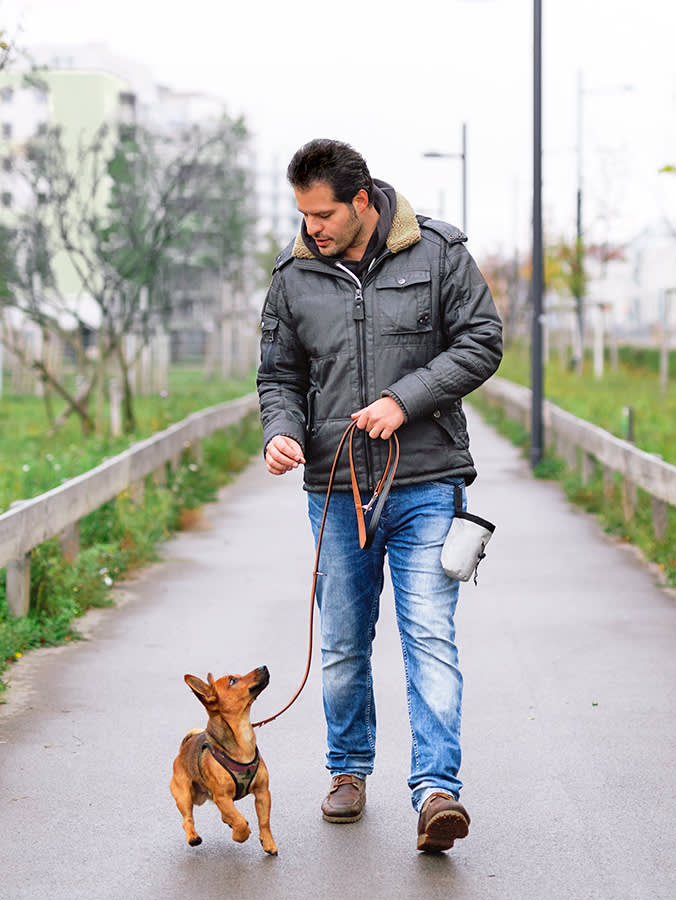
Most people teach heel as if it were a tug of war they need to win. They shorten the leash, brace their arm, and try to physically hold a squirming dog in place. It works for about four seconds. Then the dog leans, the human leans harder, and the walk becomes a slow negotiation between two frustrated mammals.
Here is the reframe that changes everything: heel is not a position you force your dog into. It is a location you make so rewarding that your dog decides, on their own, that it is the best place to be. Get that idea right and the leash almost stops mattering.
What heel actually asks of your dog
In plain terms, heel means “walk close by my side, shoulder near my leg, until I tell you the job is done.” It is tighter and more formal than ordinary loose-leash walking. You use it for the moments that need precision: threading through a crowd, holding at a curb, passing another dog on a narrow path, greeting a small child or an unsteady older person.
What matters is that heeling is not natural. A dog left to their own devices does not trot politely at your knee, because there is nothing in it for them out there in the wide, sniffable world. So the behavior has to be built, deliberately, in short bursts, and it has to pay.
Heel is the one cue where I tell owners to stop thinking like a boss and start thinking like an employer. Your dog will happily clock in at your side, but only if the wages are good and the shifts are short. Underpay them and they quit, which is what pulling really is.
Build a paycheck zone, not a prison
Watch your dog off leash in a calm room and you will notice they already have a favorite spot near you. Maybe it is in front, facing you. Maybe it is a step behind. Trainers call that the reinforcement zone, the place your dog drifts to because good things tend to happen there.
The entire method is moving that zone to your side. You are not correcting your dog out of the wrong place. You are making a new place pay so consistently that your dog relocates their whole expectation of good fortune to your knee.
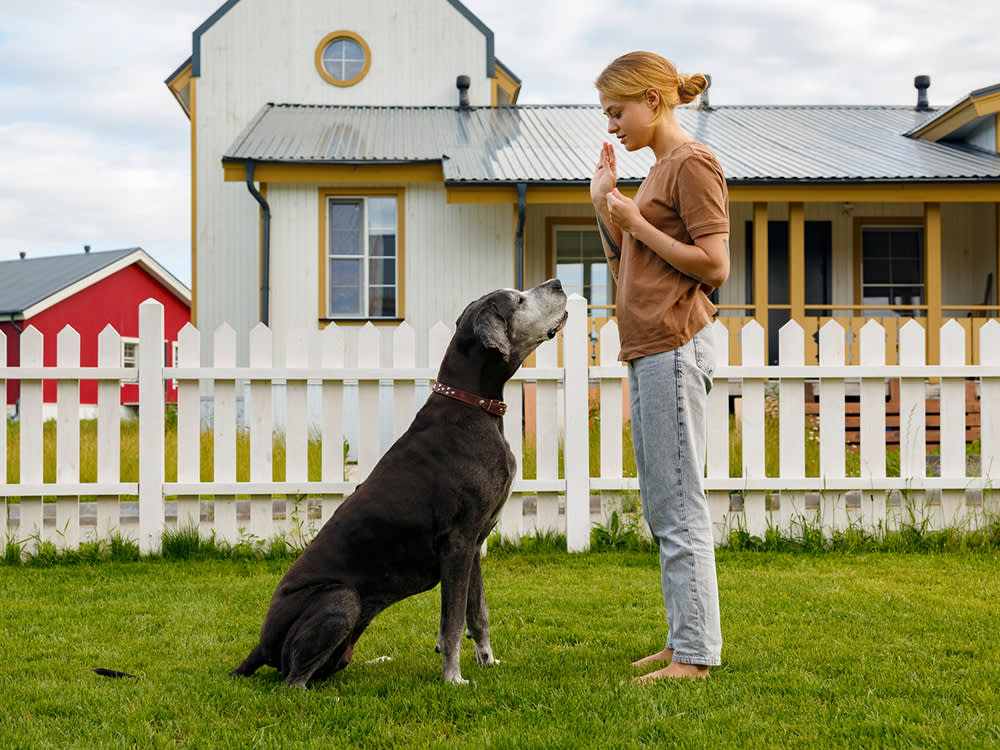
Start with no leash at all. In a hallway or fenced yard, walk in loops, say your dog’s name, and point to the side you want them on. Left is the classic choice, but pick one and stick with it. The moment your dog arrives, mark it with a quick “yes” and hand over a treat. Keep going. Within a session or three, most dogs start hovering at your leg like it is a vending machine.
Reward from the correct hand. Feed with the hand nearest your dog, delivered low, roughly where their nose would be at your hip. Feeding across your body drags the dog in front of you and teaches a crooked, wrapped-around position you will have to untangle later.
Anchor the whole thing with a sit. Have heel begin and end in a sit at your side. Since most dogs would rather swing around and face you, you move to them: cue the sit, then step alongside so you finish parallel and pointed the same direction. Feed a few treats in a row from the hip so your dog learns that looking up at you sideways, from right there, is where the money is.
Add the leash last, and keep it loose
Only once your dog is choosing your side without a leash do you clip one on, and even then it changes nothing about the job. Loop the handle over your non-dominant wrist so both hands are free to mark and feed. Let the line hang in a soft smile of slack.
Think of the leash as a seatbelt. It exists for safety if something goes wrong. It is not the steering wheel, and the second you start driving your dog with it, you have told them the position is your responsibility, not theirs.
Walk five to ten steps, reward your dog for staying with you, end in a sit, reward again, then release with a word like “free” or “break” so they can go sniff and decompress. That release is not a loophole. It is part of the deal, and for many dogs the freedom to be a dog again is as valuable as the treat.
Take the show on the road
When your dog nails heel indoors nine times out of ten, move outside to the quietest spot you have, then add difficulty one dial at a time: a little more duration, a little more distance, a little more distraction. A backyard is easier than a sidewalk, which is easier than a park at 5 p.m.
Once the basics are solid you can layer on the useful stuff, like sudden stops and direction changes so your dog learns to track your movement instead of coasting on autopilot. Keep early outings in busy places short, because a dog who is over their head stops learning and just gets overwhelmed.
When it wobbles, look here first
Heel falls apart in a handful of predictable ways, and almost all of them are about the payment plan, not your dog’s character.
If your dog forges ahead, the side has not become valuable enough yet. If they are too wired to focus, train after exercise or in a calmer setting. If the behavior is fading, your rewards have probably gone stale, delayed, or too rare, and heel is only worth what you pay for it. If your dog keeps sitting crooked, back up a step and practice moving into position beside them for a while. And if they tangle in the leash, tighten up your own mechanics before you blame theirs.
A fun test of a strong heel: ask a friend to call your dog while they are working at your side. If your dog holds, you will both feel it. If they break, you have just found your next practice session.
What newer research adds
The old-school way to stop pulling was to make the wrong thing hurt, with a jerk of the leash or a pinch of a prong. The trend in modern training runs the opposite direction, and the science backs it. A 2020 study in PLOS ONE comparing reward-based and aversive-based training found that dogs trained with punishment showed more stress behaviors and more pessimistic responses on a follow-up test, while reward-trained dogs stayed calmer and more optimistic.
The takeaway for heel is simple and hopeful. You do not have to win a fight with your dog to get a beautiful, close, willing walk. You just have to make your side the best-paying job in town, keep the sessions short, and let the leash go quiet. Pulling, as it turns out, is usually just enthusiasm with nowhere better to point it.
References
- Vieira de Castro, A. C., et al. “Does Training Method Matter? Evidence for the Negative Impact of Aversive-Based Methods on Companion Dog Welfare.” PLOS ONE, vol. 15, no. 12, 2020. journals.plos.org
- Carson, Joanne, and Lois Coryell. Dog Obedience Lesson Plans for Novice Training. Oregon State University, 1998. ir.library.oregonstate.edu
- “Dog Training: How to Structure a Beginner’s Obedience Class.” Michigan State University Extension. canr.msu.edu
Dr. Kohl is a board-certified veterinary dentist with a particular interest in preventive oral care. She reviews all dental health content at The Pet Times and contributes practical guides on home dental routines, professional cleaning, and oral disease prevention.
Meet our experts ↗Keep reading
 TrainingStop Punishing Your Puppy. It's Backfiring.Dr. Amara Solis · 9 min
 TrainingAnti-Bark Devices Don't Stop Barking. They Punish a Sentence You Can't ReadSasha Ford · 7 min
 TrainingYour Dog Isn't Being Bad at the Door. They're Winning a Game You Keep Playing.Dr. Nina Kohl · 6 min
 TrainingEveryone in Your Life Is Quietly Undoing Your Dog's TrainingDr. Nina Kohl · 8 min
 TrainingThe Underused Trick That Keeps Your Puppy Out of TroubleJordan Ellis · 7 min
 TrainingYour Dog Pulls Because Pulling Works. Stop Paying for It.Dr. Mara Chen · 6 min