


Your Dog's Butt-Licking Isn't Gross. It's a Status Report You Should Read.
A little rear-end licking is normal dog hygiene. A lot of it is your dog telling you something is wrong down there, from anal glands to parasites to, rarely, something serious. Here's how to tell which is which.

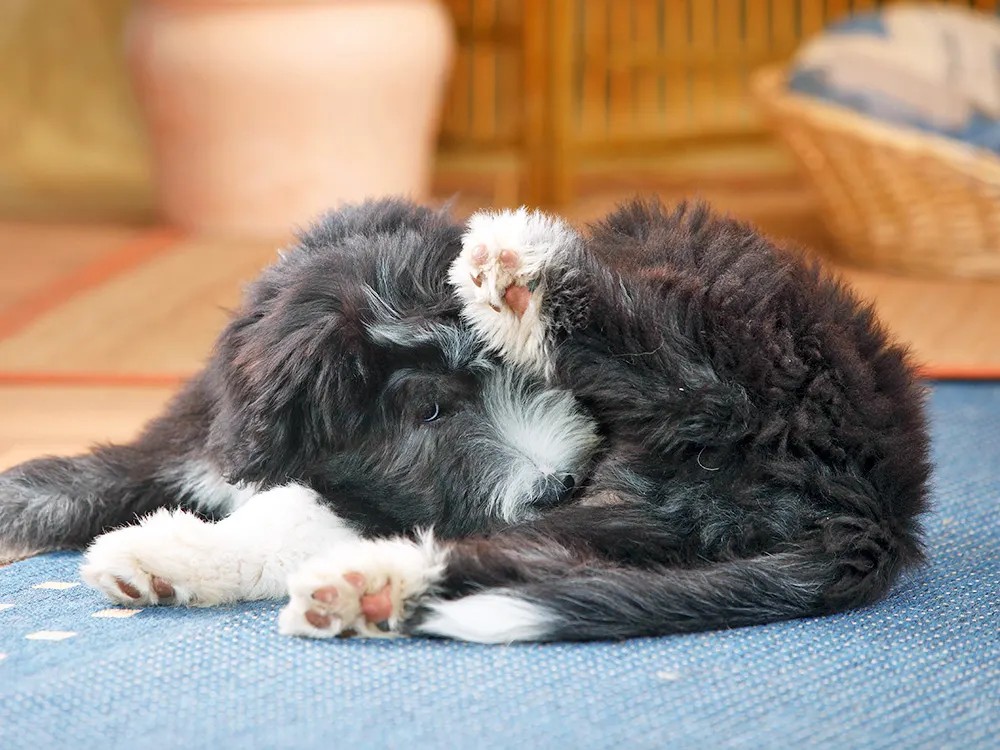
Every dog owner has lived this moment. You’re mid-conversation with guests when your dog wanders in, settles into the middle of the room, and begins loudly grooming their rear end. It feels like a personal attack. It isn’t. Your dog holds no grudge, and the behavior is almost always either routine hygiene or a signal that something back there needs attention.
The useful skill isn’t stopping the licking. It’s learning to read it. A dog’s rear end is a surprisingly honest early-warning system, and the difference between “normal” and “get this checked” is mostly a matter of degree.
The normal version
Start with the reassuring truth: every dog does this. It’s ordinary self-cleaning, and while grooming that end may seem to defeat the purpose, it’s a standard part of being a dog. An occasional session is nothing to worry about and nothing you can really train away. Live-and-let-live is the right policy here.
What changes the picture is frequency and intensity. When the licking becomes a habit, or arrives with irritation, redness, or other signs, it stops being grooming and starts being a message.
What the licking can be telling you
Anything involving the anus or the genital area can drive a dog to lick. The common culprits, roughly from most to least frequent:
Anal gland trouble. A dog’s anal glands sit just inside the rectum and produce a thick, pungent fluid that scent-marks their stool. When those glands get clogged, infected, or, rarely, cancerous, they cause real discomfort. Dogs try to relieve that pressure by licking and by dragging their rear across the floor.
Parasites. Internal and external hitchhikers are, at minimum, deeply irritating. Tapeworm segments pass out through the anus and lodge in the fur, and fleas love to nest at the base of the tail. Either gives a dog a reason to keep working the area.
Allergies. Food and environmental allergies make dogs itchy all over. Many allergic dogs famously lick their paws, but the itch can land anywhere, the rear included. Look for red, inflamed skin and patchy hair loss as supporting clues.
Infections. A urinary tract infection or a bout of nasty diarrhea can leave the whole region sore and inflamed, and a dog will lick to soothe it. Watch for company signs like frequent urination, blood in the urine, diarrhea, vomiting, or a dog going off their food.
Something more serious. Less commonly, tumors in the rectum, anus, or anal glands create discomfort a dog tries to lick away. Perianal fistulas, polyps, strictures, tears, and hernias can all do the same by producing a lump, bump, or opening around the anus.
One important wrinkle: what looks like butt-licking is sometimes genital licking. The two sit close together, and mistaking one for the other points you at the wrong list of causes. When in doubt, that’s a job for a vet rather than a guess.
The line between “leave it” and “look into it”
Here’s the practical threshold. A little attention to that region is expected and fine. The moment to act is when your dog would rather lick their rear than chase a ball, take a walk, or eat dinner. Licking that grows more frequent or more intense is the signal that something is irritating or hurting the anus, rectum, anal glands, or genitals, and occasionally it flags a digestive problem or an allergy instead.
If you cross that line, do a gentle check first. Enlist a helper to hold your dog, raise the tail, and scan the skin for anything raw, swollen, or lumpy. Jot down any other signs, diarrhea, frequent urination, itchiness, scooting, which give you and your vet more to work with.
Then loop in your vet regardless of what you find, because most of these causes can’t be fixed at home. Expect the vet to begin by examining the outside of the anus and genitals, then, with a gloved finger, assessing the anal glands and feeling inside the rectum for any masses. Depending on what turns up, they may add bloodwork, imaging, a urinalysis, or a fecal test.
The behavior itself is rarely the problem. It’s the messenger. A dog who suddenly can’t leave their rear alone is usually uncomfortable, and our job is to find out why rather than tell them to stop.
Treatment follows the cause. That might mean expressing or treating infected anal glands, a course of antibiotics for a urinary infection, gut-settling support for a digestive flare, antihistamines or a food change when allergies are behind it, and dewormers or flea treatment for parasites. Cancers, polyps, and fistulas may call for surgery plus additional therapy.
The one-line takeaway
Occasional rear-end licking is your dog keeping clean. Sudden, obsessive licking is your dog telling you to look closer. You don’t have to enjoy the behavior. You just have to notice when it changes.
References
- Rubin, Stanley I. “Disorders of the Rectum and Anus in Dogs.” Merck Veterinary Manual, Sept. 2024. https://www.merckvetmanual.com/dog-owners/digestive-disorders-of-dogs/disorders-of-the-rectum-and-anus-in-dogs
Common questions
When should I take my dog to the vet for excessive licking?
If the licking is more frequent or more intense than usual, if your dog would rather lick than eat, walk, or play, or if you notice sores, lumps, swelling, discharge, diarrhea, or frequent urination, see your vet. Most underlying causes can't be treated at home even once you spot them.
Could my dog be licking their genitals instead of their anus?
Often, yes, and it matters. What looks like butt-licking is sometimes genital licking, which points to a different set of causes such as a urinary tract infection. That's one reason a vet exam is worth it rather than guessing.
Not a substitute for your vet. Our guidance is educational. For urgent symptoms, contact a vet or emergency clinic right away. Editorial standards
Dr. Park is a board-certified emergency and critical care specialist. She reviews our health and safety content for clinical accuracy and contributes guides on recognising urgent conditions. Her focus is helping owners act quickly and correctly when it matters most.
Meet our experts ↗Keep reading
 Health & WellnessHot Spots Are Wounds Your Dog Builds Themselves. Stop the Machine.Dr. Nina Kohl · 9 min
 Health & WellnessHer Dog Collapsed on the Sidewalk. What Looked Like a Stroke Usually Isn't.Dr. Ravi Mehta · 8 min
 Health & WellnessLyme Doesn't Announce Itself. It Fakes a Limp Months Later.Dr. Ravi Mehta · 7 min
 Health & WellnessWhat's Actually in Your Vet's Pain Toolbox (and Why It Isn't in Your Cabinet)Dr. Ravi Mehta · 10 min
 Health & WellnessThat Crunching Sound Isn't a Quirk. It's a Symptom.Dr. Lena Park · 5 min
 Health & WellnessYes, Dogs Get STDs. No, They Don't Have to Mate to Catch Them.Dr. Mara Chen · 8 min