


Most Dog Hair-Loss 'Remedies' Treat the Wrong Thing
Coconut oil and apple cider vinegar are all over the internet as fixes for a dog's thinning coat. The trouble is, hair loss is a symptom, not a disease, and the popular home remedies mostly polish the coat while ignoring what's pulling it out.

Type “dog hair loss home remedy” into any search bar and you will get a tidy list: coconut oil, apple cider vinegar, oatmeal baths, a spoonful of this, a supplement of that. None of it is exactly wrong. Most of it is also beside the point.
Here is the reframe that changes how you handle a thinning, patchy, or shedding-too-much dog. Hair loss is not a disease. It is a symptom, the visible end of a chain that usually starts somewhere you cannot see, in the skin barrier, the immune system, the thyroid, or a colony of mites. The popular remedies almost all act on the coat, the very end of that chain. Some of them genuinely help the skin feel better. Almost none of them fix what is pulling the hair out. If you want a dog’s coat back, you treat the cause, not the coat.
Normal shedding versus a real problem
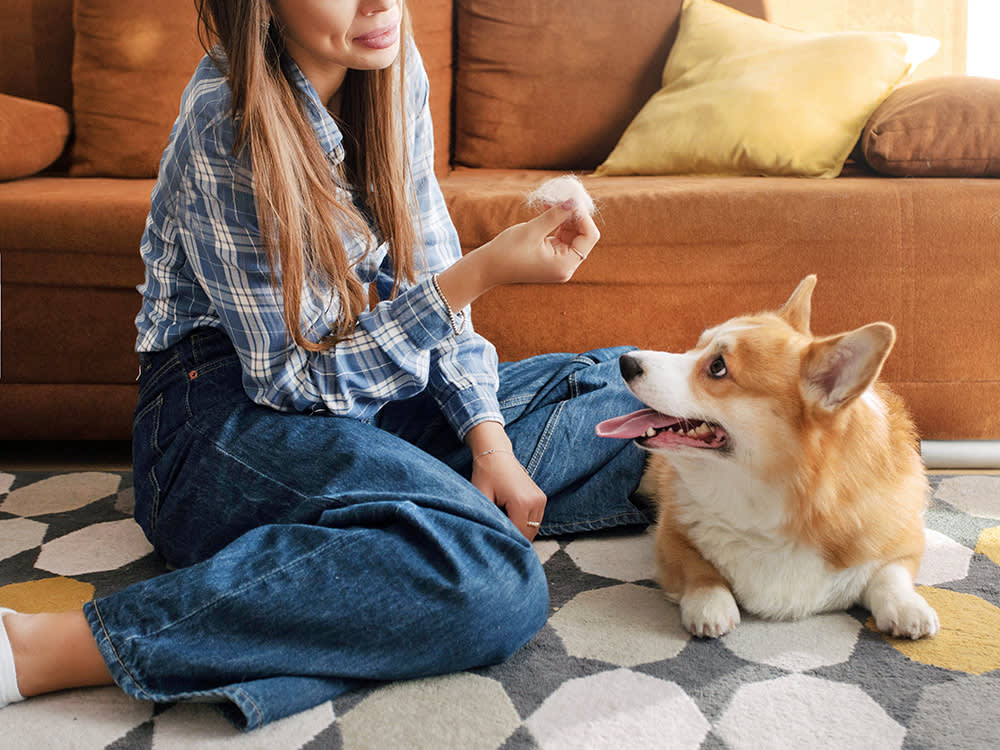
First, calm down about the fur on your couch. Every dog sheds as each hair finishes its life cycle, and that shedding surges in spring and fall as the coat swaps over for the season. A drift of hair on your black pants is not a medical event.
What is not normal is hair coming out beyond that baseline: bald patches, thinning that keeps spreading, symmetrical loss on both flanks, or a coat that looks moth-eaten in the middle of summer. That is the version this article is about, and it is the version no home remedy should be your first move for.
What’s actually pulling the hair out
The clinical word for hair loss is alopecia, and because skin covers nearly the whole dog, an enormous range of problems can announce themselves through it. Knowing the usual suspects tells you why “rub on some oil” so often fails.
Parasites. Fleas and mites set off an itch-scratch-chew cascade that ends in bald spots, often with redness and small bumps. Coconut oil does nothing to a mite.
Infections. The skin hosts a balance of bacteria and yeast held in check by the immune system. When that balance tips, you get itchy, smelly, flaky, or oozy skin with hair loss riding along. That needs an actual antimicrobial, chosen for the actual organism.
Allergies. Pollen, mold, and parasites can drive allergic skin disease so itchy that a dog chews their own hair off. This is the single most common reason for the itchy, hair-losing dog, and it is exactly the case the internet remedies are worst at.
Rashes and sores. Pressure sores on older dogs, insect bites, and embedded foreign bodies create local inflammation and local hair loss.
Genetics. Some dogs are simply built with thin or patchy coat in spots, with perfectly healthy skin underneath. Chihuahuas, Dachshunds, Boston Terriers, and others carry these patterns. Nothing is wrong and nothing needs fixing.
Whole-body disease. The skin answers to hormones. Endocrine diseases like Cushing’s and hypothyroidism cause symmetrical hair loss, sometimes with darkened, thickened patches. No amount of grooming reverses these. They need a diagnosis and medical treatment, full stop.
Grooming. There is even clipper alopecia, where shaved patches on dense-coated breeds like Malamutes, Huskies, and Akitas take an unusually long time to regrow. It looks alarming and resolves on its own.
Look at that list and the pattern jumps out. Only a couple of these respond to anything you can buy without a diagnosis. That is why step one is always the vet, not the pantry.
The mistake I see most is treating the fur when the problem is the itch. A dog isn’t losing hair because their coat is unhealthy. Nine times out of ten the coat is unhealthy because something is making them scratch, and until you find that something, you’re just conditioning the hair on the way out the door.
The home remedies, ranked honestly
Once your vet has ruled out the serious stuff, some at-home care genuinely supports recovery. Here is what is worth your time and what is oversold.
Diet and omega-3s: the one with real evidence
Start with a complete, balanced, highly digestible diet appropriate for your dog’s life stage, because a coat can only be as good as the nutrition building it. On top of that, omega-3 fatty acids are the standout addition, and not just as folk wisdom. EPA, one of the two marine omega-3s, competes with the raw material the body uses to make inflammatory signals, nudging the whole system toward less inflammation; DHA builds into skin-cell membranes and makes the barrier more resilient. Multiple veterinary studies show EPA and DHA reducing inflammation and improving skin in dogs with allergic dermatitis.
The catch, and it is a big one, is dose. Clinical trials use roughly 50 to 220 mg of EPA per kilogram of body weight per day. For a 30-pound dog, that is somewhere around 700 to 1,400 mg of EPA daily. Many “skin and coat” chews contain a small fraction of that, sometimes less than a tenth. So the honest advice is not “give fish oil,” it is “ask your vet for an EPA target for your dog’s weight, then read the label and see whether the product even gets close.” Biotin, zinc, and antioxidant vitamins like E and C can support the coat too, but the omega-3 dose is the lever that actually moves.
Topical treatments: soothing, not curing
For a specific hot spot, coconut oil can be dabbed on and left to soak in; it has mild anti-inflammatory, antifungal, and antibacterial properties and is safe if your dog licks a little. Apple cider vinegar gets far more hype than it earns: it must be diluted, it should be rinsed, it dries the skin and can worsen itch, and it stings on any open sore. For an all-over itchy dog, a gentle oatmeal or colloidal shampoo usually beats spot treatments, as long as you rinse it out completely so it does not dry the skin further. None of this is a cure. It buys comfort while the real treatment works.
Herbal remedies: proceed with caution
The herbal aisle is a mixed bag. Some products are harmless, some are useless, and a few are genuinely toxic if a dog licks them off. Clear anything herbal with your vet before it touches your dog.
Prevention that holds up
Once the skin is healthy again, a few habits keep it that way. Regular brushing collects the hair that would otherwise coat your house, prevents mats and tangles that irritate skin, spreads the skin’s natural oils for shine, and, best of all, gets your hands on your dog’s skin often enough to catch a problem while it is small. Short-haired dogs do fine with a weekly brush; long or thick coats need it every few days. And do not underestimate stress. A dog who cannot cope well can lick and chew themselves into self-inflicted bald patches, so a steady routine of feeding, exercise, play, and mental work through training and puzzle toys is real coat care, not a soft extra.
When newer medicine beats any remedy
For the big, common cause, allergic itch, the last decade has produced treatments that no home remedy comes close to. Targeted medications now interrupt the itch signal itself rather than blanketing the dog in steroids, and they can stop the chewing that drives allergic hair loss within a day. Omega-3s and gentle topicals still have a place, but as add-ons that let a dog get by on less medication, not as replacements for it. If your dog’s hair loss traces back to allergies, the most effective “remedy” is a real veterinary itch plan, with the pantry items in a supporting role.
The bottom line
Dogs lose a little hair all the time and a lot of it seasonally, and none of that needs treating. Hair loss beyond that, especially in patches or with redness, odor, sores, or itching, is a symptom pointing at something underneath, and the fastest route to a full coat is a diagnosis, not a home remedy. Once you know what you are dealing with, correctly dosed omega-3s, good grooming, gentle topicals, and a low-stress routine genuinely help. They just work best as the finishing touches on a fix, not as the fix itself.
References
- Moriello, Karen A., DVM, DACVD. “Hair Loss (Alopecia) in Dogs.” Merck Veterinary Manual, Sept. 2024. https://www.merckvetmanual.com/dog-owners/skin-disorders-of-dogs/hair-loss-alopecia-in-dogs
- Mueller, Ralf S., et al. “Effect of omega-3 fatty acids on canine atopic dermatitis.” Veterinary Dermatology (review of dietary fatty acid supplementation evidence).
Common questions
Is apple cider vinegar safe to put on a dog's skin?
In small, diluted amounts on intact skin, usually. But it can dry the skin out and make itching worse, and it stings badly on any open sore or hot spot. It is one of the more overrated remedies for hair loss, and it is not a substitute for treating the real cause.
Can I give my dog fish oil for their coat?
Yes, and omega-3s are one of the few home additions with solid evidence behind them, but dose is everything. Most clip-and-forget allergy chews contain a small fraction of the amount studies use. Ask your vet for a real EPA target for your dog's weight before assuming a supplement is doing anything.
When should hair loss send us to the vet?
Any hair loss beyond normal seasonal shedding is worth a visit, and it becomes urgent when you also see redness, odor, sores, thickened or darkened skin, or relentless itching, or when home care hasn't helped after a couple of weeks.
Not a substitute for your vet. Our guidance is educational. For urgent symptoms, contact a vet or emergency clinic right away. Editorial standards
Dr. Chen is a small-animal veterinarian who leads health and safety coverage at The Pet Times. She writes and reviews the bulk of our illness, condition, and safety content, translating clinical guidance into clear, practical advice owners can act on at home.
Meet our experts ↗Keep reading
 Health & WellnessMost Home Remedies for Dog Skin Do Nothing. Three Are Worth Keeping in the House.Dr. Nina Kohl · 11 min
 Health & WellnessThose Flakes on Your Dog Aren't Dry Skin. They're a Readout.Dr. Amara Solis · 7 min
 Health & WellnessFifteen Seconds Is Grooming. A Minute Is a Symptom.Dr. Mara Chen · 7 min
 Health & WellnessYour Puppy's Coat Is Going to Change. Here's When to Shrug and When to WorryDr. Mara Chen · 6 min
 Health & WellnessThe Bath Mistake That Ends in a Vet Bill: Letting Your Dog Stay DampDr. Lena Park · 6 min
 Health & WellnessOne Frenchie's Miserable, Itchy Skin Built an Entire Dog-Skincare BrandDr. Mara Chen · 6 min