


Your Dog Has an Ear Infection and Money's Tight. Read This First.
When the vet feels out of reach, the internet hands you a pile of home remedies. The problem is that they only fit one narrow kind of ear infection, and using them on the wrong kind can cost you far more than an exam.

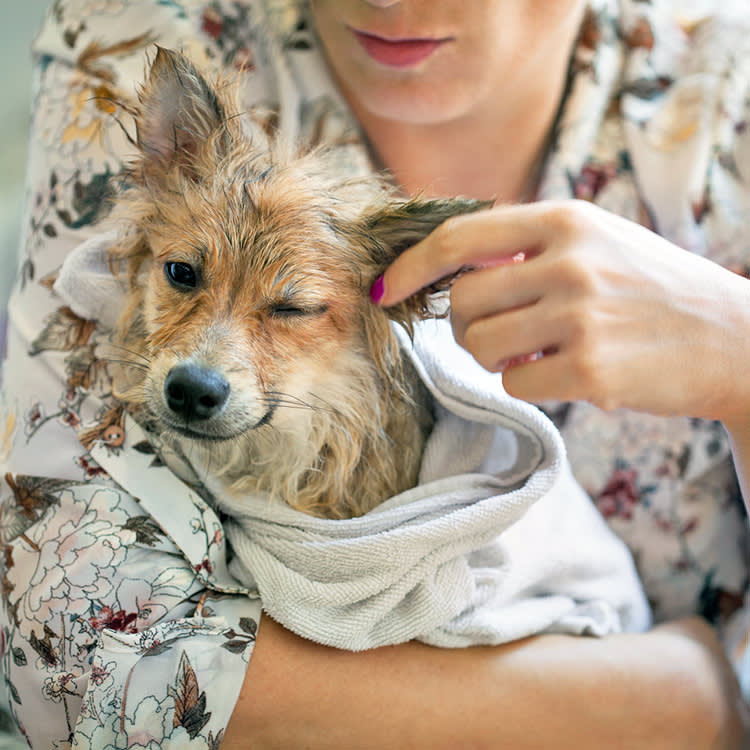
Your dog will not stop shaking their head. The ear smells off, there is gunk in it, and every time you get near it they flinch. You are worried, and you are also doing the math, because vet bills are real and this month is tight. So you do what anyone does: you search “dog ear infection home remedy,” and up comes a comforting list of vinegar, coconut oil, and green tea.
Before you pour anything into that ear, here is the single most important thing to understand, the thing most remedy lists bury. Those home treatments are not a general fix for “ear infection.” They fit one specific, mild situation, and only that one. The skill that actually protects both your dog and your wallet is not knowing the remedies. It is figuring out which situation you are in before you do anything at all.
Why “ear infection” isn’t one problem
Ear infections are among the most common reasons dogs see a vet, but the label hides a lot of variety. They can be driven by bacteria, yeast, or ear mites; they can be kicked off by trapped water, by allergies, by a grass seed or other foreign object, or by an underlying illness like hypothyroidism. And they happen at three depths, which matters enormously for how risky home care is.
Vets sort them by the part of the ear involved. Otitis externa is an infection of the outer ear canal, the most common kind and the only one where careful home care is even on the table. Otitis media is a middle-ear infection, often the result of an untreated outer one. Otitis interna is an inner-ear infection and a genuinely serious condition that can cause loss of balance and hearing. A remedy that might soothe a mild outer-ear case is useless or harmful against a deep one, and from the outside you often cannot tell them apart with certainty. That uncertainty is the whole reason to triage first.
The usual triggers are worth knowing because they hint at what you are dealing with: moisture from swimming or baths, food or environmental allergies that inflame the ear and invite secondary infection, ear mites (most common in puppies and strays), foreign objects like grass seeds or an overgrowth of ear hair, and endocrine diseases that set up chronic, recurring trouble.
Read the ear before you touch it
Run through this quick triage before deciding anything. Look and gently smell, without digging.
Signs that point toward a milder outer-ear issue: some head shaking, light scratching or rubbing, mild redness, a bit of discharge, and a dog who is annoyed but not in obvious agony. Signs that mean stop and get to a vet: a canal that is swollen shut, bleeding, or oozing pus; thick, bloody, or green discharge; a strong foul odor; real pain when you go near the ear; or any neurological sign, head tilt, circling, stumbling, a flick of the eyes, which can mean the infection has reached the middle or inner ear. Recurrent infections that keep coming back also belong in the vet column, because they usually mean something underneath, most often allergies or an endocrine problem, is driving them.
There is one hard rule underneath all of this: never put anything into an ear if there is any chance the eardrum is ruptured, and you cannot confirm that at home with certainty. If the canal is swollen shut, bleeding, or producing pus, home treatment is off the table.
The instinct to try something at home when money is tight is completely understandable, and I never shame anyone for it. What I ask is that people triage honestly first. A mild, early outer-ear case is one thing. But pouring a home remedy onto a ruptured eardrum, or treating a bacterial infection with an antifungal, can turn a cheap problem into an expensive one. Two minutes of looking before you act is the most money-saving thing you can do.
If it’s genuinely mild: careful home care
If, and only if, your triage lands firmly in the mild-outer-ear column, gentle home care can bring relief while you sort out next steps. The rules for cleaning:
Never use Q-tips; they pack debris deeper and can injure the canal. Use cotton balls or gauze instead, and clean only the part of the ear you can actually see. If your dog seems to be in pain, or the ear smells strong or has pus, stop and call a vet.
For soothing a mild case, a few options are commonly used. A diluted apple cider vinegar rinse, equal parts vinegar and distilled water, applied to the outer ear with a saturated cotton ball (never poured into the canal), can help restore normal pH and discourage yeast. Slightly warmed organic coconut oil, a few drops, has mild antibacterial and antifungal properties. A cooled green tea rinse can calm inflammation for short-term relief. Witch hazel, used sparingly, helps dry excess moisture. Calendula or chamomile rinses can soothe irritated skin. Avoid hydrogen peroxide, rubbing alcohol, and essential oils inside the canal, all of which can worsen irritation or damage the ear.
Treat these as comfort measures and a short bridge, not a cure. If things are not clearly improving within a couple of days, or they get worse at any point, the ear needs a professional.
When you truly can’t swing the vet: real options exist
If your triage says “see a vet” but the money genuinely is not there, do not just give up and hope. Delaying care on a real infection risks it spreading, becoming chronic, and even causing permanent hearing loss, which is both worse for your dog and more expensive to fix later. There are lower-cost paths:
Local animal shelters and humane societies often run low-cost or sliding-scale clinics. Veterinary schools and teaching hospitals frequently offer discounted care, with students working under licensed supervision. Nonprofits like the Pet Fund, RedRover Relief, and the Brown Dog Foundation help cover emergency veterinary costs. CareCredit is a healthcare credit card offering no- or low-interest payment plans for vet bills, subject to a credit check. And many clinics will discuss a payment plan or let you start partial treatment while you arrange the rest, but only if you ask. For the future, pet insurance taken out before a problem appears can keep the next episode from becoming a crisis.
When you do get in, a vet may examine the ear, run cytology or a culture to identify the exact organism, and prescribe targeted antibiotic or antifungal drops or oral medication. That precision is the thing home care cannot give you, and it is why the wrong guess at home so often fails.
What’s new since this was written
If your dog’s ears keep getting infected no matter what you do, the most important recent shift in veterinary thinking is that recurrent ear infections are usually a symptom, not the disease. In a large share of chronic cases, allergic skin disease is the real engine underneath, and the ear is just where it keeps showing up. Treating each flare without addressing the allergy is why some dogs seem stuck on an endless loop of ear drops.
That is where newer options come in. Beyond the long-standing allergy drug Apoquel, the FDA in September 2024 approved a new once-daily oral medication, Zenrelia (ilunocitinib), for controlling itch and atopic dermatitis in dogs, giving vets another tool to calm the underlying allergy that keeps flooding the ears. For dogs with allergy-driven recurrent otitis, allergen-specific immunotherapy, essentially allergy shots or drops tailored to what the dog reacts to, is also being studied and used as a way to prevent the infections rather than just chase them. None of this is a home remedy, and none of it is free. But if you are on your third ear infection this year, the money is often better spent getting to the cause once than treating the surface over and over.
Bottom line
Dogs get ear infections constantly, and some really are mild enough to soothe at home. But “mild” is a specific, narrow situation, an early, outer-ear, moisture-or-light-yeast case, and telling it apart from something serious is the actual skill. Triage first: look, smell, and check for the red flags before you reach for the vinegar. When the signs stay mild and improve fast, gentle cleaning can carry you through. When they do not, or when pain, deep discharge, a foul smell, or any balance or neurological sign shows up, stop and get help, using a low-cost clinic or charity if that is what it takes. The cheapest ear infection is the one you read correctly the first time.
References
- Fraser, G. “Aetiology of Otitis Externa in the Dog.” Journal of Small Animal Practice 6, no. 6 (Dec. 1965): 445–451.
- Noxon, J.O. “Otitis in the Allergic Dog.” In Veterinary Allergy, 175–182. Wiley, 2013.
- Tang, S., et al. “The Canine Skin and Ear Microbiome: A Comprehensive Survey of Pathogens Implicated in Canine Skin and Ear Infections.” Veterinary Microbiology 247 (Aug. 2020): 108764.
- U.S. Food and Drug Administration. “FDA Approves Zenrelia (ilunocitinib) for Atopic Dermatitis and Allergic Pruritus in Dogs.” September 2024.
- University of Florida College of Veterinary Medicine. “Investigation of Prevention Treatments for Recurrent Otitis Externa in Allergic Dogs.” Clinical trial listing.
Common questions
Can you treat a dog ear infection without a vet?
Sometimes, for a mild, early, outer-ear case driven by moisture or light yeast, gentle cleaning and soothing can help. But without an exam you cannot confirm the cause or rule out a ruptured eardrum, and treating the wrong problem can make it worse. If it does not improve in a few days, get it seen.
What are the warning signs that a dog ear infection is serious?
Extreme pain, a swollen-shut canal, thick or bloody or green discharge, a foul smell, or neurological signs like head tilt, loss of balance, or circling. Any of these means skip home care and see a vet, ideally the same day.
Not a substitute for your vet. Our guidance is educational. For urgent symptoms, contact a vet or emergency clinic right away. Editorial standards
Dr. Nair is a veterinarian focused on diet and feeding. She covers everyday nutrition, treats, and the many "can they eat this?" questions owners ask, grounding each answer in what is actually safe and sensible for dogs and cats.
Meet our experts ↗Keep reading
 Health & WellnessChronic Kidney Disease in Dogs Is a Race Against Time. How to Win GroundDr. Lena Park · 7 min
 Health & Wellness"Kennel Cough" Isn't a Disease. That's Why Every Outbreak Feels Like the End of the World.Dr. Ravi Mehta · 8 min
 Health & WellnessThat New Lump Feels Like Nothing. That's Exactly the Problem.Dr. Mara Chen · 7 min
 Health & WellnessThe Dog Cancer Vaccine Trial Finished. Here's What It Actually Showed.Dr. Amara Solis · 5 min
 Health & WellnessMost Lumps on Your Dog's Back Are Fat. You Cannot Tell Which by Touching.Dr. Amara Solis · 7 min
 Health & WellnessThe Great Impersonator: Why You Can't Eyeball a Mast Cell TumorDr. Mara Chen · 7 min