


Your Healthy Pet Is a Walking Blood Bank. Almost No One Knows It
Veterinary hospitals can wait months for blood your dog or cat could supply in an hour. The bottleneck isn't willingness, it's that most pet parents have no idea pets can donate at all. Here's the case for signing up, and exactly how it works.

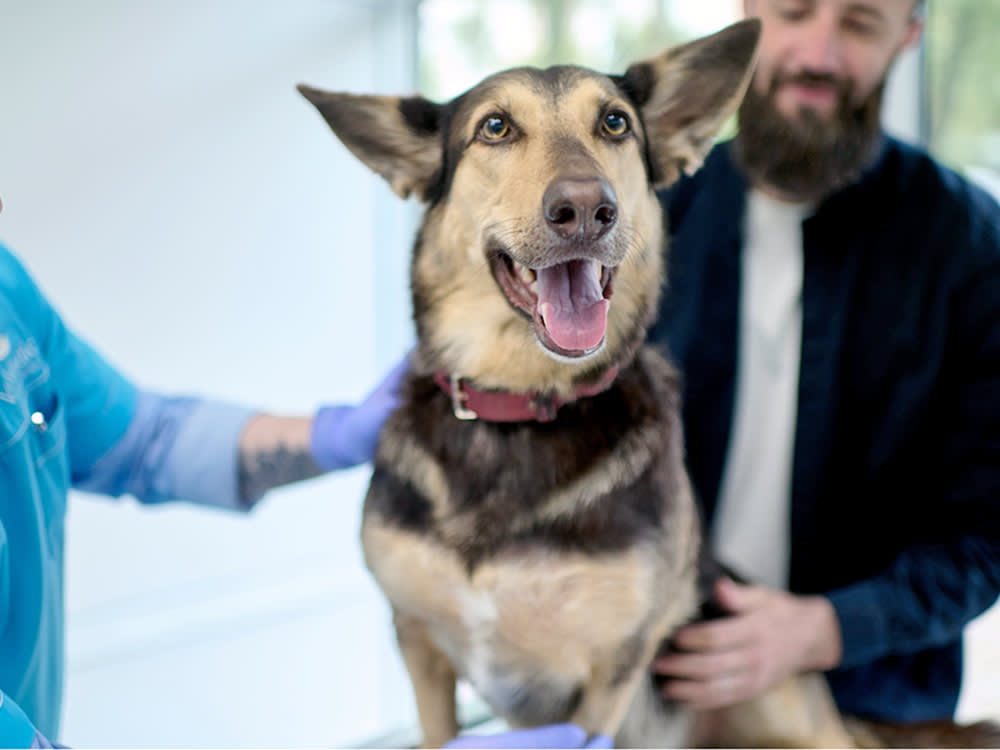
Most of us understand human blood donation as a civic habit. We know our type, we get the Red Cross calls, we trade a pint for a juice box and a good feeling. Almost no one extends that same mental model to the animal asleep at their feet, and that gap is, quite literally, the problem. Veterinary hospitals run short of blood the same way human ones do, sometimes waiting months for a supply your perfectly healthy dog or cat could replenish in about an hour. The single biggest fix is not more technology or money. It is simply that more people learn this is possible at all. So consider this the call you never got: your pet may be a lifesaving donor, and here is why that matters and how to act on it.
The shortage is real, and it is mostly an awareness problem
When a hospital needs blood for a patient, it needs it urgently and it needs it already drawn, typed, and unexpired. There is no such thing as an emergency donation in the moment a dog is bleeding out on the table. That blood has to have been collected and banked weeks earlier, which means the system runs entirely on donors who showed up before anyone needed them.
The supply has not kept pace with the need. Only a limited number of commercial banks supply animal blood in the U.S., demand keeps climbing, and hospitals can wait a long time for product. That is the gap programs like the BluePearl National Blood Bank set out to close when they launched in 2022, building a volunteer donor pool to supply their own hospitals directly rather than competing for scarce outside stock. Their stated goal: meet half their own demand with volunteer blood within two years and all of it within five. The lever they are pulling to get there is not exotic. It is education, because the more pet parents who realize donation exists, the more the pool grows.
Why a pet would ever need blood in the first place
It is not a pleasant thing to picture, but it is worth knowing why the need exists, because the reasons are common. Dogs get into rat poisons that cause internal bleeding. They get hit by cars or fall from height, especially in dense cities. Animal attacks, certain bleeding cancers, kidney and liver disease, parvovirus in puppies and seniors, and hemorrhagic gastroenteritis all send patients into sudden, dangerous blood loss. The thread connecting them is timing: when a pet needs blood, they need it now, and the only thing standing between them and a transfusion is whether someone banked a unit ahead of time.
The part the brochures skip: pet blood has types too, and a wrong match can kill
Here is what most “become a donor” pitches leave out, and it is the detail that makes certain donors especially precious. Animals have blood types, just like we do, and a mismatch can be fatal.
Dogs are typed by Dog Erythrocyte Antigens, or DEA. The most clinically important is DEA 1.1, and a dog can be positive or negative for it. Dogs who are DEA 1.1 negative are the universal donors, the canine equivalent of O-negative, because their blood can go safely to both positive and negative recipients. That is why banks especially prize them, and why over-using negative blood when typing gets skipped is one cause of the shortages in the first place.
Cats are even more delicate. They carry three types, A, B, and AB. The large majority are type A, but a meaningful minority, roughly 5 percent, are type B, and a type B cat has powerful natural antibodies against type A blood. Give a type B cat type A blood and the reaction can be lethal on the first transfusion, with no prior exposure needed. That biology is exactly why feline donation is both harder to recruit for and disproportionately valuable when a good candidate turns up.
What makes a good donor (and why cats are the hard part)
Recruiting cat donors is its own challenge, because the temperament bar is high. Cats generally have to be sedated to hold still for a draw, which means they need to be calm enough that sedation is safe and humane. The screening reflects that care. Across these programs, the typical requirements look like this:
- Age between one and eight years.
- Weight of at least 50 pounds for dogs (some sites accept 40 with the right equipment) and at least 10 pounds for cats.
- Health clearance, with no heart murmur, normal lab work, and a referral for a workup if anything looks off.
- Disease screening, including feline immunodeficiency virus (FIV) and feline leukemia (FeLV) for cats.
- Indoor-only living for cats.
- An easygoing temperament, assessed in a behavioral screening. A pet who is aggressive or simply too anxious to relax, even with sedation help, is not enrolled, because the animal’s wellbeing comes first.
What enrolling actually involves
If you think your pet might be a candidate, the path is more straightforward than people expect:
- Find your nearest location. Programs like BluePearl’s list their sites, often around 15 of them, on their blood bank page, along with the full requirements and FAQs.
- Reach out and book a pre-screening. You will schedule a behavioral assessment plus a full physical exam, and your pet’s blood is drawn and sent out for infectious-disease screening and blood typing.
- Donate, in about an hour. Once enrolled, the donation appointment itself runs roughly an hour.
- Get told when you helped. Good programs barcode each unit so it can be tracked. When your pet’s blood is used to save another animal, you get an email saying so, which closes the loop in a way that keeps donors coming back.
- Repeat a few times a year. Pets can typically donate every eight to 12 weeks, about four to six times annually.
The hardest part of this whole effort isn’t drawing the blood, it’s the moment of recognition. Once a pet parent realizes their healthy dog or cat can do this, and that a single donation can supply multiple patients, signing up tends to feel less like a chore and more like an obvious good. The job is just getting that lightbulb to go on.
Meet two donors
The abstraction lands better with faces on it.
Maverick is six and has donated six times since enrolling in July 2022. His owner, a vet tech, has watched transfusions save patients firsthand and says she would never put him through it if he showed any fear. He does not. For Maverick, donation day is car rides, a fan club of human friends, and goodies.
Oliver is two and has donated four times since December 2023. His owner enrolled him partly to continue a tradition: her previous dog donated for eight years. Mostly, she says, she does it so Oliver can help other dogs at the moment they need it most.
That is the whole pitch, really. Your pet feels great, gets fussed over for an hour, and somewhere in a different hospital, a dog who fell from a fire escape or a cat bleeding from trauma gets the unit that was banked ahead of time because you knew this was possible.
References
Sara Lim leads our Product Picks coverage, testing and comparing the things pets and their owners actually use. From everyday essentials to home-and-style finds, she focuses on honest, useful recommendations rather than hype.
Meet our experts ↗Keep reading
 LivingDon't Vacuum Up That Fur. It Can Soak Up an Oil Spill.Leila Torres · 6 min
 LivingNearly Half of Abuse Survivors Stay Because of a Pet. These Groups Exist to End That Trap.Nina Vasquez · 7 min
 LivingAn Oklahoma Lab Didn't Just Lose Its Animals. It Lost Its LicenseNina Vasquez · 4 min
 LivingOne Fake Email Nearly Shut Down This Animal ShelterMarcus Webb · 5 min
 LivingIf You Died Tomorrow, Who Feeds the Dog? Put It in Writing.Leila Torres · 6 min
 LivingThe Internet's Favorite Grief Metaphor Just Got a Real AddressNina Vasquez · 4 min