


Your Pet Isn't Predicting the Storm. They're Detecting Three of Its Signals
Dogs and cats often react to a storm hours before you notice a cloud. It's not a sixth sense but three physical cues: smell, falling pressure, and static. Figuring out which one your pet feels is the key to calming them.

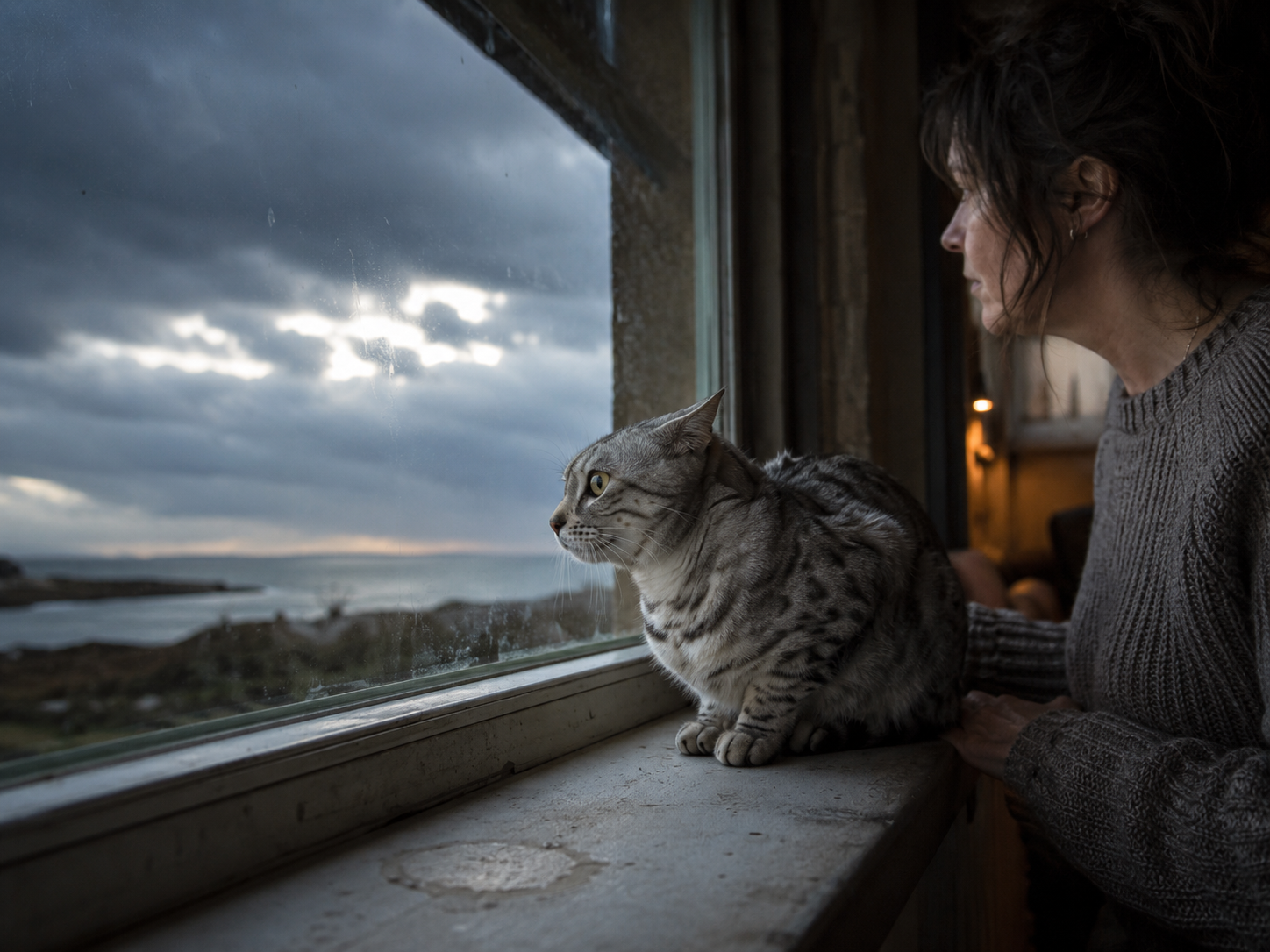
You’ve probably had a relative insist rain is coming because their knee aches, then watched them turn out to be right. Pets do a version of the same trick, often beating the forecast to a storm by an hour or more. It can look like a sixth sense, but it isn’t. Your pet is picking up on specific, physical changes in the air, and there are three of them. Knowing which one your animal is reacting to is what turns “my dog is weird before storms” into a plan for actually helping.
The three signals, not one mystery
Research on animals detecting weather is a young field, but it’s growing. A 2022 study of owner-reported data in Italy found that intense weather events do change how dogs and cats behave, especially by ramping up anxiety. The mechanisms behind that keep coming back to three distinct channels, and they don’t all arrive at the same time or affect every pet.
Signal one: smell
No study has definitively proven dogs forecast storms by scent alone, but many experts believe smell plays a role. People can often catch the earthy smell of coming rain (that’s petrichor and ozone), and dogs and cats have far sharper noses than we do, so it’s a reasonable bet they smell the change earlier and more vividly. This is likely the earliest cue, arriving before pressure or static shift much.
Signal two: falling barometric pressure
A 2013 study found birds can detect a drop in barometric pressure and adjust their behavior accordingly. Dogs appear sensitive to the same sudden pressure and temperature swings that mark a strong system, a hurricane or severe thunderstorm, moving in.
What we need sophisticated instruments to predict, they can simply feel. It sounds a little mystical, but it really comes down to pressure and the changes in the air ahead of a front.
Marcus Webb, Pet Times trainer
Signal three: static electricity
Picture how a sweater crackles right before a storm. Something similar builds in a dog’s coat.
Coat matters here. A thick undercoat holds a charge when the air turns electric, so a storm can literally prickle against the skin before the first thunderclap. That alone will put certain dogs on edge early.
Marcus Webb, Pet Times trainer
If your pup seems on edge ahead of a storm, that prickling static may be part of the reason.
Which signal is yours reacting to?
This is where sorting the signals pays off, because the tell is often in where your pet goes and what they do. A dog drawn to the bathroom, the laundry room, or up against metal pipes is very likely reacting to static: those spots are electrically grounded, and grounding relieves the built-up charge. In fact, behaviorists estimate that roughly half of storm-phobic dogs instinctively seek out grounded locations like tubs, sinks, and radiators. A pet who reacts long before any thunder, with no charge in the air yet, is more likely on smell or pressure. Matching the behavior to the cue tells you what will actually help.
Signs and symptoms to watch for
How a pet reacts depends largely on temperament. A dog or cat who already startles at noise will likely look frightened. An easygoing pet may show subtler shifts that are easy to miss.
Behavior changes: Storm-sensitive pets often show visible stress about an hour before the weather hits, panting, pacing, or becoming unusually clingy. Quieter signs include restlessness, acting slightly “off,” or losing interest in play. Cats may grow more reactive and vocal.
Physical signs: Seeking out grounded spots (see above), trembling, or suddenly demanding far more attention than usual.
How to help an anxious pet through a storm
A little preparation goes a long way. Sit with your pet, stay calm yourself, run a white-noise machine or fan, and lean on whatever you already know soothes them. Tune in to what your animal needs and don’t force anything. If your dog hates going out in the rain, don’t make them unless there’s truly no choice.
If your pet stays distressed despite your best efforts, a trainer can help.
Trainers don’t only teach sit, stay, and come. A good one can give you real strategies for desensitizing and counterconditioning your dog’s emotional response to a trigger, and storm phobia absolutely qualifies.
Marcus Webb, Pet Times trainer
A word on anti-static capes: the evidence
Because static is a real signal, snug “anti-static” storm capes have been marketed to bleed off a dog’s charge. It’s worth knowing what testing actually found. A controlled study compared a purpose-built anti-static cape against an identical placebo cape with no anti-static function. Both helped moderately, and there was no statistically significant difference between them. The useful reading: the calming likely comes from the gentle, swaddling pressure of a snug garment, the same principle behind pressure wraps, rather than from any special static-draining technology. A well-fitted wrap may soothe an anxious dog; you just shouldn’t pay a premium for the “anti-static” label specifically.
When to see a vet
If your pet is so consistently fearful that storms cause real, debilitating distress or start affecting their wellbeing, talk to your vet. They can assess the behavior, offer additional tools, and, when appropriate, prescribe medication for anxiety or the specific symptoms your pet struggles with.
What’s new since this was written
Extreme weather is becoming more frequent, and emergency planners now urge pet parents to fold animals into disaster prep from the start rather than as an afterthought. The American Kennel Club and major veterinary groups recommend assembling a pet go-bag well ahead of storm season, stocked with several days of food and water, medications, a first aid kit, copies of medical and vaccination records, a recent photo of you with your pet in case you’re separated, and a sturdy carrier or leash.
Confirm now, before any warning, that your pet’s microchip is registered with current contact information, and identify pet-friendly shelters or hotels along your evacuation route. The animals who weather disasters best are usually the ones whose families planned for them in advance.
References
- Frontiers in Veterinary Science (2022): Do Intense Weather Events Influence Dogs’ and Cats’ Behavior? Analysis of Owner-Reported Data in Italy. https://www.frontiersin.org/journals/veterinary-science/articles/10.3389/fvets.2022.973574/full
- Journal of Experimental Biology (2013): Environment, Behavior and Physiology: Do Birds Use Barometric Pressure to Predict Storms? https://journals.biologists.com/jeb/article/216/11/1982/11431/Environment-behavior-and-physiology-do-birds-use
- Applied Animal Behaviour Science: Comparison of the Effectiveness of a Purported Anti-Static Cape (the Storm Defender) vs. a Placebo Cape in the Treatment of Canine Thunderstorm Phobia. https://www.sciencedirect.com/science/article/abs/pii/S016815910900104X
- American Kennel Club: Hurricane Preparedness for Dog Owners. https://www.akc.org/expert-advice/health/hurricane-preparedness-dog-owners/
Common questions
What should pet parents do to prepare for a hurricane?
Build a preparedness plan that includes your pet, and pack a go-bag with several days of food and water, medication, a first aid kit, copies of medical and vaccination records, bowls, a recent photo of you together, toys, waste bags, and a sturdy carrier or leash. Confirm the microchip is registered with current contact info.
Dr. Nair is a veterinarian focused on diet and feeding. She covers everyday nutrition, treats, and the many "can they eat this?" questions owners ask, grounding each answer in what is actually safe and sensible for dogs and cats.
Meet our experts ↗Keep reading
 TrainingWhen Your Kid Leaves for College, the Pet Falls Apart TooDr. Mara Chen · 5 min
 TrainingYour Dog Isn't Throwing a Tantrum. That Word Is Hiding the Real ProblemDr. Nina Kohl · 7 min
 TrainingYour Dog Isn't Lonely. Point a Camera at Them and Find Out.Dr. Nina Kohl · 8 min
 TrainingThat Old Sweater Isn't Comforting Your Cat. It's Just Soft.Dr. Mara Chen · 8 min
 TrainingStop Letting Your Dog 'Say Hi' on the LeashDr. Priya Nair · 5 min
 TrainingYour Dog Isn't Being Difficult. They Might Be Wired Differently.Dr. Nina Kohl · 8 min