


That Corkscrew Tail Is Cold-Weather Engineering, Not a Cute Accident
The curl in a dog's tail is mostly a survival trick from cold climates. Here are 13 breeds built around it, plus what the curl actually tells you.

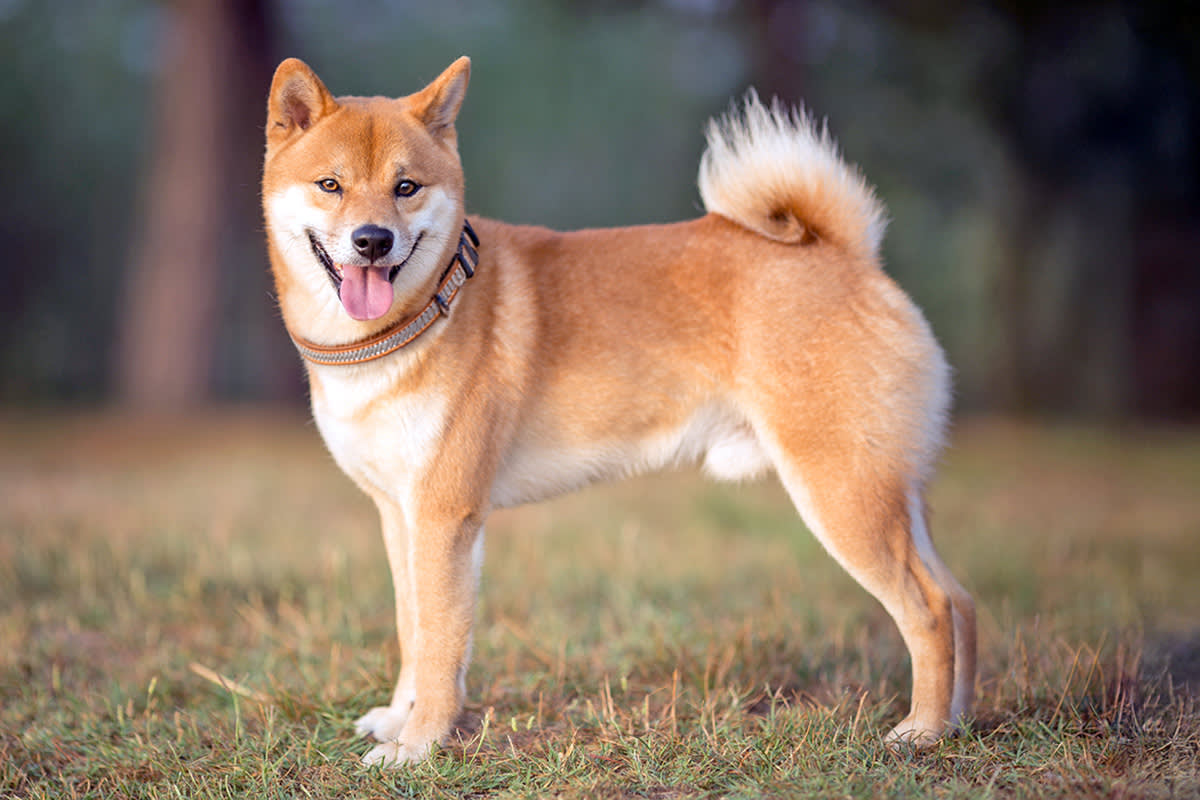
Spend a minute watching a Shiba Inu trot across a park and your eye keeps going back to the same place: that tight cinnamon-roll of a tail riding high over the back. It reads as decoration, a bit of flair evolution threw in for fun. It isn’t. For most of the breeds that carry one, the curl is a piece of cold-weather engineering, a leftover from ancestors who slept curled nose-to-tail through subzero nights and needed every scrap of their own body heat.
That is the through-line worth holding onto before you fall for a specific breed’s looks: the tail is telling you where the dog came from and, often, what it still needs. A curl usually means northern working roots, a dense double coat, a strong independent streak, and a body built to move all day. Below are 13 breeds where the curl is a defining feature, sorted loosely from the tightest corkscrews to the loose plumes, with a note on what each one is actually like to live with.
First, what the curl is really doing
A curled tail is not a muscle a dog flexes into shape. It is built into the bone, a set of vertebrae fused or angled so the tail naturally arcs up and over. Selective breeding then exaggerated the trait until it became a breed signature.
“People assume a curled tail is just cosmetic, and for the spitz breeds it mostly is,” says Dr. Nina Kohl. “But it started as function. A dog that can drape its tail over its own nose keeps the air it breathes a few degrees warmer overnight, and in the Arctic that is not a small thing.”
One practical upshot: the curl is a mood ring. Most curly tails loosen and drop when a dog is asleep, unwell, or scared, and spring back up when the dog is alert and confident. Learn your dog’s normal, and a tail that stops curling becomes an early tell that something is off.
Akita
The Akita wears one of the thickest, most muscular curls on this list, a heavy plume that rests solidly against the back. Bred in the mountains of northern Japan as a guardian, the Akita hides real power under a dense double coat. These are quiet, deeply loyal dogs that bond hard to their families and stay wary of strangers. They often do poorly with other pets and are a genuinely bad match for a first-time owner. Early, patient socialization is not optional.
Chow Chow
From the neck down the Chow Chow looks like a small lion; the tightly curled tail sitting flat on the back finishes the picture. Add the blue-black tongue, the deep facial wrinkles, and the ruff, and you get a dog with real gravitas. The personality follows the look: calm, serious, aloof, and intensely loyal to one household. Chows usually prefer to be the only pet in the home and are slow to warm to newcomers.
Pug
The Pug carries maybe the tightest curl of the bunch, a little pastry twist over the rump, and it comes on a completely different kind of dog than the northern breeds around it. Once lapdogs to Chinese and Dutch royalty, Pugs are sweet, silly companions that adapt to apartments and houses alike. The serious caveat is the flat face: Pugs struggle to breathe in heat and humidity, so they need moderate temperatures, careful exercise, and an owner who watches their breathing. Their prominent eyes are also injury-prone.
Shiba Inu
The Shiba’s fox-red coat and two-toned tail curling into the back make it one of the most recognizable dogs alive. This ancient Japanese breed was a hunter, and it still thinks like one: independent, alert, and famously opinionated. Shibas need early socialization to be easy family dogs and plenty of daily exercise to stay content. They are clean, catlike, and not especially interested in doing what you say just because you asked.
Finnish Spitz
Foxlike enough to make strangers do a double take, the Finnish Spitz gives itself away with a curly, fluffy, all-orange tail, since a real fox’s tail hangs straight. Bred as a bird dog, it is famously talkative, running the gamut from ordinary barks to full yodels. Affectionate and bright, it is generally good with kids and other animals, but that voice makes it a poor fit for a shared wall in a quiet building.
Keeshond
The Keeshond, a former Dutch barge dog, carries a plumed curl that half-disappears into an enormous, dense coat. The breed’s trademark “spectacles,” the shading around the eyes, gives it a permanently thoughtful, smiling look, and the temperament matches: devoted, friendly, and genuinely good with people and other animals. Of the northern breeds here, the Keeshond is one of the easier companions, though the coat is a serious grooming commitment.
Norwegian Elkhound
Picture a German Shepherd’s build wearing a tightly curled tail and a silver-grey coat, and you have the Norwegian Elkhound. This is an ancient breed, remains have been found in Viking-era sites, and it was built to track and hold large game. Athletic and sharp, the Elkhound needs real exercise and mental work to be happy. It is loving with its family but can be pushy with strange dogs if it wasn’t socialized young.
Alaskan Malamute
The Malamute’s curled tail is a working feature, held up and out of the way while hauling freight across the Arctic. People mix it up with the Siberian Husky, but the Malamute is the bigger, heavier dog by a good 25 pounds or more. These are powerful, job-loving animals that are affectionate off the clock but will happily run the household if you let them. They need a confident owner and a lot of physical outlet.
Siberian Husky
The Husky’s tail sometimes curls tight and sometimes arcs into a looser sickle shape; either way it can wrap over the nose to trap warm air during rest. Bred to pull sleds over long distances, Huskies are high-energy, clever, vocal, and often hilariously argumentative. They thrive in a pack, are loving with kids and other dogs, and are escape artists with a strong prey drive. Under-exercise one and you will hear about it.
Norwegian Buhund
The Buhund carries a plumed curl on a compact, muscular, medium-sized frame under a weatherproof double coat. A Viking-era herding and guarding dog, it is bright, energetic, and more biddable than many spitz breeds, which makes it a slightly easier first northern dog. Buhunds can be reserved with strangers but are warm with their families and generally friendly with other pets. They want a job, or at least a daily plan.
Samoyed
The Samoyed owns one of the most spectacular curls here, a white plume over a dog that looks like a walking cloud. Bred by the Samoyedic peoples of Siberia to herd reindeer and sleep among their people for warmth, the breed is famously gentle and people-oriented, so much so that Samoyeds are prone to separation anxiety. They handle cold beautifully and heat badly, and that glorious coat needs constant upkeep.
Pomeranian
The Pomeranian shrinks the northern spitz template down to a seven-pound puffball with a loosely curled tail. Descended from much larger sled dogs, the modern Pom is bright, bold, and endlessly attention-seeking, a former favorite of royalty that learns tricks and cues fast. They fit apartment life easily but are fragile, so they are not ideal around very young children who haven’t learned to handle a tiny dog gently.
Basenji
The Basenji is the curveball on this list, an African hunting dog rather than a northern one, and its tail proves the curl isn’t only a cold-weather trait. Alert, the tail coils tight like a cinnamon roll; relaxed, it loosens to a gentle arch. Basenjis are the famous “barkless” dogs, though they yodel and chortle plenty. They are high-energy, deeply loyal, wary of outsiders, and about as independent as a dog gets.
Tibetan Mastiff
The biggest curly-tailed dog here by a wide margin, the Tibetan Mastiff can top 150 pounds and stand over two feet tall, with a feather-duster tail riding a massive double coat. Bred to guard livestock and monasteries on the Himalayan plateau, it is a gentle giant to its own family and seriously territorial with strangers, so early socialization is essential. That heavy coat means it overheats easily and belongs in a cool climate.
The one curl that is not just cosmetic
There is an important line to draw here. The loose, plumed, over-the-back curls of the spitz breeds are structural and generally harmless. But the tight, low “screw tails” seen in some flat-faced breeds, like Pugs, Bulldogs, and Boston Terriers, are a separate story. That corkscrew is often a visible marker of malformed tail vertebrae, and in some dogs the same underlying condition affects the spine higher up, contributing to problems like hemivertebrae. If your flat-faced dog has a tight screw tail, keep an eye on hind-end coordination and mention it to your vet. The curl you admire and the curl you monitor are not the same trait.
What’s new since this was written
Tail research has quietly gotten more interesting. Behavior scientists now treat the tail as a genuine communication tool, and a widely reported finding is that dogs tend to wag more to the right when they feel positive and more to the left when they feel wary, an asymmetry other dogs actually read. For a high, curled tail that already sits over the back, that side-to-side detail is harder to spot, which is a good reminder to watch the whole dog, not just the tail, when you’re gauging mood.
On the health side, veterinary geneticists have zeroed in on a gene called DISHEVELLED 2 (DVL2) as a driver of the screw-tail trait and the spinal malformations that can travel with it in bulldog-type breeds. It is one more reason to treat a tight corkscrew tail as a health signal worth watching rather than just a quirk, and to ask a breeder about spinal screening if you’re drawn to a screw-tailed breed.
References
- American Kennel Club. “Dog Breeds.” Accessed May 2026. https://www.akc.org/dog-breeds/
- Quaranta, Angelo, Marcello Siniscalchi, and Giorgio Vallortigara. “Asymmetric tail-wagging responses by dogs to different emotive stimuli.” Current Biology, vol. 17, no. 6, 2007, R199–R201. https://www.cell.com/current-biology/fulltext/S0960-9822(07)00997-1
- Mansour, Tamer A., et al. “Whole genome variant association across 100 dogs identifies a frame shift mutation in DISHEVELLED 2 which contributes to Robinow-like syndrome in Bulldogs and related screw tail dog breeds.” PLOS Genetics, vol. 14, no. 12, 2018, e1007850. https://journals.plos.org/plosgenetics/article?id=10.1371/journal.pgen.1007850
Common questions
Why do some dogs have curly tails?
Most curly-tailed breeds trace back to cold climates, where a tail that curls over the back can shield the face and nose during sleep. The curl is largely a structural trait fixed in the spine and then exaggerated by generations of selective breeding.
Does a curly tail ever straighten out?
Yes. Many curly tails unfurl when a dog is asleep, sick, frightened, or deeply relaxed. A tail that suddenly drops and stays down can be worth a vet's attention, but a resting curl loosening is normal.
Are curly tails linked to health problems?
The loose, plumed curls of spitz breeds are usually just cosmetic. The tight, corkscrew 'screw tails' of some flat-faced breeds are a different matter and can come with spinal malformations, so those breeds deserve extra veterinary attention.
Tom Hadley writes about training and behavior, helping owners understand what their pets are trying to tell them. His work covers everyday manners, decoding common behaviors, and the small changes at home that make dogs and cats easier to live with.
Meet our experts ↗Keep reading
 LivingMale-Female Is the 'Safe' Second-Pet Combo. The Experts Disagree.Dr. Nina Kohl · 5 min
 First DaysOne Bad Meeting Can Undo Everything: How to Introduce a Nervous Cat to a DogDr. Lena Park · 9 min
 LivingCat or Dog? Stop Asking Which Is Better and Ask This InsteadClaire Sutton · 7 min
 First DaysThe Ride Home Is Your New Dog's First Lesson. Don't Blow It.Dr. Lena Park · 6 min
 First DaysHalf of New Puppy Owners Feel Terrible. The Research Says When It Stops.Dr. Amara Solis · 6 min
 Living15 Rescues Turned Her Down. Then Her Olympics Fell Apart and She Got the Dog.Sasha Ford · 6 min