


The Dog Treat That's Basically Calorie-Free
Cucumber is about 95 percent water and almost no calories, which makes it the rare snack you can hand over guilt-free, at a time when most dogs are carrying too much weight. Here's how to use it and the two small catches.

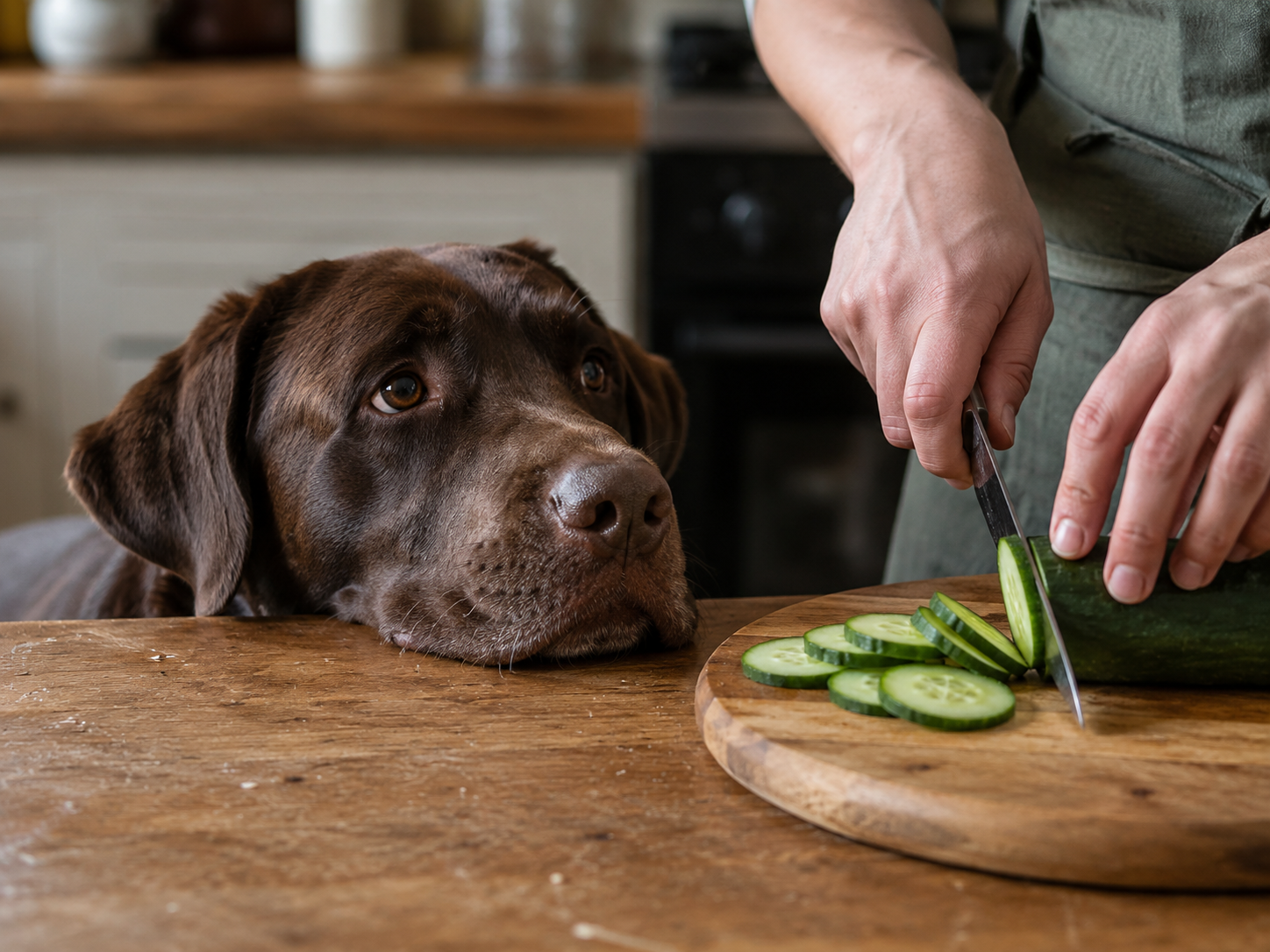
Most of the “can my dog eat this” questions are really about avoiding harm. Cucumber is one of the few where the interesting answer runs the other way: not just “is it safe” (it is), but “is this the smartest low-stakes treat in your fridge.” At a moment when the majority of dogs in the United States are carrying extra weight, a snack that is 95 percent water and almost no calories is worth knowing how to use.
Why cucumber earns its spot
Start with what it is. The cucumber, a member of the gourd family, is roughly 95 percent water by weight, which is where its refreshing crunch comes from. That water content is also the whole trick. It means a dog can chew, crunch, and feel treated without ingesting the calories that a biscuit or a piece of cheese would carry.
Alongside the water, cucumbers bring potassium, phosphorus, calcium, and magnesium, minerals your dog’s body uses for normal function in the heart, muscles, bones, and nerves. There is fiber too, mostly in the skin, which helps move things through the gut and firm up stool. What cucumbers do not provide is protein or fat, so they are a snack, not fuel. On a day when your dog is running hard, they will need something with more substance to keep up.
The weight angle, in real numbers
Here is why the calorie point is not just a nice-to-have. In the Association for Pet Obesity Prevention’s 2024 survey, veterinary assessments put roughly 59 percent of dogs in the overweight-to-obese range, a body condition score of 6 or higher, with about 22 percent clinically obese. Extra weight is not cosmetic. It feeds into arthritis, diabetes, and a shorter life.
The hard part of managing a dog’s weight is usually not the meals, it is the treats, because handing over food is how we show affection. Cucumber solves that tension. It lets you keep the ritual of giving a snack while spending almost nothing from the daily calorie budget.
Owners tell me they feel guilty cutting back on treats, like they’re taking something away from the relationship. I point them to the crisper drawer. A few cucumber coins let you keep saying yes all day without the guilt or the waistline, and for an overweight dog that swap alone can move the needle.
A few ways to put it to work: chill slices in the fridge for a few hours and hand them over on a hot day for a cooling, hydrating snack, always alongside a full water bowl. Use coins as training rewards when you are doing a lot of repetitions and do not want to load the dog with calories. And swap them in for higher-calorie treats when your vet has asked you to trim your dog’s weight.
The two catches
Cucumber is genuinely low-risk, but two things are worth doing right.
The first is size. Cut it into bite-sized pieces. A dog that bolts a large chunk whole, especially a dog that does not chew carefully, could in rare cases get a piece lodged in the gut, which is the kind of blockage that means surgery. It is uncommon with something as soft as cucumber, but easy to prevent, so prevent it.
The second is the bathroom math. Plants in the Cucumis family have a mild diuretic effect, meaning they nudge the body to make more urine. That is not dangerous, but a dog who eats a lot of cucumber may need extra trips outside. Save the big cucumber snack for a time other than right before bed or a long car ride, unless you enjoy surprises.
One more note for dogs with medical conditions or special diets: check with your vet before making cucumber a regular thing, since individual health situations can change the calculus.
A word on the topical folklore
You may have heard cucumber described as soothing on skin, the way people use slices on tired eyes. There is a long tradition of using the cool flesh on minor irritation, sunburn, or itchiness, and if your dog tolerates it you can gently hold a slice against a mildly red or itchy patch. Keep it away from open wounds or real injuries, where it could sting or introduce infection, and treat it as comfort care, not medicine.
Other low-calorie treats worth rotating in
Variety keeps snack time interesting, and several other fruits and vegetables pair well with cucumber in a light treat rotation. Pumpkin brings fiber, antioxidants, vitamin C, and beta-carotene. Carrots add vitamins C and K, potassium, and a satisfying crunch that is good for teeth. Green beans are filling and fiber-rich, which helps a food-motivated dog feel satisfied on fewer calories. Small pieces of apple, banana, or berries cover the sweeter cravings.
Wash everything, remove seeds, pits, and rinds, and cut to size. And keep the reflex of double-checking anything new, because a handful of common foods are genuinely dangerous. Avocado contains persin, a mild toxin that can cause vomiting and diarrhea. Xylitol, an artificial sweetener in many human foods, can cause a severe blood-sugar crash and liver failure. Hops, used in home brewing, can be deadly, causing agitation, seizures, and dangerous overheating.
What’s new since this was written
The clearest update is the scale of the dog-weight problem, and it reframes how to think about a snack like cucumber. The 2024 obesity figures show most dogs now carry more weight than is healthy, and the treats we hand out are a big, controllable part of that. That turns cucumber from a quirky “sure, it’s fine” answer into an actual tool: a near-zero-calorie way to keep treating a dog you are trying to slim down.
If your dog is on the heavier side, the practical move is to talk with your vet about a target weight and a daily calorie number, then let low-calorie produce like cucumber absorb the treats you would otherwise give. It is a small change that is easy to sustain, which is exactly what weight management needs.
References
- Association for Pet Obesity Prevention. “2024 Pet Obesity Survey Results.” https://www.petobesityprevention.org/2024-survey
- U.S. Food and Drug Administration. “Complete and Balanced Pet Food.” https://www.fda.gov/animal-veterinary/animal-health-literacy/complete-and-balanced-pet-food
- ASPCA Animal Poison Control. “Toxic and Non-Toxic Plants: Cucumber.” https://www.aspca.org/pet-care/animal-poison-control/dog-poison-safe/cucumber
- “Fiber.” The Nutrition Source, Harvard T.H. Chan School of Public Health. https://nutritionsource.hsph.harvard.edu/carbohydrates/fiber/
Common questions
Can dogs eat cucumber skin and seeds?
Yes. The whole cucumber, skin and seeds included, is non-toxic to dogs, as is the plant itself. The skin is the most bitter part because of compounds called cucurbitacins, so a picky dog may prefer it peeled.
Why does my dog love cucumber when others won't touch it?
Taste is individual, and cucumbers vary in bitterness depending on where they grew and the local climate. Some dogs love the cool crunch, others walk away. Both are normal.
Is cucumber actually good for dogs?
As an occasional treat, yes. It hydrates, adds a little fiber, and delivers minerals like potassium and magnesium without adding meaningful calories. It should never replace a complete, balanced dog food, which is where your dog gets the nutrients they actually need.
Not a substitute for your vet. Our guidance is educational. For urgent symptoms, contact a vet or emergency clinic right away. Editorial standards
Dr. Nair is a veterinarian focused on diet and feeding. She covers everyday nutrition, treats, and the many "can they eat this?" questions owners ask, grounding each answer in what is actually safe and sensible for dogs and cats.
Meet our experts ↗Keep reading
 FoodThe Xylitol in Raspberries Sounds Scary. The Math Says Feed Them AnywayDr. Mara Chen · 6 min
 FoodYour Dog Has a Sweet Tooth. That's Exactly the Problem.Dr. Nina Kohl · 7 min
 FoodHoneydew Is Mostly Sugar Water. That's the Catch for DogsDr. Priya Nair · 5 min
 FoodOnly 6% of Homemade Dog Diets Are Complete. Yours Is Probably in the Other 94%.Dr. Amara Solis · 12 min
 FoodStop Measuring Your Dog's Food in Cups. Here's the Number That Matters.Dr. Amara Solis · 7 min
 FoodYour Dog Has No Idea When He's Full. That's Not a Flaw, It's the DesignDr. Ravi Mehta · 6 min