


Your Cat Knows Its Roommate's Name. It Just Won't Perform for You.
A study found house cats learn the names of the other cats they live with, and probably some human names too. The catch that makes it fascinating: only cats in real family homes bothered to learn.

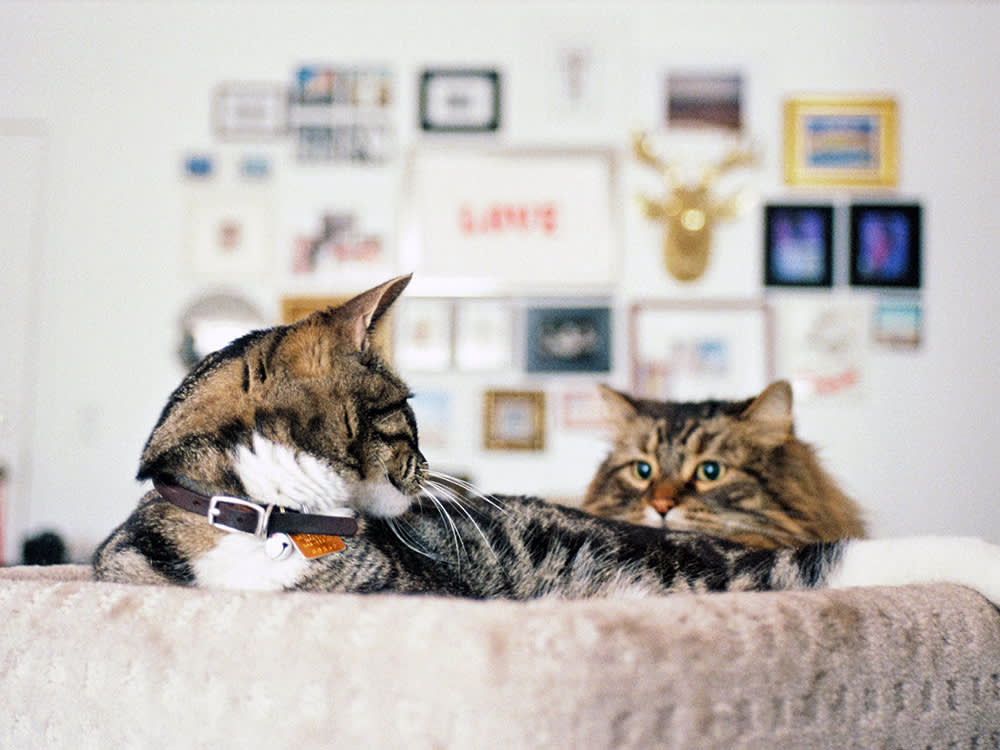
Cats have a public relations problem. Because they rarely perform on cue the way dogs do, people assume there is not much going on behind those eyes. A study aimed straight at that assumption, and the finding is quietly remarkable: your cat is probably keeping a mental roster of everyone in the house, feline and human, and simply declining to show you.
Aloof, not empty-headed
Start with what we already knew. Cats can recognize their own names; earlier research established that much. They just often choose not to respond, because coming when called would mean surrendering a sunbeam or abandoning a scratching post mid-project. The refusal is a decision, not a blank.
The newer question was bigger: do cats also learn the names of the other cats they live with? A study published in Scientific Reports set out to test it, and the answer appears to be yes.
How you test a cat that won’t cooperate
You cannot ask a cat to point to “Mochi.” So the researchers used a clever trick built around surprise.
They studied cats that lived with at least two other cats, drawing from two very different settings: ordinary multi-cat family homes, and cat cafes. Each cat watched a monitor. First, the cat heard a recording of a familiar human voice saying a name. Then an image of one of the household cats appeared. Half the time the name matched the cat shown. Half the time it did not, a housemate’s face paired with the wrong housemate’s name.
The measure was simply how long the cat stared. The logic rests on something called the expectancy violation effect: animals, including us, look longer at things that break our expectations. If a cat had learned that a particular name goes with a particular face, a mismatch should catch it off guard and hold its gaze.
The split between home cats and cafe cats
That is exactly what happened, with a telling wrinkle. The house cats stared longer when the name and face did not match, evidence that the wrong pairing surprised them, which only makes sense if they expected the right one. And the longer a cat had lived with its family, the stronger this effect was.
The cafe cats did not show it. Their gaze did not lengthen for mismatches the way the home cats’ did.
The interesting part isn’t just that cats learn names, it’s who learns them. A cat in your living room hears ‘Luna’ aimed at Luna, over and over, from people who treat each cat as an individual. A cafe cat lives in a blur of names and a rotating cast of humans. The home cat has the data to build the association. The cafe cat basically never gets a clean signal.
That contrast is what makes the study more than a cute headline. It suggests cats are not passively absorbing sounds; they are learning from meaningful, repeated social exposure, the same way a lot of learning works. Names stick when they are consistently tied to a specific individual by people who matter to the cat.
And yes, probably your name too
The research did not stop at cat names. When the setup was repeated with photos of human family members and their spoken names, cats again seemed to notice mismatches, hinting that they learn the names of their people as well. The most likely mechanism is the same one: a name spoken again and again in the presence of a particular face, over months of shared life, gradually becomes a link the cat carries around.
What newer research adds
This name study sits inside a burst of feline cognition work that keeps landing on the same conclusion from different angles. In recent years researchers have shown cats can distinguish their owner’s voice from a stranger’s, read human emotional expressions and adjust their behavior, and, in a 2024 study, rapidly associate spoken words with images after only brief exposure, a form of learning once thought to be beyond them. Taken together, the picture is of an animal doing steady social and linguistic tracking under a famously indifferent surface.
Two honest caveats keep this grounded. The name study, like much cat-cognition research, used a modest number of animals and an indirect measure, looking time, rather than a direct test, so it points strongly rather than proves absolutely. And “knows the name” here means the cat has linked a sound to an individual, not that it understands language the way we do. Still, the next time your cat ignores you when you call a housemate’s name, consider the more likely explanation: it heard you perfectly, it knows exactly who you mean, and it has simply decided the information does not require a response.
References
- Takagi, S., et al. “Cats learn the names of their friend cats in their daily lives.” Scientific Reports, 2022. nature.com
- Saito, A., et al. “Domestic cats (Felis catus) discriminate their names from other words.” Scientific Reports, 2019. nature.com
Common questions
Do cats really know other cats' names?
A study published in Scientific Reports found that cats living in multi-cat homes appear to learn the names of their fellow cats. When shown a photo of a housemate paired with the wrong name, they stared longer, a sign their expectation had been violated because they expected to hear the correct name.
Why didn't cafe cats learn names the way house cats did?
The researchers think it comes down to exposure. In a family home, a cat repeatedly hears a specific name attached to a specific cat, spoken by people who interact with each individually. In a cat cafe, names are used less consistently and the social web is larger and looser, so the name-to-cat links never form as strongly.
Does my cat know my name?
Possibly. The same line of research suggests cats may also learn the names of the human family members they live with, likely through the same repeated pairing of a name with a person. As with other cats, longer time living together strengthened the effect.
Dr. Kohl is a board-certified veterinary dentist with a particular interest in preventive oral care. She reviews all dental health content at The Pet Times and contributes practical guides on home dental routines, professional cleaning, and oral disease prevention.
Meet our experts ↗Keep reading
 TrainingYour Cat Isn't Being Naughty. The Chewing Is a MessageDr. Nina Kohl · 9 min
 TrainingYour Cat Notices the Suitcase. Here's What They Actually Feel.Dr. Nina Kohl · 5 min
 TrainingThat Sound Isn't a Meow. And It Isn't Good News.Dr. Lena Park · 8 min
 TrainingSome Cats Are Happier as Only Children. Here's How to Tell.Dr. Amara Solis · 7 min
 LivingYou Bought the Bed. She Sleeps in the Drawer. She's Not Being Rude.Dr. Nina Kohl · 6 min
 TrainingYour Cat Screams at 3am Because You Never Let It Finish the HuntDr. Mara Chen · 8 min