


A Hot Spot Is the Smoke, Not the Fire. Here's How to Find What's Burning Your Cat.
A hot spot is a wound your cat builds by licking an itch. Treat the wound and ignore the itch, and it comes right back. The real fix is figuring out what set it off.
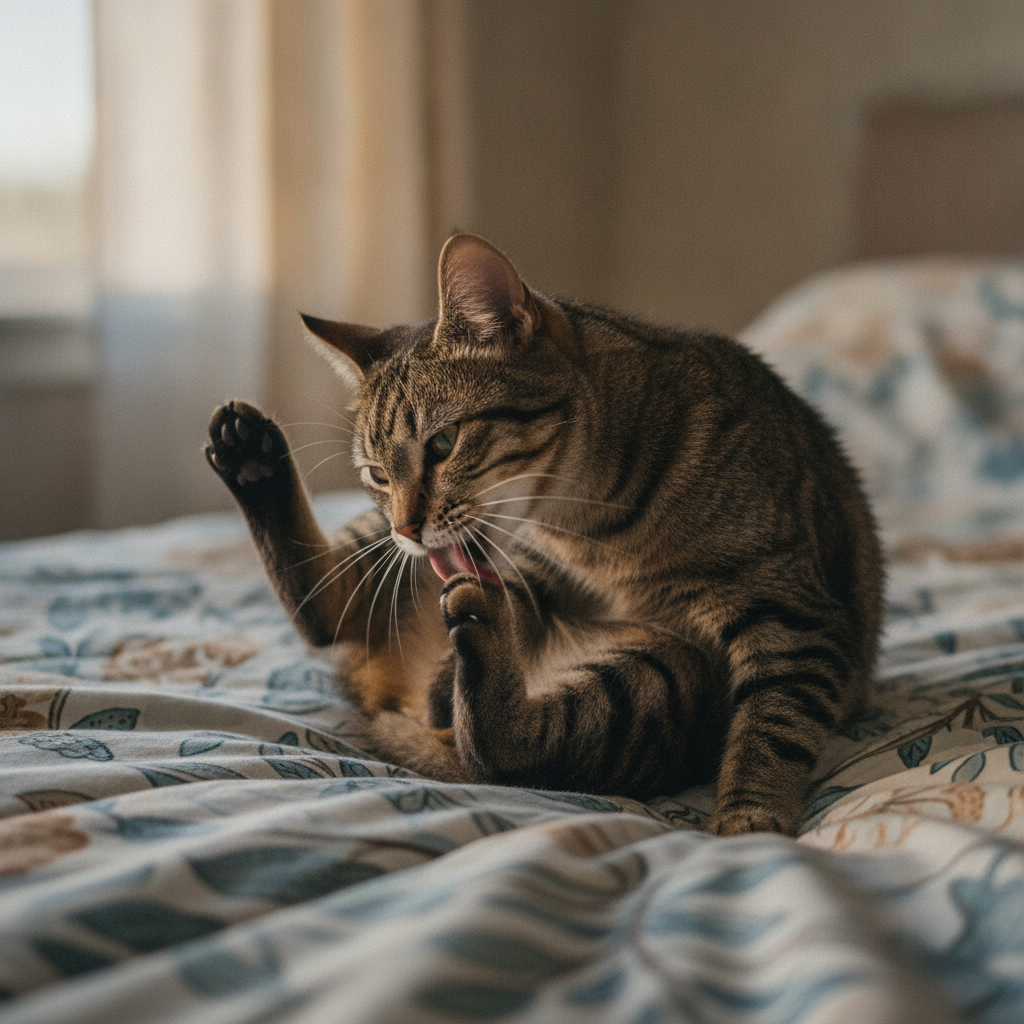
If your cat is suddenly more obsessed with gnawing at one patch of their body than with yelling at you for dinner, you may be looking at a hot spot. And the most useful thing to understand about a hot spot is that it is not really the problem. It’s the evidence of one.
A hot spot is a wound the cat creates. Something makes a patch of skin itch or hurt, the cat licks and bites at it, that self-trauma damages the skin, the damaged skin gets itchier and more inflamed, and around it goes. The wound you can see is the end of that loop, not the start. Which is why the instinct to treat the raw spot and move on almost always backfires: if the thing that started the itch is still there, the cat starts the loop again the moment the skin heals. Clearing a hot spot for good means answering two questions in order. First, how do you stop the damage happening right now? And second, and this is the one that actually matters, what is making your cat itch in the first place?
What a hot spot actually is
The clinical name is moist dermatitis, or pyotraumatic dermatitis, which is a precise way of saying “skin inflammation the animal has made worse by licking and chewing it.” The result is an area of skin that’s red, wet, and sore to the touch. On a cat, it tends to announce itself, because they laser-focus on the spot and flinch when it’s touched.
Question one: stop the loop today
Nearly every hot spot needs a vet, and we’ll get to why. But there are sensible first steps you can take at home to take the edge off your cat’s misery and start the skin healing while you sort out the cause.
- Check for fleas, and treat every pet. Fleas are the single most common trigger, so start here. Comb your cat thoroughly, paying attention to the tail base, the neck, the ears, and the belly. You may not spot live fleas, but “flea dirt,” little black specks of flea droppings, in the comb is a giveaway. If there’s any evidence of fleas, start a safe flea treatment, treat all the animals in the home, and clean the house carefully, because the fleas you don’t see are the ones re-infesting your cat.
- Try a soothing bath, if, and it’s a big if, your cat allows it. A colloidal oatmeal-based shampoo can calm itchy skin. Skip this entirely if the skin is raw, bleeding, or oozing, because it’ll simply hurt.
- Block the licking. Letting the skin heal means physically stopping your cat from working at it. A cone or an inflatable donut collar does the job; so can a loosely fitted baby onesie or shirt, depending on where the spot is, as long as your cat can walk comfortably and still reach the litter box.
- Keep it clean, gently. Dab away loose fur or debris with a cloth or paper towel dampened with cold water. Go slowly, and stop if your cat resists, tender skin will not tolerate much.
- Keep it dry, and resist the urge to slather. Counterintuitively, hot spots heal by drying out, scabbing, and recovering. Ointments, creams, and tight bandages tend to trap moisture and stall that process. Leave the wound uncovered and skip the drugstore products unless your vet has specifically prescribed them.
These are stopgaps. They make your cat more comfortable and buy the skin some breathing room, but on their own they don’t address why the itch exists.
Question two: find the itch (this is the real fix)
Because a hot spot is self-inflicted, anything that makes a cat itchy or sore can set one off. Working out which one is the whole point of the exercise.
- Fleas. Again, the usual suspect. Even indoor cats get them, and even a light infestation can trigger a localized hot spot as the cat over-grooms one itchy area.
- Allergies. Food allergies or environmental allergies can make a cat itchy, and cats can develop them at any age. Once the skin is itchy, hot spots are never far behind.
- Skin infections. Bacterial or fungal infections, or mites, both cause and result from hot spots, a genuine chicken-and-egg situation. It isn’t always clear which came first, but treating the infection is a major part of getting relief either way.
- Pain. Sometimes the licking is about hurt, not itch. Cats with orthopedic pain, an old injury or arthritis, may fixate on a spot, and cats with internal discomfort from digestive or bladder problems sometimes over-groom the belly and raise a hot spot there.
- Immune-mediated disease. Certain autoimmune skin disorders make cats itchy. These usually require a skin biopsy to diagnose and may be suspected when nothing else fits.
You’ll notice these range from “buy flea prevention” to “diagnose an autoimmune disease,” which is exactly why home care only gets you so far.
Why the vet visit isn’t optional
Almost every cat with a hot spot should be seen, because pinning down and fixing the root cause is the only thing that reliably breaks the itch-and-chew cycle. Even if you manage to stop the licking long enough for a wound to close, it’s likely to return if the cat is still itchy or in pain, and many of these wounds are infected and simply won’t heal until the infection is treated too.
To find the cause, your vet works methodically. They’ll check for bacterial and fungal infection with skin cytology and, if needed, cultures. They’ll rule out parasites, sometimes with a skin scrape to look for mites. They may use the response to treatment itself as a clue, trialing a hypoallergenic food, a flea treatment, or specific medications and watching how the skin reacts, because improvement (or the lack of it) is informative. In stubborn or severe cases, they may take a biopsy, a small sample of skin examined under a microscope, which is the most definitive test, though because it needs sedation it isn’t done in every case. And because some hot spots trace back to internal pain, they may recommend X-rays, ultrasound, or bloodwork to look for trouble inside the body.
Treatment then runs on three tracks at once: fixing the underlying cause, easing the itch and pain your cat feels right now (often with antihistamines or steroids, sometimes pain medication), and helping the wound heal, typically by shaving the fur, cleaning with a gentle antiseptic, adding antibiotics if it’s infected, and using a barrier to keep the cat from re-opening it.
Some signs mean you skip the home care and go straight in. A wound that’s bleeding, oozing yellowish serum, or smelling bad has likely become seriously compromised or infected and needs prompt veterinary attention. So does a spot so painful your cat won’t let you near it, both because they need pain relief and because you can’t get an accurate diagnosis at home.
One caution worth flagging: a few other conditions can masquerade as a hot spot but need a different approach entirely, including feline eosinophilic granuloma complex, plain over-grooming, abscesses, and even some skin cancers. That’s another reason to let a vet confirm what you’re actually dealing with.
Keeping them from coming back
Prevention follows the cause, but a few habits lower the odds across the board:
- Year-round flea prevention, indoor cats included. Fleas find a way in, and they cause far more than hot spots.
- Regular checkups. At least once a year, and twice for senior cats or those with existing health issues, so your vet can catch problems before they snowball into skin trauma.
- Stick with the plan. If your cat lives with allergies or a chronic skin condition, those are lifelong. The special diet or medication only works if it’s consistent. It’s tempting to cut corners or let a refill lapse when life gets hectic, but those gaps are exactly when the itch, and the next hot spot, come back. Once the two of you land on a routine that keeps things quiet, the win is in not drifting off it.
The most common mistake is going after the wound and never asking what set it off. You can clean and cone a hot spot beautifully, but if you never find the flea or the allergy or the sore joint underneath it, you’ll be back here in a month. The wound is the smoke. My job is finding the fire.
References
- Scott DW, Miller WH. “Feline dermatology at Cornell University: 1407 cases.” Journal of Feline Medicine and Surgery.
- Veterinary Partner (VIN): Pyotraumatic Dermatitis (Hot Spots) in Dogs and Cats
- Yu HW, Vogelnest LJ. “Feline superficial pyoderma: a retrospective study of 52 cases.” Veterinary Dermatology.
Common questions
How long does a hot spot take to heal on a cat?
It depends on the cause and on whether you can stop the licking. Skin generally heals within about 14 days, but if there's an ongoing infection or your cat keeps chewing at the area, it can take considerably longer.
What does a hot spot look like on a cat?
Usually a focal patch where the fur is missing or matted down, over skin that's moist, red, sometimes oozing, and tender to the touch. Cats tend to fixate on licking the spot, which is often the first thing owners notice.
Not a substitute for your vet. Our guidance is educational. For urgent symptoms, contact a vet or emergency clinic right away. Editorial standards
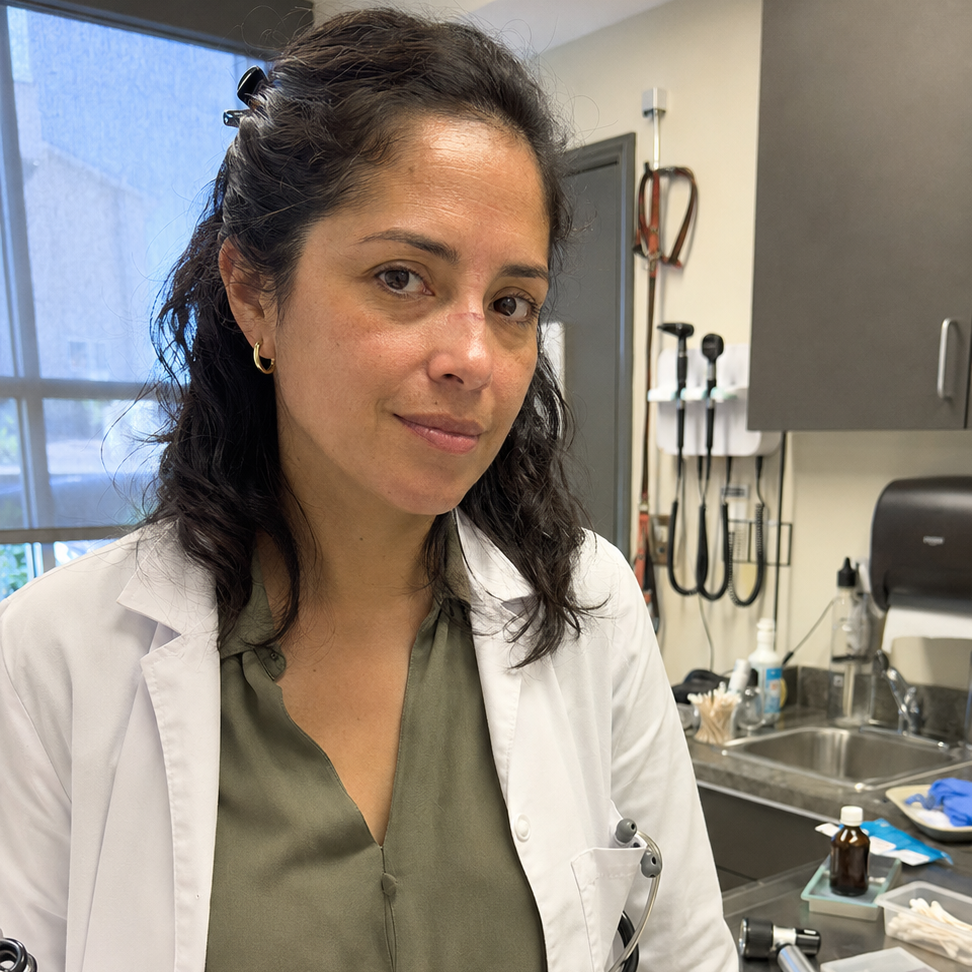
Dr. Solis is a board-certified veterinary dermatologist with over twelve years of clinical experience. She advises on skin conditions, allergies, and grooming practices that affect coat and skin health. All dermatology and allergy content at The Pet Times is reviewed by her team before publication.
Meet our experts ↗Keep reading
 Health & WellnessThe Twitchy Back Is Usually Nothing. The One Time It Isn't Has a Name.Dr. Lena Park · 8 min
 Health & Wellness"Twitchy Cat Syndrome" Looks Terrifying. The Research Says Most Cats Recover.Dr. Lena Park · 7 min
 Health & WellnessThat Scaly Patch on Your Cat Could Be Yours NextDr. Nina Kohl · 7 min
 Health & WellnessFeline Mange Is Five Different Problems. Only Some Spread to YouDr. Lena Park · 7 min
 Health & WellnessRingworm Isn't a Worm. It's a Fungus That Can Jump to You.Dr. Priya Nair · 6 min
 Health & WellnessThe Benadryl Trap: Why the Go-To Cat Remedy Usually Fails, and What WorksDr. Mara Chen · 9 min