


Your Cat Is Scooting: Is It Really the Anal Glands?
Anal sac disease is about 40 times rarer in cats than in dogs, so the same symptoms usually point elsewhere. Here's how to tell anal gland trouble from the more likely culprits, and when to worry.

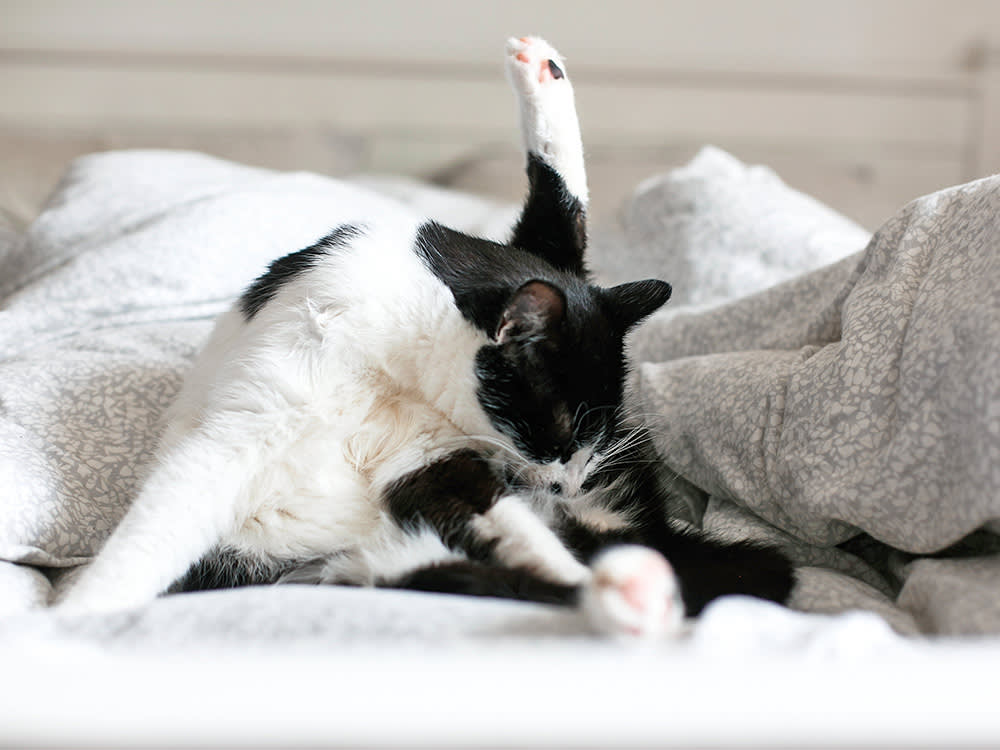
Here is the counterintuitive thing to know before you go down an internet rabbit hole about your cat’s rear end: if your cat is scooting, licking under their tail, or leaving an odd smell behind, the anal glands are probably not the first thing your vet will suspect. That runs against everything you have absorbed about dogs, where full or impacted anal sacs are a genuinely common nuisance. Cats are different animals, and the numbers say so.
A large cross-sectional study of veterinary records estimated non-cancerous anal sac disease at roughly 15.7 percent in dogs and just 0.4 percent in cats. That is on the order of 40 times rarer in cats. So yes, cats have anal glands, and yes, they can occasionally cause trouble. But the single most useful skill for a cat owner is not learning to express them. It is learning to tell an actual anal gland problem apart from the more likely explanations for the exact same behavior. That is what this guide is built around.
First: is this even an anal gland problem?
When a cat scoots, licks obsessively at the base of the tail, or seems uncomfortable back there, three explanations account for the large majority of cases, and only one of them is the glands.
Tapeworms. This is the classic cat culprit and the one owners most often miss. Tapeworm segments migrate out of the anus and cause itching and irritation, which sends a cat scooting across the carpet. The tell is visual: small, pale, rice-like or sesame-seed-like segments near the anus, in the fur, or in the bedding. Cats usually pick up tapeworms by swallowing an infected flea during grooming, so a scooting cat with any flea history deserves a parasite check first.
Skin and food allergies. Itchy skin does not respect anatomy. An allergic cat may lick, chew, and scoot at the rear simply because that is one of the itchiest zones, with no gland involvement at all. Allergies are harder to pin down and often need a vet to work through diet trials or medication, but they are a far more common driver of rear-end fussing in cats than impacted sacs.
The anal glands themselves. Less common, but real, and the focus of the rest of this article. In cats, when the glands do cause problems, the overwhelming majority of the time it is simple impaction — the sac stops emptying and over-fills — rather than the infections and abscesses people tend to picture.
The practical takeaway: a single scoot is worth noting but not panicking over. Repeated scooting, visible licking or biting, or any discharge means a vet visit, and the vet’s job is to sort out which of these three it actually is. Guessing “anal glands” at home and trying to fix it yourself is how cats get hurt.
What anal glands are and how they work
Anal glands are two small sacs tucked just inside the rectum, at roughly the four and eight o’clock positions. You usually cannot see them, though sometimes the duct openings are visible. Their job is to store and release a scent-marking fluid that, in ancestral cats, helped relay information like identity and reproductive status. In today’s domestic cats, that role has largely faded. The glands are still there, even though they are no longer really needed.
Normal anal gland fluid is strong-smelling but thin, clear, or pale, and it is typically expressed in tiny amounts during defecation or when a cat is frightened or stressed. That is the mechanism that keeps healthy glands healthy: each firm bowel movement presses on the sacs and empties them a little. Trouble starts when that emptying stops happening, which is exactly why stool quality turns out to matter so much (more on that below).
Normal discharge versus a problem
Cat anal gland discharge varies in color and consistency. Normal discharge ranges from a clear, thin fluid to slightly yellowish, and it can even be a bit thickened and pale brown. People often describe the odor as “fishy,” and you usually only notice it during a stressful moment, like grooming or a vet visit.
Abnormal discharge looks and smells different. When the glands are impacted or infected, the fluid becomes thick, pasty, brown, or even blood-tinged, and it is particularly foul-smelling. If you notice that shift alongside scooting, excessive licking or chewing around the tail base, discomfort when defecating, or visible swelling or redness near the anus, it is time to be concerned.
Why cats so rarely have gland trouble (and which cats are the exceptions)
Understanding why cats are the 0.4 percent, not the 15.7 percent, tells you exactly which cats break the pattern. Healthy gland emptying depends on two things: firm, well-formed stool that presses on the sacs, and a cat lean and mobile enough to groom and posture normally. Most cats have both. The exceptions are the cats who lose one or the other.
Cats with chronic soft stool or diarrhea. This is arguably the biggest driver. Loose stool does not press firmly enough on the sacs to empty them, so material builds up. Any cat with recurring digestive upset, food sensitivities, or inflammatory bowel issues is at higher risk. Siamese cats, who lean toward food allergies and sensitivities, are one example.
Overweight cats. Excess body fat puts pressure on the region, reduces activity, and makes the natural expression during bowel movements less effective. Obese cats are also less able to reach and groom the area.
Long-haired and flat-faced breeds with grooming challenges. Persians, with their long, dense coats, can develop chronic hygiene issues around the anal area that set up impaction or infection, and they are prone to weight gain. Himalayans share the long coat and the tendency toward extra pounds. Exotic Shorthairs, close relatives of Persians, can inherit similar risks from their body shape.
Beyond those groups, other causes exist but are uncommon: trauma to the anal area, and, rarely, cancer of the anal sacs or surrounding tissue. If your cat is a lean, well-groomed shorthair with normal stools, the odds of an anal gland problem are genuinely low, which is another reason to look at parasites and skin first.
Signs to watch for
Cats are masters at hiding illness, but rear-end discomfort usually announces itself through behavior. Watch for:
- Scooting or dragging the rear end
- Excessive licking or biting at the anal area
- Visible swelling, redness, or a firm bulge near the anus
- Foul-smelling or thick, discolored discharge
- Crying when touched near the rear, or avoiding the litter box
None of these are specific to the glands. That is the whole point. But any of them, especially if they persist or repeat, is your cue to get a professional look rather than diagnose from a search bar.
When to see your vet, and what a threshold looks like
Not every twitch under the tail is an emergency, so here is a practical guide to urgency.
Call for a routine appointment if you see occasional scooting or licking, or you spot possible tapeworm segments, with your cat otherwise acting normal. This is a “figure out the cause” visit.
Call promptly (same day or next) if scooting or licking is frequent, you see abnormal discharge, or your cat resents being touched near the rear.
Treat as urgent if you find a hot, firm, or swollen lump beside the anus, an open draining sore, bleeding, obvious pain, fever, or lethargy. A ruptured anal gland abscess is painful and needs treatment, not watchful waiting.
How vets sort it out
Diagnosis usually starts with your cat’s history — what you have observed at home is essential information. That, plus a thorough physical exam, is often all that is needed. The exam includes checking for tapeworm evidence, assessing the skin for allergy signs, and manually evaluating the sacs for swelling, impaction, or abscess, most often with a rectal exam.
If infection or an abscess is suspected, your vet may collect a sample of the gland’s contents for culture and sensitivity testing to choose the right antibiotic. A fecal test can catch parasites. In rare cases, X-rays or ultrasound are used to look for tumors or deeper abscesses, and blood tests may be ordered to check for underlying conditions.
Treatment options
Treatment depends entirely on what the exam turns up, which is why nailing the diagnosis matters more than any home remedy.
If it is tapeworms, the fix is a dewormer plus flea control to stop reinfection, not anything to do with the glands.
If it is allergies, treatment may involve a diet change, flea prevention, or medication to calm the itch. This can take some detective work.
If it is genuinely the anal glands, the approach scales with severity:
- For impacted glands — the most common feline gland problem — treatment may be as simple as manually expressing the contents. Your vet can often do this with an awake cat, unless the cat is particularly painful or aggressive, in which case sedation or pain relief may be used. A recheck helps confirm the glands are functioning normally and the issue is not becoming chronic.
- For infection, treatment usually means antibiotics, possibly guided by culture and sensitivity, along with anti-inflammatory and pain medication.
- For an abscess, the vet may need to lance and flush it, followed by antibiotics and pain control.
- Surgery to remove the glands is reserved for severe, recurrent cases that do not respond to other treatment. It is complicated, may require a surgical specialist, and can have post-operative complications. It is genuinely a last resort.
In cats, my first questions when someone reports scooting are almost never about the anal glands. I want to know about fleas, tapeworms, and whether the stool has been soft. Fix the diarrhea or the parasites and the scooting usually goes with it. The owners who get into trouble are the ones who watched YouTube and tried to squeeze the glands themselves.
The real prevention lever: stool quality
Because firm stool is what empties healthy glands, the most effective thing you can do for a susceptible cat is keep their digestion in good shape, and this is where diet earns its keep.
Fiber adds bulk to the stool, which restores the natural pressure that expresses the sacs during a bowel movement. For cats prone to soft stools, a vet may recommend a measured amount of canned pumpkin, a psyllium supplement, or a higher-fiber therapeutic food. Omega-3 fatty acids can help calm inflammation, and probiotics support a steadier gut, which indirectly supports normal gland function. Introduce any of these on your vet’s advice rather than experimenting, since too much fiber can swing a cat the other way into constipation.
Keeping your cat at a lean body weight does double duty: it restores effective posturing and grooming and takes pressure off the region. And consistent flea control quietly prevents the tapeworms that cause so much of the scooting people blame on glands in the first place.
Grooming, and one thing not to do
Regular grooming keeps the anal area clean and gives you a routine reason to glance at the area so you catch early changes. For long-haired cats, keeping the fur back there trimmed genuinely helps. If you use a groomer, ask them to watch the area and flag anything unusual.
One firm caution: groomers may offer to express your cat’s anal glands as a matter of course. Do not accept this for a cat without symptoms. Expressing healthy glands repeatedly can irritate them and create the exact impaction you were trying to avoid, and groomers often do not empty them the way a vet would anyway. Symptom-free glands should be left alone.
What the science adds
If you want to understand why these secretions smell the way they do, the chemistry is more sophisticated than it seems. Researchers who analyzed the volatile compounds in domestic cat anal sac secretions found that the odor carries individual information cats can actually discriminate between — essentially a chemical signature unique to each cat. It is a good reminder that these glands, vestigial as they look in a pampered house cat, still produce a remarkably information-rich substance. The practical message does not change: a sudden shift in that smell, especially toward something foul and persistent, is your signal to call the vet, not to investigate yourself.
References
- O’Neill, Dan G., et al. “A Cross-Sectional Study on Canine and Feline Anal Sac Disease.” Animals, vol. 11, no. 12, 2021, https://doi.org/10.3390/ani11123452.
- “Disorders of the Rectum and Anus in Cats.” Merck Veterinary Manual, https://www.merckvetmanual.com/cat-owners/digestive-disorders-of-cats/disorders-of-the-rectum-and-anus-in-cats.
- “Anal Sac Disease in Cats.” VCA Animal Hospitals, https://vcahospitals.com/know-your-pet/anal-sac-disease-in-cats.
- Collins, Brian. “Anal Sac Diseases.” Cornell University College of Veterinary Medicine, 1 Mar. 2023, https://www.vet.cornell.edu/departments-centers-and-institutes/riney-canine-health-center/canine-health-information/anal-sac-diseases.
- Miyazaki, Tamako, et al. “Olfactory Discrimination of Anal Sac Secretions in the Domestic Cat and the Chemical Profiles of the Volatile Compounds.” Journal of Ethology, vol. 36, no. 1, 16 Nov. 2017, pp. 99–105, https://doi.org/10.1007/s10164-017-0532-x.
Common questions
My cat is scooting. Does that mean the anal glands?
Not necessarily, and in cats it often does not. Tapeworms and itchy skin or food allergies are common triggers for the same behavior. A single scoot is worth noting; repeated scooting, licking, or any discharge warrants a vet visit to find the real cause.
Can I express my cat's anal glands at home?
You should never try unless your veterinarian has specifically told you to and a professional has trained you. Cats have small, deep sacs, and improper handling can injure you and cause real trauma to your cat. If you think the glands need expressing, that is a vet job.
What does it mean if my cat is leaking brown liquid?
Normal anal gland secretion is thin and clear to pale yellow, so thick, brown, or blood-tinged fluid can signal an impaction, infection, or abscess. Other causes are possible too. Either way, have your cat examined rather than watching it at home.
How long does an anal gland infection take to heal?
With prompt care — expressing the gland and starting antibiotics — most mild to moderate infections improve within a few days, though full healing takes one to two weeks. An abscess that has already ruptured or needs draining takes longer.
Do healthy cats need their anal glands expressed on a schedule?
No. Unlike some small dogs, most cats never need routine expression. Expressing healthy glands too often can actually irritate them and create the very problem you were trying to prevent. Leave symptom-free glands alone.
Not a substitute for your vet. Our guidance is educational. For urgent symptoms, contact a vet or emergency clinic right away. Editorial standards
Dr. Chen is a small-animal veterinarian who leads health and safety coverage at The Pet Times. She writes and reviews the bulk of our illness, condition, and safety content, translating clinical guidance into clear, practical advice owners can act on at home.
Meet our experts ↗Keep reading
 Health & WellnessYour Cat's Rusty Eye Stains Aren't Cosmetic. And the Popular Fix Can BackfireDr. Ravi Mehta · 7 min
 Health & WellnessYour Cat's Drool Is Only Cute If Your Hand Is on ThemDr. Lena Park · 8 min
 Health & WellnessTwo Myths Are Getting Cats Killed by Heartworm. Here's the TruthDr. Priya Nair · 9 min
 Health & WellnessYour Cat Probably Has Herpes. The Go-To Remedy Doesn't Work.Dr. Lena Park · 6 min
 Health & WellnessYour Cat Isn't Being Spiteful. Almost Every 'Bad Cat' Behavior Is Anxiety.Dr. Priya Nair · 9 min
 Health & WellnessYour Cat Hasn't Pooped in Days. Here's the Line Between 'Wait' and 'Vet Now'Dr. Mara Chen · 9 min