


Hip Dysplasia Starts Long Before the Limp. Most Owners Catch It Too Late.
The classic image of hip dysplasia is a stiff old dog. But the condition begins in puppyhood, and the window when it's most treatable closes early. How to spot it, which dogs are at risk, and how a new class of medicine has changed the odds.

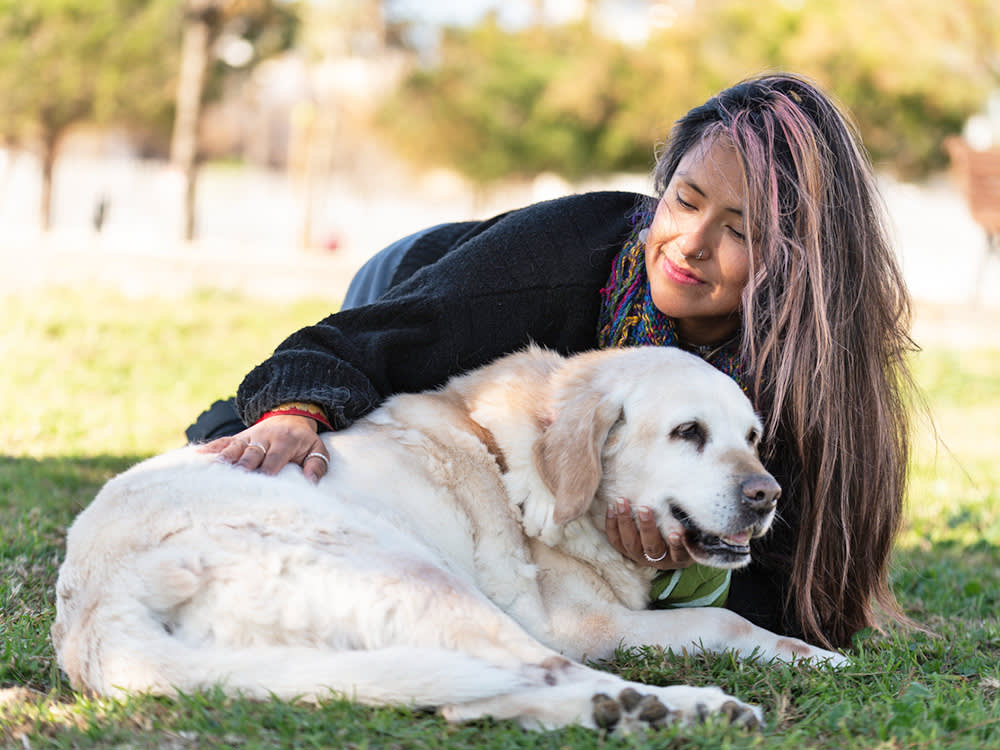
Say “hip dysplasia” and most people picture a gray-muzzled dog struggling to stand. That picture is real, but it is the end of the story, not the beginning. Hip dysplasia is a developmental condition, which means it starts while a puppy is still growing, often before there is a single obvious symptom. The cruel part is timing: several of the interventions that help most only work if the problem is caught early, sometimes before three months of age. By the time a dog is visibly limping, the most protective options may already be off the table.
That is why this piece is built around the calendar as much as the condition. If you are bringing home a large-breed puppy, or you already have a stocky dog, the goal is to know what to look for and when, not to react once the damage is done.
What is actually happening in the joint
In a dog with hip dysplasia, the coxofemoral joint, the hip, forms improperly during a puppy’s growth. The hips are normal at birth; the trouble arrives as the puppy grows and the joint fails to tighten, developing laxity, or looseness. A loose joint means the ball and socket no longer glide together, and that friction sets off inflammation while wearing down bone and cartilage, ending in early-onset osteoarthritis, also called degenerative joint disease.
Genetics load the dice, but they are not the whole story. Environment, the timing of sterilization, and body build all shift the odds. A puppy given free access to stairs very early, before three months, faces higher odds. Large-breed dogs fixed at a very young age can also carry more risk, though rescue dogs are often altered early for entirely understandable reasons. And a stocky, stout frame raises risk more than a lean, lanky one.
Which dogs are most at risk
The condition turns up most in large and giant breeds, though a dog’s build matters as much as sheer size. Pugs are not large, yet their shape makes them prone to it, while a lean Greyhound is comparatively spared. As a rule, stocky beats slender for risk. The breeds most affected include:
- German Shepherd
- Labrador Retriever
- Golden Retriever
- Rottweiler
- Great Dane
- Newfoundland
- Saint Bernard
- Bulldogs (American, English, and French)
- Mastiff
- Basset Hound
- Pug
- Corgi
The early signs, which look like behavior, not pain
Because it is developmental, symptoms may not appear right away, but warning signs can show up in a puppy only a few months old. Early on they surface as shifts in behavior driven by hind-end discomfort rather than obvious pain:
- Occasional limping in one or both hind limbs
- A “bunny hop” with the back legs when running or playing
- Sitting frequently
- Reluctance to run or jump
- Being slow to rise
What it looks like once it progresses
As joint degeneration advances, the signs get more severe and start to overlap with those of hip arthritis in older dogs. Common signs of established hip dysplasia include hip pain, persistent hind-limb lameness, difficulty rising or lying down, trouble jumping or taking stairs, a sway in the hips while walking, a bunny-hop gait, audible clicking from the joints, leaning forward to unload the hind end, and muscle atrophy in the back legs.
How vets diagnose it
Diagnosis combines a physical exam with imaging. A vet may check for excessive looseness by positioning the hip a specific way, the Ortolani test, and radiographs of the hip are the most common confirmation. Both the exam and the X-rays often require sedation or anesthesia so the hips can be positioned correctly, especially in a dog that is already sore.
If you’re bringing home an at-risk breed, ask your vet about screening before there’s a problem, not after. This is a condition where early diagnosis genuinely changes the options on the table. Some of the joint-preserving surgeries only work in a narrow puppy window, so catching laxity early can mean the difference between preventing arthritis and just managing it for the rest of the dog’s life.
Treatment, starting with the non-surgical route
Many dogs do well without an operation. Medical management blends medication with lifestyle changes, and weight is the centerpiece. Keeping a dog lean takes pressure and stress off the hip joints and is a priority for any overweight dog. Low-impact exercise maintains strength without pounding the joint; swimming is a favorite, and physical-therapy exercises preserve range of motion and muscle.
Joint supplements can protect cartilage and ease arthritis pain. Common oral ingredients include glucosamine, chondroitin, omega-3 fatty acids, and green-lipped mussel extract, and vets sometimes recommend injectable joint protectants as well. Even over-the-counter versions are worth clearing with your vet first. For pain and inflammation, the usual first-line pick is a non-steroidal anti-inflammatory drug (an NSAID), with other options if that alone falls short. Some owners also see benefit from supplemental therapies like acupuncture and stem-cell therapy.
When surgery is the answer
Surgical options depend on the dog’s age and the severity of disease. Some procedures preserve the joint; others are “salvage” surgeries meant to restore quality of life.
- Juvenile pubic symphysiodesis (JPS) reduces joint laxity in young dogs and must be done before about five months of age, which is exactly why early diagnosis matters.
- Double or triple pelvic osteotomy (DPO/TPO) realigns the hip in young dogs who have dysplasia but not yet arthritis, typically between five and ten months old.
- Total hip replacement is a salvage procedure for severe degenerative disease no longer responding to medical management, replacing both ball and socket with implants.
- Femoral head ostectomy (FHO) removes the ball of the joint to eliminate painful friction. It is less expensive than a full replacement but is generally reserved for dogs under about 45 pounds with severe disease in one hind limb.
Sterilization should also be part of the plan, not because it treats the disease, but because a dog carrying this condition shouldn’t be passing it into a litter.
What’s new since this was written
The biggest change in canine joint-pain care in years is a drug called Librela (bedinvetmab), which the FDA approved in May 2023 as the first monoclonal antibody for osteoarthritis pain in dogs. Instead of acting like a traditional painkiller, it binds and blocks nerve growth factor, a protein elevated in arthritic joints that helps carry pain signals to the brain. It is given as a once-monthly injection at the vet’s office, and more than a million dogs in the US had been treated within roughly two years of launch, with a label update following in 2025.
For a dog whose hip dysplasia has progressed to chronic arthritis, this matters because it adds a genuinely different tool alongside NSAIDs, weight control, and supplements, and some dogs tolerate it when they cannot take other drugs. It is not a cure and not a substitute for the early-window surgeries, and as with any newer medication it is worth discussing benefits and reported side effects with your vet. But it has meaningfully widened what “managing the pain” can look like, which is the whole ballgame for the many dogs who live long, full lives with well-controlled hip dysplasia.
References
- Cohn, Leah A., and Etienne Côté. Côté’s Clinical Veterinary Advisor: Dogs and Cats. 4th ed., Elsevier, 2020.
- Orthopedic Foundation for Animals. “Hip Dysplasia.” ofa.org
- Krontveit, R.I. et al. “A Prospective Study on Canine Hip Dysplasia and Growth in a Cohort of Four Large Breeds in Norway (1998–2001).” Preventive Veterinary Medicine, 2010.
- U.S. Food and Drug Administration. “FDA Approves First Monoclonal Antibody for Dogs With Osteoarthritis Pain.” fda.gov
Common questions
What are the early signs of hip dysplasia in a dog?
Watch for subtle changes as early as two to three months old: occasional hind-limb limping, a 'bunny hop' when running, frequent sitting, reluctance to run or jump, and being slow to rise. These behavior shifts often show up before any obvious pain.
Can hip dysplasia be treated without surgery?
Often, yes. Many dogs do well on medical management: keeping a lean weight, low-impact exercise like swimming, joint supplements, and pain medication. Surgery is reserved for dogs that don't respond or have severe disease, and some procedures must be done young to help at all.
Not a substitute for your vet. Our guidance is educational. For urgent symptoms, contact a vet or emergency clinic right away. Editorial standards
Dr. Chen is a small-animal veterinarian who leads health and safety coverage at The Pet Times. She writes and reviews the bulk of our illness, condition, and safety content, translating clinical guidance into clear, practical advice owners can act on at home.
Meet our experts ↗Keep reading
 Health & WellnessYour Puppy Just Threw Up. Here's How to Tell 'Wait and See' From 'Vet Now.'Dr. Lena Park · 7 min
 First DaysYour Puppy's First Vet Visit Is Won Before You Leave the HouseDr. Ravi Mehta · 8 min
 Health & WellnessThe Runt Isn't the Problem. The First 48 Hours Are.Dr. Priya Nair · 9 min
 Health & WellnessThe 8-Week Puppy Bath Rule Has Nothing to Do With GermsDr. Mara Chen · 9 min
 First DaysYour Puppy Wants a Bully Stick. Their Teeth Aren't Ready.Dr. Mara Chen · 6 min
 Health & WellnessThe '1 Dog Year = 7 Human Years' Rule Is Made Up. Here's the Real Math.Dr. Mara Chen · 9 min