


Your German Shepherd's Nose Isn't Special. A Pit Bull's Bite Isn't Either.
A 3D study of 117 dog skulls found we never actually bred dogs to smell or bite better. What that means for working dogs, breed stereotypes, and pit bull panic.

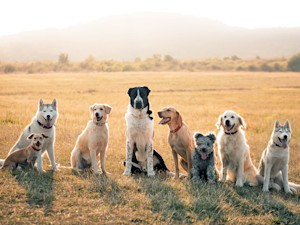
We tell ourselves a tidy story about dog breeds: the German Shepherd was engineered for its world-class nose, the guard breed for its crushing bite, the toy breed for a life of pampered leisure. It feels obviously true. According to a close look at the actual bone, it mostly isn’t.
A study published in early 2025 in the journal Science Advances took 3D scans of dog skulls and found something that upends the “bred for the job” assumption: when it comes to skull shape, the breeds we think of as specialists aren’t structurally specialized at all. We reshaped how dogs look, dramatically. We did not, it turns out, successfully reshape what their skulls can do.
What the researchers did
The team used 3D reconstruction to analyze 117 dog skulls spanning 40 domestic breeds (alongside wild canids for comparison). Then they zeroed in on the anatomy that ought to matter for the classic “specialist” jobs: the structures inside the nose and jaw that do the work of smelling and biting.
Skull shape did vary across breeds in plenty of ways. But the parts tied to smelling and biting function were remarkably alike from breed to breed. Crucially, the researchers found no evidence that skull shape actually contributed to task ability. Dogs bred for a stronger bite, for instance, did not post different bite-force measurements. The structural specialization we assumed was there simply wasn’t showing up in the bone.
As study co-author Lindsay Waldrop explained to Phys.org, humans have spent the last two centuries creating hundreds of breeds that look very different and are reputed to be specialists at herding, guarding, and scent work, and we assumed those looks reflected structural specialization. For the skull, at least, the study says that assumption doesn’t hold: these dogs aren’t built differently for the tasks that involve the skull, like biting and scent work.
There was one genuine exception. Flat-faced (brachycephalic) breeds like Bulldogs and Pugs really were deliberately reshaped, given their shortened snouts by intentional breeding. But even that wasn’t for a job. It was for appearance, an aesthetic preference, and it famously brings breathing problems rather than any functional edge.
What actually makes a working dog
If not the skull, then what? The research points to the things breed stereotypes tend to ignore: personality and training. A dog’s temperament and how they’re taught, not the shape of their head, are what determine whether they excel at a task. Physical build alone can’t predict performance. We bred dogs to look wildly different from one another, and those cosmetic changes just didn’t carry the functional payload we credited them with.
This lines up with what good trainers have said for years. I’ve watched ‘wrong breed’ dogs outwork textbook picks over and over. Drive and training beat pedigree, and now the anatomy backs that up.
The part that matters most: breed panic
This is where a skull study stops being a curiosity and starts mattering for real dogs. The same research directly undercuts one of the most consequential myths in the dog world, that certain breeds, pit bulls above all, are inherently more dangerous because of how their jaws are built.
The researchers were blunt about it. Waldrop noted that news coverage of dog attacks often singles out specific breeds like pit bulls, alongside claims that such dogs out-bite others of the same size or possess unique traits, the fabled “locking jaws” among them, that supposedly make them uniquely dangerous. The study, she said, shows that simply is not true: dogs bred to bite are not structurally different from dogs bred to do anything else. There is no anatomical basis for the “these jaws are built different” argument that props up breed bans and breed-specific fear.
That doesn’t mean any dog can’t bite, or that behavior and history don’t matter. It means the physical premise underneath a lot of breed panic, that some breeds are engineered weapons, isn’t supported by the bone. Judge the dog, not the silhouette.
What’s new since this was written
The skull study slots into a growing body of research pushing the same conclusion from different angles: breed is a weak predictor of an individual dog’s behavior and ability. Large genetics-and-behavior studies in recent years have found that breed explains only a small fraction of the variation in how individual dogs act, with personality differences within a breed often dwarfing the differences between breeds. The old idea that breed is destiny keeps shrinking as the data comes in.
The practical takeaway is refreshingly freeing. When you’re choosing a dog, evaluating a working prospect, or meeting an unfamiliar dog at the park, the label on the breed tells you far less than the individual in front of you. Meet the actual dog, their temperament, their training, their history, and you’ll be reading the thing that genuinely predicts how they’ll behave.
References
- Hebdon, N., Waldrop, L. D., et al. “Dog skull shape challenges assumptions of performance specialization from selective breeding.” Science Advances, January 2025.
- Are dogs really bred for function? New Chapman study challenges the assumptions about certain breeds. Chapman University Newsroom, January 2025.
Common questions
So why is my German Shepherd a great scent dog?
Training, drive, and individual personality, far more than skull anatomy. The research points to a dog's temperament and how they're trained as the real drivers of working ability, not their breed's physical build.
Does this mean pit bulls don't bite harder?
That's exactly what the researchers concluded. They found no structural evidence that dogs bred to bite are built to bite harder than similar-sized dogs of other breeds, and no support for myths like 'locking jaws.' Breed-based danger claims aren't backed by skull anatomy.
What about flat-faced breeds like Bulldogs and Pugs?
Those were the exception. Humans did deliberately breed brachycephalic dogs for shortened snouts, but for looks, not for any task. That reshaping serves aesthetics, and it comes with well-known breathing problems, not performance gains.
Dr. Kohl is a board-certified veterinary dentist with a particular interest in preventive oral care. She reviews all dental health content at The Pet Times and contributes practical guides on home dental routines, professional cleaning, and oral disease prevention.
Meet our experts ↗Keep reading
 LivingA Wolfdog Is Not a Fluffier Husky. Nobody Can Tell You What You Actually Own.Dr. Ravi Mehta · 8 min
 Health & WellnessThe Same Scents That Calm a Shelter Dog Can Poison YoursDr. Lena Park · 7 min
 TrainingYour Dog Hates These 8 Smells. Some of Them Can Actually Hurt Them.Dr. Amara Solis · 7 min
 Health & WellnessYour Dog Becomes an Adult Three Separate TimesDr. Ravi Mehta · 9 min
 TrainingStop Asking Why Your Dog Scratches the Carpet. Ask Where.Dr. Nina Kohl · 7 min
 Health & WellnessA Quiet Dog Is Fine. A Newly Quiet Dog Is a Symptom.Dr. Ravi Mehta · 7 min