


The Bordetella Vaccine, Decoded: Not Whether to Get It, but Which Kind and When
The real bordetella questions most owners never get answered: which of the three forms protects fastest, how many days before boarding to get it, and how to match the vaccine to your dog's actual life instead of guessing.

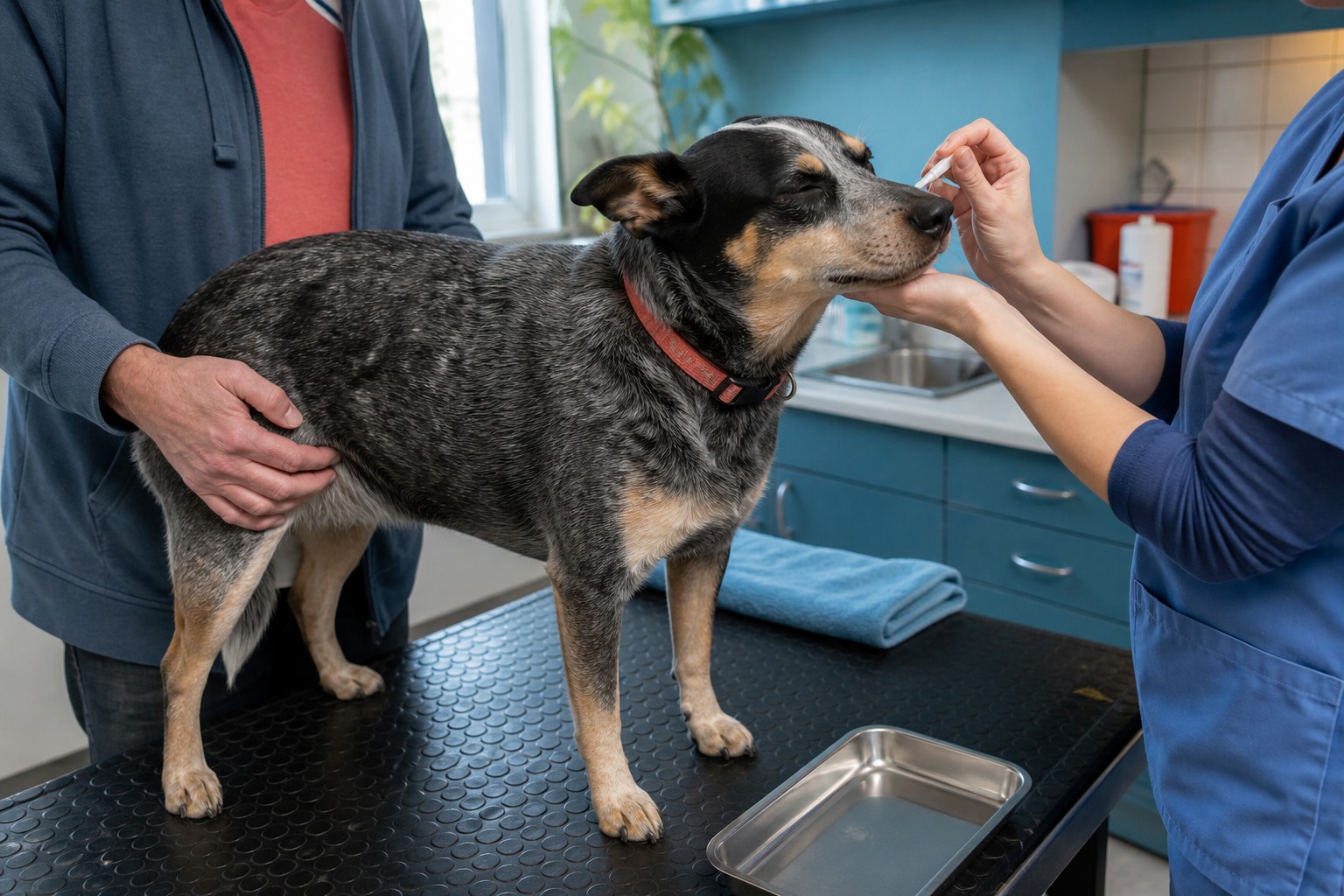
Most bordetella advice answers a question you have probably already settled: does my dog need it? If your dog boards, goes to daycare, gets groomed, or hits the dog park, the answer is almost certainly yes. The questions that actually trip owners up are the ones nobody explains, namely which of the three forms of the vaccine to get, and how far ahead of that boarding reservation it has to happen to do any good. Get those wrong and a “vaccinated” dog can still come home with kennel cough. Here is the version of this conversation that goes past the yes-or-no.
First, the thing the vaccine is fighting
Bordetella bronchiseptica is a bacterium and one of the leading causes of kennel cough, a highly contagious respiratory illness that can hit any dog at any age. It spreads through respiratory droplets and contaminated objects, a sneezed-on water bowl, a shared toy, the bars of an adjacent kennel run, which is why places where dogs cluster are the classic hotspots. It rarely turns life-threatening, but it is miserable and disruptive, bringing on:
- A dry, honking cough that sounds like something is stuck in the throat
- Runny nose and watery eyes
- Sneezing
- A mild fever
- Lethargy
- A reduced appetite
Kennel cough is not picky about species in the way you might assume, either. Cats can catch it, so a coughing dog should be kept away from the household cat as well as other dogs. In healthy people it does not cause disease, so this is a dog-and-other-pets problem, not a human one.
The decision most owners skip: which form
This is the part that matters and almost never gets explained at the counter. The bordetella vaccine comes three ways, and they are not interchangeable.
The intranasal (nose drops) and oral forms build mucosal immunity, meaning protection right at the lining of the nose and mouth where the bacteria actually try to get in. That local defense is why these forms work the way they do: protection begins in roughly 48 to 72 hours, and immunity lasts about 12 to 14 months. They can also cover canine parainfluenza, another common kennel-cough culprit, in a single dose.
The injectable form works differently. It needs two doses given a few weeks apart before it is effective, takes longer to ramp up, and does not produce the same targeted defense in the upper airway. Head-to-head, the mucosal forms tend to give faster, longer, and more locally focused protection. The injectable is mainly the right call for a dog who genuinely will not tolerate something squirted up the nose or into the mouth.
The practical translation: for most social dogs, ask for the intranasal or oral version unless your vet has a specific reason to choose the shot.
The timing mistake that wastes the whole thing
Because the mucosal forms take two to three days to start protecting, a bordetella vaccine given the morning of a boarding drop-off is doing essentially nothing on day one of the stay, exactly when exposure risk is highest.
“The number-one bordetella error I see is people getting it on the way to the kennel,” says Dr. Amara Solis. “The vaccine is fine, the timing is the problem. Give it at least three to five days ahead, and a week is better. That small bit of lead time is the difference between protection and a false sense of one.”
This is also why many boarding and daycare facilities require proof that the vaccine was given five to seven days in advance, and some want it boosted every six months rather than annually. When you book, ask what their window is and back-plan the vet visit from there.
Matching it to your dog’s real life
Bordetella is a non-core vaccine, which means it is recommended based on lifestyle rather than given to every dog automatically. The honest way to decide is to look at your dog’s actual month.
A dog who boards, attends daycare, is professionally groomed, takes group training classes, travels, or frequents dog parks is regularly in the kind of close, shared-air setting where kennel cough moves fast. That dog is a clear candidate, and the vaccine can start as early as six to eight weeks of age in puppies. A dog who mostly stays home, walks solo, and rarely mingles with unfamiliar dogs has a much lower exposure profile and may reasonably skip it. The point is to match the vaccine to the risk, not to default to either yes or no.
The honest risk-and-benefit picture
No vaccine is risk-free, and bordetella is no exception, though it is generally well tolerated. The common side effects are mild and short-lived: a low-grade fever, mild lethargy, and a dip in appetite, usually resolving within about 24 hours. An injection-site dose can leave some tenderness or swelling; a nasal dose can cause a little sneezing or coughing for a day or two. Serious reactions, such as vomiting, diarrhea, a skin rash, or facial swelling, are rare but warrant an immediate call to your vet.
Set against that low and mostly trivial risk is solid efficacy when the vaccine is given correctly and on time. For a dog whose life regularly puts them shoulder to shoulder with other dogs, that trade strongly favors vaccinating. Just remember that “correctly and on time” is doing real work in that sentence, which is the whole reason the form and the timing deserve more attention than the yes-or-no.
The bottom line
- Bordetella is a leading cause of kennel cough, a highly contagious respiratory illness that brings on a hacking cough, fever, and lethargy.
- For most social dogs, the intranasal or oral vaccine is the better choice: it protects in 48 to 72 hours, lasts 12 to 14 months, and defends the airway directly.
- Time it at least three to five days before boarding or daycare, confirm your facility’s required window, and match the decision to your dog’s real exposure rather than a blanket rule.
References
- American Animal Hospital Association, “2022 AAHA Canine Vaccination Guidelines: Bordetella, Canine Parainfluenza, and Canine Influenza.”
- Ellis, J.A., et al., “Thirteen-Month Duration of Immunity of an Oral Canine Vaccine Against Challenge with Bordetella bronchiseptica,” Veterinary Record Open, 2020.
- American Kennel Club, “Bordetella Vaccine: What to Know About the Vaccine for Dogs.”
- American Veterinary Medical Association, “Vaccinations.”
Common questions
Which bordetella vaccine is best, the nose drops, the oral, or the shot?
For most social dogs, the intranasal or oral form is preferred. Both build mucosal immunity right where the bacteria enter, start working in a few days, and last 12 to 14 months. The injectable form needs two doses several weeks apart to take effect and is mainly used for dogs who will not tolerate the nose or mouth route.
Is the bordetella vaccine necessary for every dog?
No. It is a non-core, lifestyle-based vaccine. Dogs who board, are groomed, go to daycare, visit dog parks, or attend group classes benefit most. A dog who mostly stays home with little contact with other dogs may not need it. Match it to your dog's actual routine.
How often does the bordetella vaccine need a booster?
The mucosal forms provide roughly 12 to 14 months of immunity, so annual revaccination is standard. Some boarding and daycare facilities require it every six months, so check their policy when you book.
Can dogs spread bordetella to people?
It is an animal disease and does not cause illness in healthy people, but it spreads quickly between dogs and can infect cats, so keep a coughing dog away from other pets.
Not a substitute for your vet. Our guidance is educational. For urgent symptoms, contact a vet or emergency clinic right away. Editorial standards
Dr. Kohl is a board-certified veterinary dentist with a particular interest in preventive oral care. She reviews all dental health content at The Pet Times and contributes practical guides on home dental routines, professional cleaning, and oral disease prevention.
Meet our experts ↗Keep reading
 Health & WellnessDon't Ask What the Average Vet Bill Is. Ask What Your Worst Year Could CostDr. Ravi Mehta · 9 min
 Health & WellnessYou Can't Brush Off Tartar. You Have 72 Hours to Beat It.Dr. Mara Chen · 9 min
 Health & WellnessYou Nicked the Quick. Here's the 5-Minute Rule That Handles ItLeila Torres · 6 min
 Health & Wellness'Too Old to Treat' Is a Guess About a Statistic, Not Your DogDr. Ravi Mehta · 6 min
 Health & WellnessChronic Kidney Disease in Dogs Is a Race Against Time. How to Win GroundDr. Lena Park · 7 min
 Health & WellnessThe Skin-Pinch Test for Dehydration Fails on the Dogs Who Need It MostDr. Amara Solis · 8 min