


Sleep Style First: Beds, Crates, and Towers Matched to How Your Pet Rests
A nester, a sprawler, and a heat-seeker need three different beds, and most people buy the wrong one. We sorted the best beds, crates, cat towers, and hammocks by sleep style, with the founders and vets behind them.

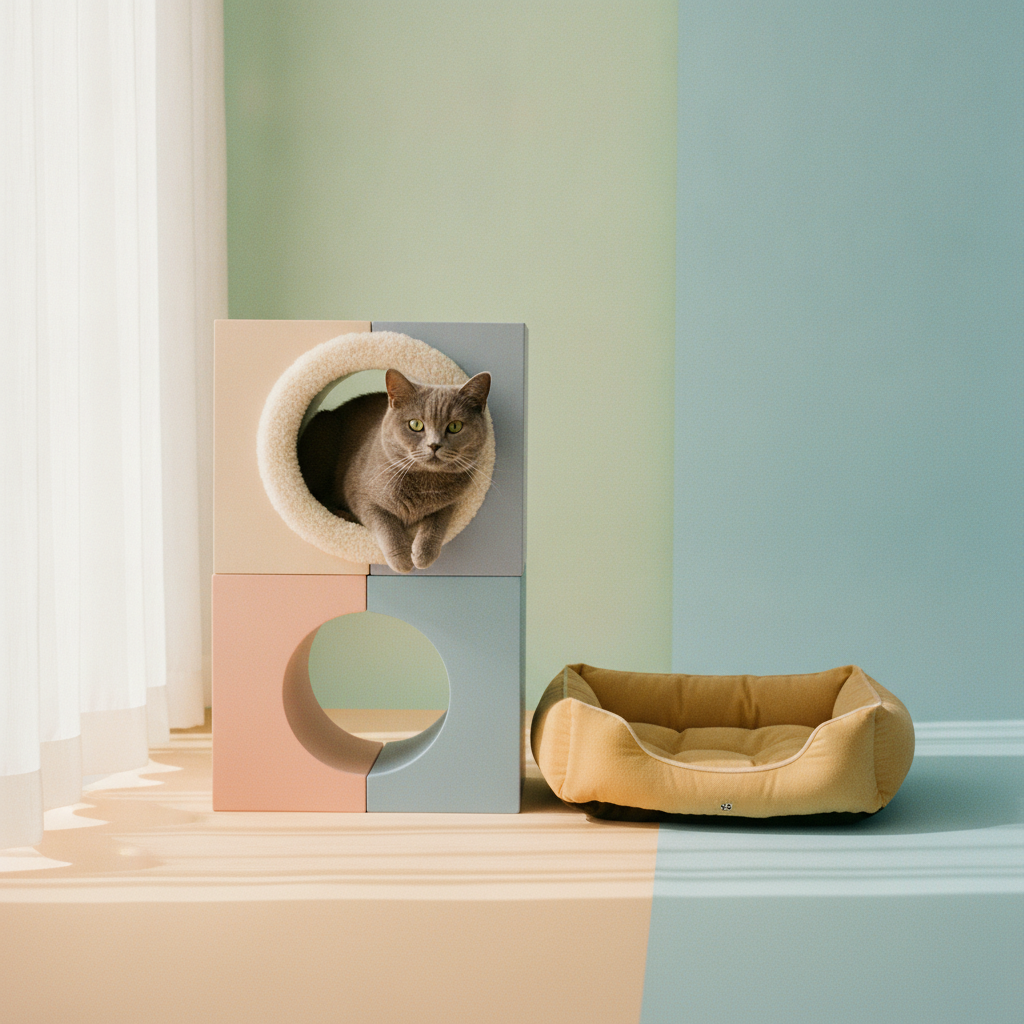
The reason your expensive bed sits empty while your cat sleeps in the box it shipped in is almost never the bed’s quality. It is a mismatch between the bed and how that particular animal chooses to rest. Cats and dogs sort into a few clear sleep styles, the nester who wants to be surrounded, the sprawler who wants to stretch flat, the heat-seeker who follows the sun, the burrower who disappears under a blanket, and each one needs a different shape. Buy for the style and the bed gets used; buy for the looks and you have donated to the cardboard-box cause.
So instead of awarding “best cat bed” in the abstract, here are our picks sorted by the sleeper you actually live with, with the founders’ and vets’ reasoning that earns each one its spot.
Figure out your pet’s sleep style first
Watch where your pet ends up at 3 p.m. for a few days. A pet who curls tight into corners, presses against cushions, or tucks into laundry is a nester who wants bolstered, enclosed sides. One who flops flat on cool floors, belly down and legs out, is a sprawler who needs a roomy flat mat, not a cradle. A pet who migrates to follow a sunbeam across the room is a heat-seeker who will pick a warm perch over the plushest bed every time. And the one who tunnels under your duvet is a burrower who wants a cave or a cover to crawl into. Match the shape to the behavior and everything below gets easier.
For nesters who want to be surrounded
A nester relaxes when something is touching their back. Bolstered and enclosed shapes do the work.
For cats, Mau’s eco-friendly knit Vevo bed is the strong pick, with sides that adjust from a low cradle to a taller near-enclosure. “The adjustable sides add real warmth and a sense of enclosure for the cats who like to hide,” notes founder Joel Dickstein, whose brand uses soft knitted fabrics rather than scratchy polyester and directs five percent of proceeds to animal welfare and conservation. The taller you fold the sides, the better it suits a true nester.
For dogs who nest, Lay Lo began on Etsy as a design-forward answer to ugly pet beds and now runs locally made capsule collections, some using upcycled or recycled materials, with collaborators including textile designer Warren Aldrich and Joseph Altuzarra. Each bed pairs a swappable orthopedic mattress with a washable, replaceable duvet-style cover, so the nesting surface stays clean without tossing the whole bed.
For sprawlers who stretch out and need real support
A sprawler presses a soft bed flat and ends up on the floor, so support, not plush, is the priority, especially as joints age.
The Animals Matter Raine Puff Companion-Pedic uses a Companion-Pedic memory-foam base built to relieve pressure on aging joints. “For senior dogs especially, supportive foam can take real load off the hips, knees, and elbows compared with a firmer or thinner bed,” says Dr. Amara Solis, a Pet Times veterinary contributor. “Most dogs develop some arthritis with age, and where they sleep for half the day matters more than people think.” The line is vegan, eco-friendly, and U.S.-made. For sprawlers, skip the deep bolster and give them room to extend.
For heat-seekers who follow the sun
A heat-seeker will choose a warm, elevated spot over any bed on the floor. Give them the high, sunny perch they are already hunting for.
Tuft + paw’s felt window hammock installs with suction cups and holds cats up to 30 pounds, putting them exactly where they want to be. “Warmth is a powerful draw for cats, so a sunlit spot at the glass lands with nearly every one of them, and the passing parade of birds and squirrels is a bonus,” explains Pet Times feline behavior contributor Dr. Nina Kohl. “Height matters too. As both predator and prey, cats feel safest somewhere elevated where they can survey the room and spot anything approaching.” The matte-black frame is understated and the clear suction cups nearly vanish against the glass; add the brand’s blanket topper for extra warmth.
For cats who want vertical territory with style, tuft + paw’s sculptural Grove tower is sleek enough to read as furniture, with a faux-shearling top perch and a padded interior cave. “Cat products were held to such a low standard despite how much we love our cats. I knew we could do better,” says founder Jackson Cunningham, who designed it after striking out shopping for his own cat, Jiggity.
For scratchers who need the right post, not just any bed
Some “sleep” furniture earns its place by protecting your couch. Cats scratch to stretch, mark, and shed nail sheaths, and a flimsy post fails the job.
“A good scratcher is tall enough for a full-body stretch, heavy and sturdy enough that it will not tip while a cat throws their weight into it, and rough enough to actually condition the claws,” says Dr. Amara Solis. A solid cat tree checks all three. Once the basics are covered, you can pick one you actually want in your living room, like a handmade, ’70s flower-power tree built from real treated wood branches, ideal for a sun-loving cat who likes to be seen.
For dogs who need a den, not a bed
For many dogs, the right “bed” is a crate that functions as a den, a retreat from fireworks, parties, or too much commotion. The Association of Professional Dog Trainers recommends the crate as a short-term training tool for puppies and a safe space later in life.
A lightweight, well-ventilated soft crate works like a glamping tent: durable, breathable, and packable over a shoulder when you travel. If you want the crate to disappear into your home, Fable makes a sleek piece that doubles as furniture. “If you dislike the look of a wire crate, there are versions built to look like end tables or bureaus, decorative and functional at once,” says Dr. Nina Kohl. “As long as your dog is not a determined chewer of wood, they work beautifully, and crate familiarity also lowers stress at the vet.” For puppies, the crate doubles as a housebreaking and chew-management tool that pays off long after the bite-y months.
The bottom line
Stop shopping by category and start shopping by behavior. Identify whether you have a nester, a sprawler, a heat-seeker, a burrower, or a den-dog, buy the shape that fits, and the empty-bed problem mostly disappears. The brands above happen to back their design with sustainability and real reasoning, which is a good reason to give them your money once you know which shape to pick.
References
- Association of Professional Dog Trainers. “Crate Training Your Dog.” apdt.com.
- American Association of Feline Practitioners. “Environmental Needs Guidelines.” catvets.com.
- Ellis, S. L. H., et al. “Environmental Enrichment for the Domestic Cat.” Journal of Feline Medicine and Surgery, 2013.
Jordan Ellis is a certified professional dog trainer with a decade of experience working with rescue organisations and private clients. They specialise in anxiety, reactivity, and positive reinforcement methods, and review all training and behaviour content at The Pet Times.
Meet our experts ↗Keep reading
 Product Picks7 Pieces of Dog Gear That Won't Wreck Your Living RoomSara Lim · 6 min
 Product PicksThis Brand Treats Your Dog's Bed Like Real Furniture. It Started With a Scared Labrador.Marcus Webb · 5 min
 Product PicksZara's Pet Collection Is Beautiful. Half of It Shouldn't Go Near a Dog.Sasha Ford · 8 min
 Product PicksYour Sheets Are a Fur Magnet. This Bedding Was Built to Fight BackNina Vasquez · 4 min
 Product PicksThis Designer Makes Pet Furniture You're Not Supposed to SeeSasha Ford · 5 min
 Product PicksWhere Your Pet Sleeps Is an Instinct, Not a Decorating ChoiceSasha Ford · 13 min