


This Brand Treats Your Dog's Bed Like Real Furniture. It Started With a Scared Labrador.
MiaCara applies German manufacturing rigor, FSC wood, REACH safety testing, renewable energy, to the ugliest category in the home. Founder Sebastian Zweig on Scandi-meets-German design, and why it began with a cushion his dog refused to touch.

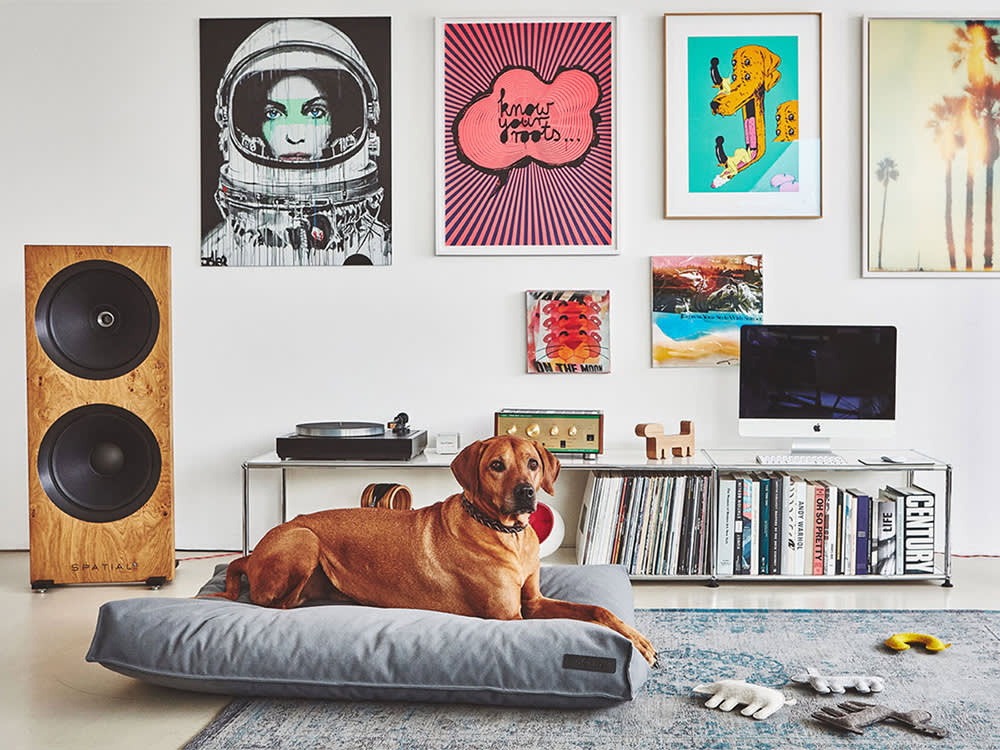
Walk through most homes and you can spot the pet stuff instantly, because it is the one category the owner stopped caring about. The neon plastic bowl, the carpeted tower, the bed printed with cartoon paw prints. MiaCara’s entire premise is a refusal of that shrug. The German brand treats a dog bed or a litter box the way it would treat a dining chair, as a piece of furniture that should be beautiful, safe, and built to last. And the whole thing started because a Labrador was afraid of a cheap cushion.
A dog changed a furniture man’s career
MiaCara co-founder Sebastian Zweig was not, by his own account, a pet person. His wife, Barbara, and their two boys were the ones lobbying for a dog; he was skeptical. Then Cara the Labrador arrived and, as these things go, rearranged his life. Within two years he had left his job at the Swiss fine-furniture maker de Sede and launched, with Barbara, a luxury design brand for dogs, cats, and the aesthetically particular humans who live with them.
The specific spark was small and telling. The family bought Cara a new dog cushion, and she refused to lie on it, spooked by the crinkle of its styrofoam-ball filling. Zweig’s reaction was less “poor dog” and more “this can be done better.” The brand launched in 2011 on a single principle borrowed straight from design school: form should follow function. He had no formal design training, just a long-running interest in design and architecture and a taste for the minimalist and functional, an eye he says his last job at de Sede sharpened into a genuine urge to make well-made, long-lasting objects.
The rigor is the point
What separates MiaCara from the wave of prettier pet brands is how far the seriousness goes past looks. The designs are distinctly European and, more importantly, made like European furniture. Products are built largely in Europe from Forest Stewardship Council-certified wood and, where they can manage it, recycled materials, and the company’s offices and warehouse run on 100 percent renewable energy. The commitment reaches the box it ships in: FSC-certified cardboard, sealed with fully biodegradable paper tape, with no plastic or styrofoam filler, an especially pointed choice given that styrofoam is what scared Cara off in the first place.
That FSC label is not decoration. It certifies that the wood comes from responsibly managed forests, the kind of supply-chain claim the furniture world takes seriously and the pet aisle almost never bothers with. Zweig frames it plainly: the goal is durable, premium products made with minimal impact, developed alongside customers and suppliers rather than in spite of them. The catalog now spans beds, collars, rain coats, leashes, litter boxes, toys, and scratching posts, and the through-line is that each one is designed to look at home in a room a design-minded person actually curated.
Then the cats got their due
MiaCara’s move into cats, the Gatto line launched in 2015, came from watching its own customers. People kept buying items from the dog collection, a small cushion here, a compact feeder there, and using them for their cats. When Zweig looked closely at the cat market, he found it even more neglected than the dog market had been, with cat furniture that struck him as, in a word, ugly. He also spotted the deeper reason it mattered: most cats now live entirely indoors, which means their furniture has to do a job.
This is where the brand’s design philosophy intersects with something vets have been saying for years. An indoor cat needs its environment to supply what the outdoors used to, opportunities to scratch, hide, perch, play, sleep, and eat in ways that suit feline instincts. Environmental enrichment isn’t a luxury for an indoor cat; it is preventive care against boredom, stress, and the behavior problems that follow. A scratching post or a cat cave is only “decor” on the surface. Underneath, it is meeting a genuine behavioral need, which is a good argument for buying one you will actually keep in the room rather than hide.
How a MiaCara product gets made
The development process reads more like an appliance company than a pet brand. Every project starts with the needs of both the animal and the owner, then goes to the designers, who are challenged to solve those needs in a form that is also distinctive and good-looking. A first prototype gets tested with a range of real cats. If the design holds up, a second prototype is put through safety and compliance testing against international standards, including REACH, the European Union’s stringent framework governing which chemicals can be present in a product. Only then does it ship. It is a lot of engineering to point at a cat bed, which is exactly the point.
As for whether German and American pet owners want different things, Zweig says the gap keeps narrowing as minimalist Scandinavian design takes hold in both markets. His bet is simple and, increasingly, correct: anyone who cares about the look of their home does not want an ugly pet product sitting in the middle of it. MiaCara exists to fill that space, and it traces all the way back to a dog who knew a bad cushion when she felt one.
MiaCara is a European brand not sold through Amazon; product links go directly to the maker.
Marcus Webb writes about the gear, gadgets, and everyday choices that make life with a pet easier. His coverage runs from product picks to training and the causes worth paying attention to, always with an eye on what actually earns a place in your home.
Meet our experts ↗Keep reading
 Product PicksWhere Your Pet Sleeps Is an Instinct, Not a Decorating ChoiceSasha Ford · 13 min
 Product PicksThis Designer Makes Pet Furniture You're Not Supposed to SeeSasha Ford · 5 min
 Product PicksThe Window Hammock That Ends the Cat-Versus-Houseplant WarSara Lim · 3 min
 Product PicksThe Prettiest Dog Bed of the Terrazzo Era Was Really an ElegyNina Vasquez · 5 min
 Product Picks7 Pieces of Dog Gear That Won't Wreck Your Living RoomSara Lim · 6 min
 Product PicksThe 8 Best Cat Trees for Maine Coons, Sorted by Size and Your CeilingSasha Ford · 11 min