


This Designer Makes Pet Furniture You're Not Supposed to See
Hiddin's clear acrylic gates, crates, and beds are built on one contrarian idea: the best pet gear for a small home is the gear that disappears. A look at Tracey Butler's invisible-furniture bet, and whether lucite actually holds up.

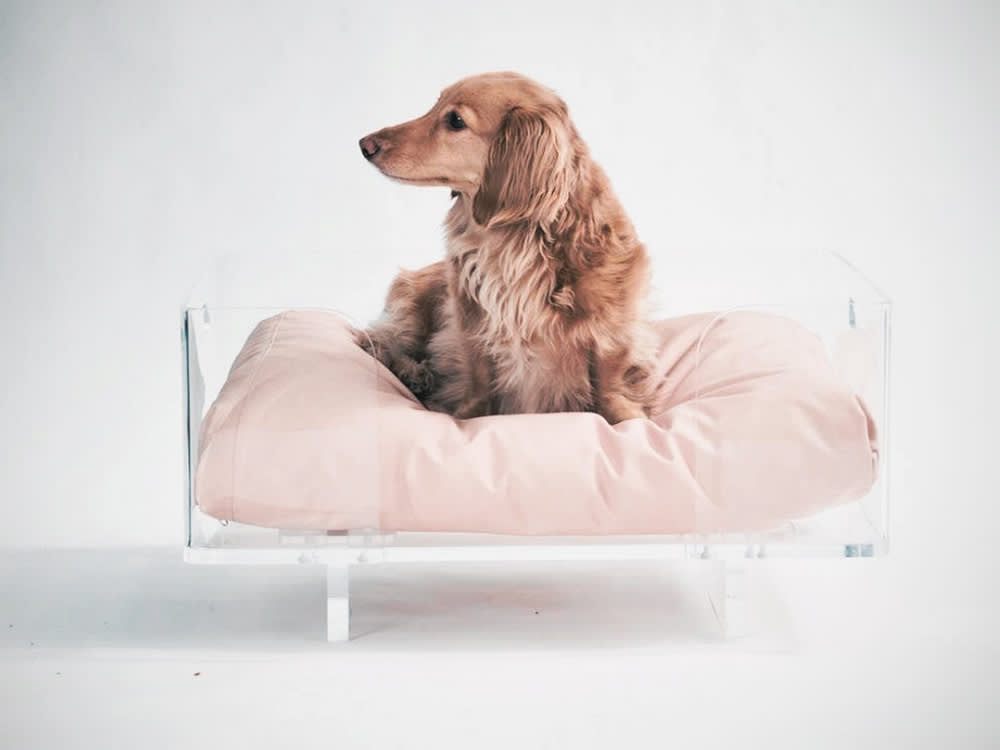
Most pet furniture asks you to make peace with a compromise. You love your dog, so you accept the chunky wooden baby gate scarring the doorway, the wire crate parked like a cage in the living room, the plastic bowls that clash with everything. The gear announces itself in every room. Hiddin is built on the opposite instinct: what if the best pet product in a small, design-conscious home is the one you can barely tell is there?
That is the whole bet. Hiddin makes gates, crates, playpens, beds, feeders, toy bins, bowls, collars, and leashes out of clear lucite, and its tagline says the quiet part out loud: hidden in plain sight. The pieces do their job while more or less vanishing into the room around them.
The Ghost Chair, but for the dog
If a transparent piece of furniture becoming a design icon sounds far-fetched, it has happened before. Some twenty years back, the designer Philippe Starck and the brand Kartell reworked a classic Louis XV armchair in clear polycarbonate and called it the Louis Ghost. Lightweight, minimalist, and faintly witty, it turned invisibility into a status object and spawned a whole category of see-through decor for anyone who wanted furniture that took up space without visually taking up space.
Hiddin applies that same logic to the parts of your home your pet has colonized. A clear zig-zag gate holds its line across a hallway without the wall damage or the eyesore of the metal version. A lucite crate contains without looking like confinement. The effect is a little uncanny, which is part of the charm. There is genuine comedy in watching a puppy stopped cold by a barrier it cannot quite see.
The woman behind the invisible furniture
Hiddin is the pet-world spinoff of interior designer Tracey Butler, who spent more than two decades in design before turning her frustration into a product line. After early fashion-world stops at Bergdorf Goodman and Henri Bendel, she trained under the celebrated interior designers Jeffrey Bilhuber, whose clients have included Anna Wintour and David Bowie, and Thom Filicia of Queer Eye fame, before founding her own firm, Clear Home Design.
Her pet products carry the same DNA as her human interiors: pieces engineered to make small, cluttered spaces read as calmer and more open. The transparent perch blocks give cats the illusion of levitating on the wall. The elevated feeders pair the clear frame with glass or stainless-steel bowls. Butler’s pitch has always been that safety and style are not a trade-off, and that a pet does not need to live behind visible bars to live safely indoors.
Why lucite, specifically
The material is not just an aesthetic choice. Acrylic (lucite) is genuinely well suited to pet gear in ways wood and wire are not. It is lightweight, so a gate or crate is easy to move and reposition. It is impact-resistant, so it takes the daily abuse of a dog without cracking. And it wipes clean, which matters more with animals than with almost any other furniture in your house. The pieces are handcrafted in the United States, and the acrylic itself is now made from recycled and repurposed material, which softens the environmental cost of a plastic-based product.
There is also a subtle behavioral upside. A clear enclosure gives an anxious pet an unobstructed view of the room and the people in it, which can feel less like being shut away than a solid-walled crate does.
The honest tradeoffs
Invisible furniture is not magic, and it is worth going in clear-eyed. Clear acrylic scratches, and scratches show more on a transparent surface than on a busy fabric or a dark wood, so a heavy chewer or a determined digger will leave marks over time. Lucite pieces also tend to sit at a premium price, because you are paying for a design object as much as a dog bed. And “lightweight” cuts both ways: for a very large, very strong dog, a see-through crate is a containment aesthetic, not a maximum-security solution.
None of that sinks the concept. It just means Hiddin is aimed at a specific buyer: someone in a smaller or more design-forward home, with a small-to-medium pet, who genuinely cares that the gear blends in. For that person, gear that disappears is not a gimmick. It is the entire point.
What’s new since this was written
Hiddin has grown past its original lineup and now sells through its own shop, with a range that spans beds, gates, crates, playpens, feeders, toy bins, collars, and leashes. The brand has also leaned harder into sustainability, making its clear acrylic from recycled and repurposed material rather than virgin plastic, and pitching the see-through design as a way to ease pet anxiety by keeping a nervous animal’s sightlines open. The core idea has not changed, but the catalog and the eco story around it have both filled out.
Hiddin’s products are sold directly through the brand rather than through Amazon, so the links here point to the maker.
Sasha Ford is a certified cat behaviour consultant who has worked with shelters, catteries, and private clients across the country. They review all feline behaviour content at The Pet Times, with expertise in multi-cat households, indoor enrichment, and stress-related disorders.
Meet our experts ↗Keep reading
 Product PicksYour Sheets Are a Fur Magnet. This Bedding Was Built to Fight BackNina Vasquez · 4 min
 Product PicksWhere Your Pet Sleeps Is an Instinct, Not a Decorating ChoiceSasha Ford · 13 min
 Product PicksThe Window Hammock That Ends the Cat-Versus-Houseplant WarSara Lim · 3 min
 Product PicksYour Dog's Bed Is Wrecking Your Living Room. These 5 Won't.Leila Torres · 5 min
 Product PicksThese Dog Beds Are Handwoven by Indian Artisans, Not Stamped Out in a FactorySasha Ford · 4 min
 Product PicksYour Cat Doesn't Want a Present. She Wants Territory.Sara Lim · 6 min