


The Cat Bowl Is a Health Tool, Not Decor. How to Pick the Right One
A fussy eater is usually a bowl problem, not a food problem. Here is how to read your cat's mealtime behavior and match it to the right bowl, with tested picks for whisker fatigue, neck pain, gulping, and dehydration.

Affiliate disclosure. This article contains affiliate links. We may earn a small commission if you buy through a link, at no extra cost to you. How we handle recommendations.
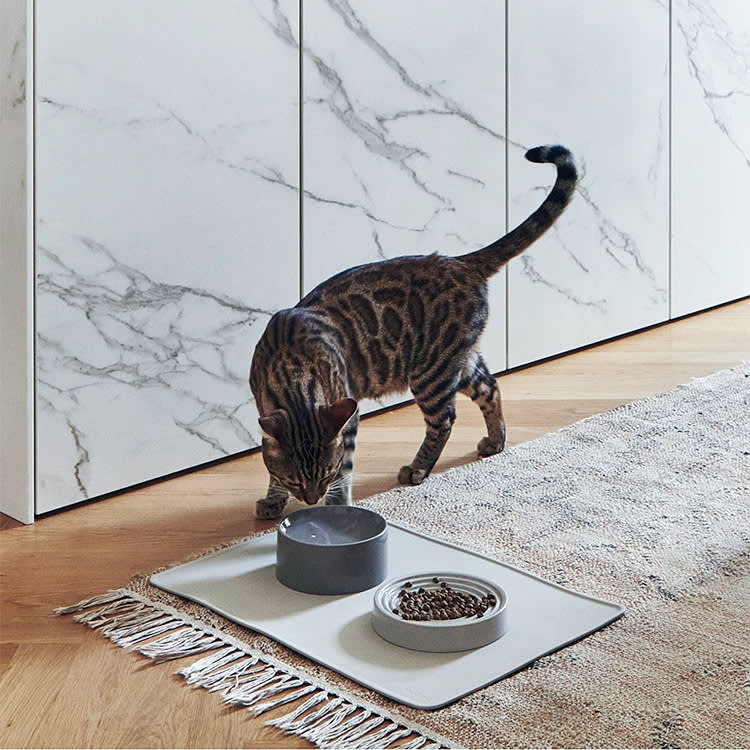
Most “picky eater” problems are not about the food. They are about the dish the food is sitting in.
A cat who licks water off a wet spoon but refuses a full bowl, who eats the edges and leaves a clean ring of kibble in the center, who paws at the floor around the dish or carries food out to eat it off the tile, is usually telling you something specific about the bowl: it is too deep, too narrow, too low, the wrong material, or simply not clean. Change the dish and the behavior often changes with it. That makes the cat bowl one of the cheapest pieces of preventive care you can buy, and one of the most overlooked.
So this is not a catalog of pretty dishes. It is a short guide to reading your cat’s mealtime behavior, matching it to the right bowl, and then keeping that bowl clean enough to matter. We talked it through with our veterinary team, and tested the picks below against real cats.
First, read your cat
Before you buy anything, watch one or two meals and look for a tell.
A cat who eats from the edges and leaves the middle is often dodging whisker contact. A cat who lowers awkwardly, eats in short bursts, or stops early may be feeling neck or spine strain from a dish that sits flat on the floor. A cat who inhales the whole bowl and then vomits a few minutes later is gulping and needs to be slowed down. A cat who ignores still water but drinks from the faucet wants movement. And a cat with black specks or scabbing on the chin may be reacting to a plastic dish.
Each of those is a different bowl problem with a different fix, which is why a single “best cat bowl” does not exist. Below, the fixes are organized by the behavior, not by how the dish looks on your floor.
The material question, settled
Material is the one decision that applies to every cat, so handle it first.
“For everyday feeding, I steer owners toward stainless steel, glass, or glazed ceramic,” says Dr. Chen. “They are non-porous, so they do not hold onto oils and bacteria the way plastic does once it gets scratched. Plastic is also the material I most often see behind feline chin acne, those little blackheads along the jaw.”
Here is the short version of how the everyday materials compare:
| Material | Hygiene | Durability | Notes |
|---|---|---|---|
| Stainless steel | Excellent, non-porous | Nearly indestructible | Lightweight, so look for a no-slip base |
| Glazed ceramic | Excellent if unchipped | Good, can chip or craze | Heavy and stable; replace if the glaze cracks |
| Glass | Excellent, non-porous | Breakable | Easy to see when it is truly clean |
| Plastic | Poor, scratches harbor bacteria | High | Linked to chin acne; avoid for daily feeding |
If you already own a plastic dish your cat loves, the compromise is a high-grade, BPA-free plastic that you inspect monthly and retire the moment it shows scratches. But given the choice, the other three materials win on every measure that affects your cat’s health.
Fixes by behavior
go wide and shallow
A whisker-friendly dish is simply one wide enough and shallow enough that the food sits in a thin layer the whiskers clear. It does not have to be expensive or even shaped like a bowl. A flat ceramic saucer works. If you want a purpose-built option, look for a wide, shallow tilted ceramic cat bowl: the broad eating surface and slight tilt keep food off the whiskers, and glazed ceramic cleans up completely.
A practical note from Dr. Chen: “If you switch to a wide dish and your cat still leaves food, the issue may just be portion size and freshness. Cats do not like eating down to the stale layer at the bottom. Smaller, fresher servings often fix what looks like a bowl problem.”
raise the dish
For senior cats, cats with arthritis, and cats with conditions like megaesophagus, an elevated dish that brings the food up 3 to 5 inches can make eating noticeably more comfortable. The Necoichi raised cat food bowl is a well-made ceramic option with a tilt built in, so it raises the food and angles it toward your cat at the same time. Skip elevation for a healthy young cat, though, who does not need it.
slow it down
A slow feeder turns a 20-second binge into a few minutes of working for the food, which cuts down on the gulp-then-vomit cycle and gives a little mental enrichment. Ceramic versions clean better than the molded-plastic maze bowls. The Catit Senses 2.0 Digger slow feeder is an affordable, dishwasher-safe pick that meaningfully slows fast eaters without frustrating them into giving up.
add movement
Some cats instinctively distrust standing water and will stay mildly dehydrated rather than drink it, which is a real concern for a species prone to urinary and kidney issues. A fountain that keeps water moving and filtered often gets a reluctant drinker to drink more. The PetLibro Dockstream cordless cat water fountain runs quietly, filters the water, and keeps a small reserve in the bowl even if the power cuts out. Whatever fountain you choose, the non-negotiable is taking it apart and scrubbing it weekly, because a neglected fountain quickly becomes a bacteria factory.
stainless steel
Non-porous, dishwasher-safe, and effectively unbreakable, stainless steel is the lowest-maintenance choice. A wide stainless-steel cat bowl with a no-slip base gives you that easy-clean surface in a shallow profile that doubles as a whisker-friendly dish. For a cat with chin acne, switching to stainless and washing daily often clears the skin within a few weeks.
anchor it
A cat who shoves the bowl across the kitchen, or feeds two cats who steal from each other, benefits from a weighted or non-slip dish on a grippy mat. A heavy ceramic bowl on a silicone feeding mat stays put and catches the spills. One caution from Dr. Chen for multi-cat homes: “Side-by-side double bowls look tidy, but most cats prefer to eat with some distance from each other. If you have two cats, give them separate stations rather than one shared tray.” And if you run water beside food in a double dish, watch that splashing water does not soak the kibble, which can grow mold.
The part everyone skips: cleaning
The best bowl in the world stops being healthy the day you stop washing it.
Food bowls build up a greasy biofilm within hours, and water bowls left standing for a few days can carry more bacteria than a lot of surfaces people consider dirty. The fix is not complicated: wash food and water dishes daily with soap and hot water, or run them through the dishwasher. The reason Dr. Chen recommends owning two or three sets is purely practical. “If a clean bowl is always within reach, you actually do it,” she says. “One bowl that you mean to wash later is one bowl that sits dirty.”
Retire any dish that chips, crazes, or scratches. Those tiny grooves are exactly where bacteria settle, and on a plastic bowl they are where chin acne starts.
The takeaway
Buy for the behavior, not the look. Watch a couple of meals, spot the tell, and pick the dish that fixes it: wide and shallow for whisker-shy eaters, elevated for stiff older cats, a slow feeder for gulpers, a fountain for reluctant drinkers, stainless for the easiest clean. Then wash it every day. A $15 dish, matched to your cat and kept clean, solves more “fussy eater” complaints than a new bag of food ever will.
References
- American Veterinary Medical Association. “Pet Care: Cats.” avma.org.
- Cornell Feline Health Center. “Feeding Your Cat.” Cornell University College of Veterinary Medicine.
- International Society of Feline Medicine. “Food and Water Bowl Placement and Environmental Needs for Cats.”
- Weese, J.S., et al. “Bacterial contamination of pet food and food bowls.” Journal of Veterinary Internal Medicine.
Common questions
Is whisker fatigue real, or a marketing gimmick?
It is a real but mild and individual phenomenon, not a diagnosis. Whiskers are deeply innervated sensory organs, so a deep, narrow bowl that bends them at every bite genuinely bothers some cats. There is no large clinical study proving widespread "whisker stress," so treat it as one possible explanation among several. If your cat eats happily from a deep bowl, you do not need to fix anything.
What is the best material for a cat bowl?
Stainless steel, glass, or glazed ceramic. All three are non-porous, dishwasher-safe, and do not trap the oils and bacteria that scratched plastic does. Plastic is the one material to avoid for daily feeding, since it can harbor bacteria and is linked to feline chin acne in some cats.
How wide and how tall should a cat's food dish be?
Wide enough that the food sits in a shallow layer the cat's whiskers clear, roughly 5 inches or more across for the eating surface. Height is optional: an elevated dish (about 3 to 5 inches off the floor) helps senior cats and cats with arthritis or megaesophagus, but a healthy young cat does not need one.
How often should I wash my cat's bowls?
Daily, with soap and hot water, for both food and water dishes. Food bowls grow biofilm fast, and a water bowl left for days can carry more bacteria than many household surfaces. Keeping two or three sets in rotation makes a clean dish at every meal realistic.
Why does my cat paw at the floor or knock food out of the bowl?
Often it is a too-deep or too-narrow bowl, food that has gone stale at the bottom, or instinctive "caching" behavior. Try a wide shallow saucer and smaller, fresher portions before assuming it is a fountain or feeder problem.
Dr. Chen is a small-animal veterinarian who leads health and safety coverage at The Pet Times. She writes and reviews the bulk of our illness, condition, and safety content, translating clinical guidance into clear, practical advice owners can act on at home.
Meet our experts ↗Keep reading
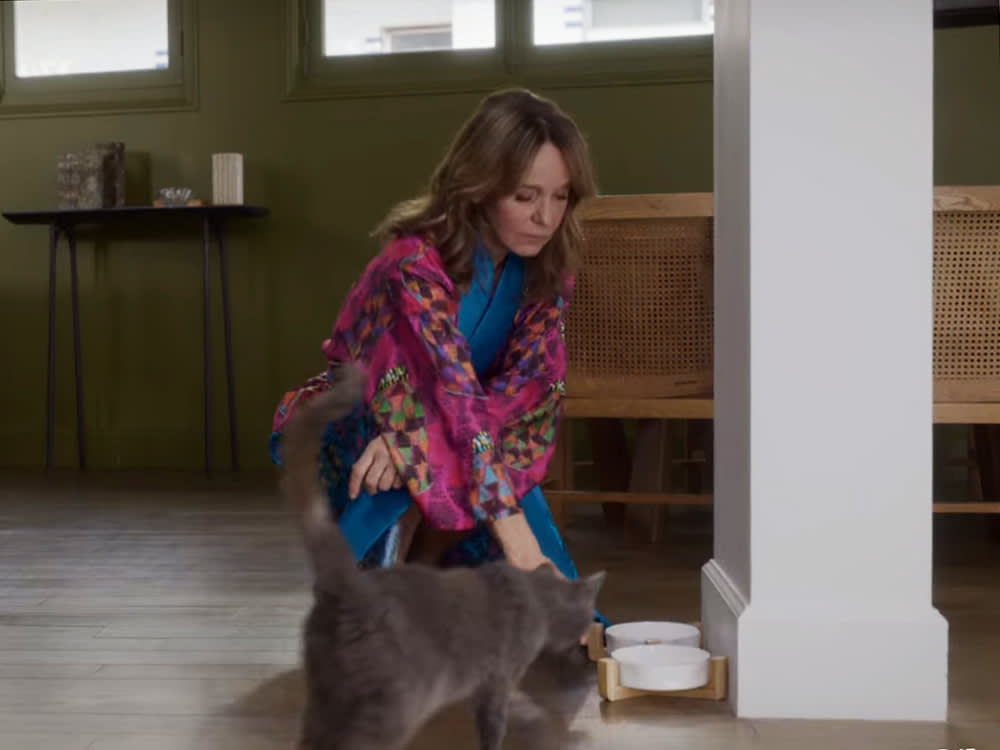 LivingYou Can't Buy Sylvie's Cat Bowl From Emily in Paris. Here's How to Nail the Look.Leila Torres · 3 min
 Product PicksOdor Control Is 80% Maintenance, 20% Litter. Here's the Litter PartSasha Ford · 5 min
 Product PicksA Wellness Influencer's Cat-Parent Gift Guide That Skips the JunkSara Lim · 4 min
 Living"Eco-Friendly" Cat Gear Is Mostly a Sticker. 6 Swaps That Aren't.Nina Vasquez · 8 min
 Product PicksThe 10 Best Automatic Cat Feeders of 2026, Sorted by the One Question That MattersSasha Ford · 18 min
 Product PicksLitter Tracking Ends at the Mat. 8 That Actually Trap the MessSara Lim · 7 min