


How to Choose Cat-Proof Carpet: A Buyer's Framework, Not a Brand List
The right carpet for a cat home comes down to three decisions, fiber, weave, and color, made in the right order. Get those right and the brand name barely matters.

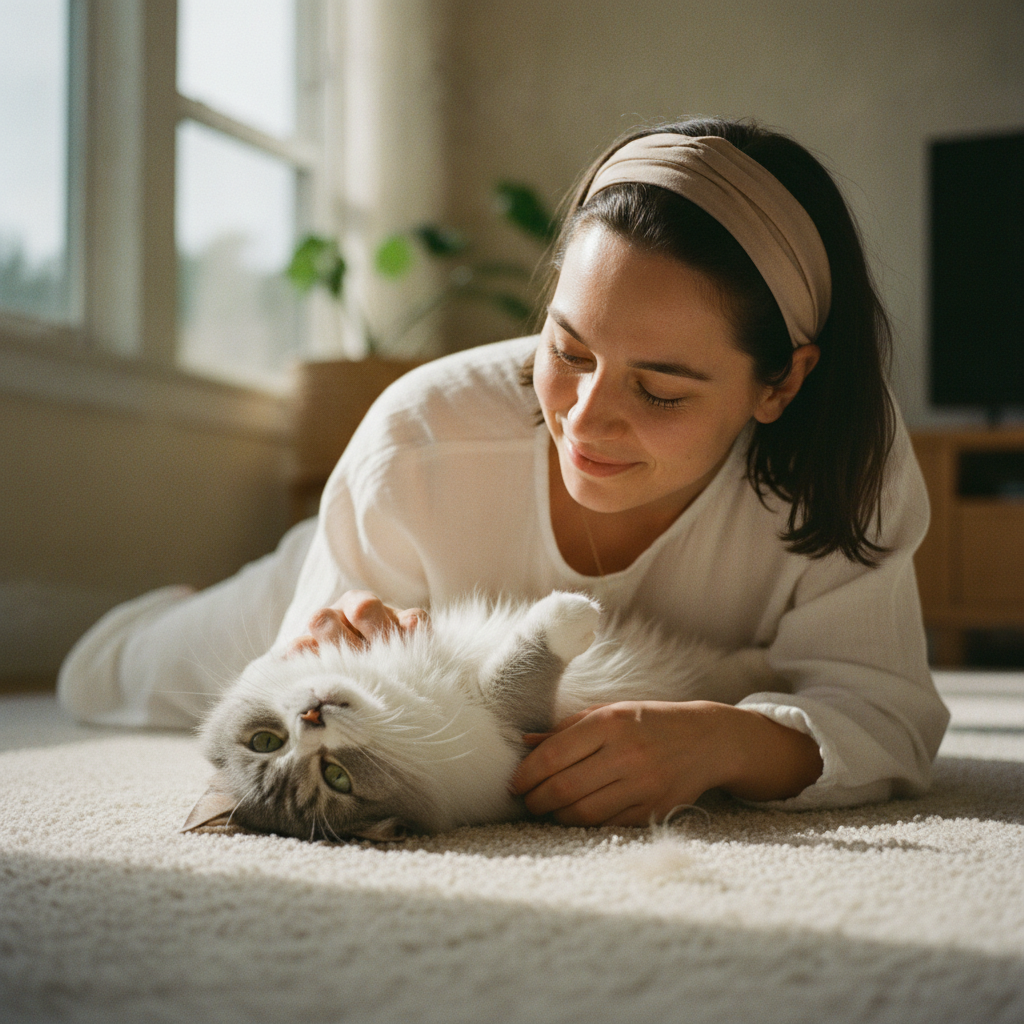
Most “best carpet for cats” guides are really brand tours: here is a line from this manufacturer, here is one from that one, each with a cheerful product name and a warranty. That is useful right up until the moment a salesperson shows you something not on the list, and you have no way to judge it. So this guide is built the other way around. There are exactly three decisions that determine whether carpet survives a cat, fiber, weave, and color, and once you can make those three, you can walk into any flooring store and evaluate anything in front of you, named brand or not.
A quick honest reset first. As much as we love them, cats are a flooring stress test: scratching, the occasional surprise hairball, tracked litter, and the rest. That is exactly why many cat owners give up and go to tile or hardwood. But fiber technology has moved, and a thoughtfully chosen carpet can absolutely hold up in a cat home. You just have to choose it on purpose. Here is the order to think in.
Decision 1: Fiber (this is the big one)
Fiber is where most of the durability lives, so make this call first.
For a cat home, the strong default is solution-dyed nylon. Nylon is the most resilient of the common carpet fibers; it springs back from crushing and stands up to repeated scratching better than polyester or olefin. The “solution-dyed” part matters even more than people realize: instead of dyeing a finished fiber, the color is mixed into the raw material so it runs all the way through the strand, like a carrot rather than a radish. That means stains and even cleaning bleach have far less to grab onto. If you remember one phrase from this article, make it “solution-dyed nylon.”
Wool is the premium natural alternative. It is genuinely durable and has natural stain and odor resistance, and it feels wonderful underfoot. The trade-offs are price, it costs considerably more, and that it can be fussier to clean. It is a lovely choice for a low-traffic room and a cat who is not a heavy scratcher.
What to avoid: cheap polyester or olefin in high-cat-traffic areas. They cost less up front and can stain-resist well, but they crush and wear faster, so you pay again sooner.
Decision 2: Weave (low and tight, almost always)
Once you have a fiber, the construction decides how the carpet behaves day to day. The rule for cats is short and simple: go low-pile and tightly looped.
Pile height is how tall the fibers stand; loop versus cut is whether the yarn forms closed loops or is sheared into upright tufts. A low, tight loop, the Berber family is the classic example, does three things a cat home needs. It gives claws almost nothing to hook and pull, which protects both the carpet and your cat’s nails. It sheds and releases fur instead of burying it, so vacuuming actually works. And its dense surface resists liquids soaking down to the pad. Avoid tall, shaggy, or frieze cut-pile carpets in cat zones; they swallow fur, hide tracked litter, and snag claws.
One caveat worth knowing: a few cats fixate on pulling at looped carpet specifically. If yours is a dedicated loop-puller, a dense low-cut pile in solution-dyed nylon is the compromise, and a well-placed scratching post becomes non-negotiable.
Decision 3: Color (match the cat, then the dirt)
Color is the decision people make on looks alone and regret. There are two jobs color does in a cat home, and they can conflict.
To hide fur, match the carpet’s tone to your cat’s coat. A dark carpet under a light-coated cat is a fur magnet that shows every strand, and vice versa. Multi-tone, flecked, or heathered carpets are the cheat code here, because they break up the visual field and camouflage shed hair across a range of coat colors.
To hide stains, mid-tones and busy patterns generally beat solids, light or dark. If your goals collide, a light cat but you also want stains to disappear, a flecked mid-tone carpet that incorporates your cat’s coat color is the best of both. Decide which problem bothers you more and let that lead.
The two specs to actually check on the sample
When you are standing at the rack, two things separate a genuine pet-grade carpet from a marketing claim:
- A moisture barrier or waterproof backing. Pet-focused lines build a layer into the backing that keeps accidents from soaking into the pad and subfloor, which is where permanent odor problems start. This is the single most valuable pet feature, because the smell you cannot get out is the smell that reached the pad. Look for it by name on the spec sheet.
- A pet-specific warranty. Read what it actually covers. The strong ones explicitly cover pet urine, vomit, and feces, not just general wear. A warranty that excludes pet stains is telling you something.
Brands do build whole collections around these features, and they are worth a look as starting points: pet-focused lines from the major mills now come in hundreds of styles and colors, with names ranging from the sensible to the frankly cat-pun-adjacent. But you are no longer shopping by name. You are checking each one against fiber, weave, color, barrier, and warranty, in that order.
The part the carpet can’t do
Even the best carpet is half the job, and pretending otherwise is how people end up disappointed. The other half is maintenance and behavior. Vacuum at least twice a week to keep fur, dander, and tracked litter from grinding in, and book a professional deep clean about once a year, which also helps anyone in the home with pet allergies. Keep an enzymatic, pet-safe cleaner on hand and hit accidents immediately, because dried-in urine is exactly what odor problems are made of.
And give the scratching the outlet it is going to demand regardless of your flooring. A cat will scratch; your only choice is whether they do it on an appealing post or on your new carpet. Put a sturdy post right where your cat already targets, and you protect the floor you just chose so carefully. Carpet plus maintenance plus a good post is the actual answer. Any one of the three alone will let you down.
References
- Carpet and Rug Institute. “Carpet Fiber Characteristics and Performance.” https://carpet-rug.org/
- Shaw Industries. “Understanding Solution-Dyed Carpet Fiber.” https://shawfloors.com/flooring/carpet
- American Association of Feline Practitioners. “Environmental Needs Guidelines.” https://catvets.com/guidelines/practice-guidelines/environmental-needs-guidelines
Common questions
What is the best carpet for cats with claws?
A low-pile, tightly looped carpet. Short tight loops give claws nothing to hook into, which protects both your floor and your cat's nails. Pair it with a scratching post placed near the spot your cat targets, because no flooring substitutes for an appealing scratching surface.
Is there such a thing as truly cat-proof carpet?
No carpet is fully cat-proof, but solution-dyed nylon in a low, tight loop comes closest. Solution-dyed fibers have color locked into the strand itself, so they resist staining and bleaching far better than ordinary dyed carpet.
What is the best carpet for hiding cat hair?
Match the carpet's tone to your cat's coat, not the other way around. A multi-tone or flecked carpet in your cat's general color range hides shed fur best, while a solid carpet in a contrasting color shows every strand.
How often should I clean carpet in a cat home?
Vacuum at least twice a week to stay ahead of fur, dander, and tracked litter, and book a professional deep clean roughly once a year. Treat accidents immediately with an enzymatic cleaner, since dried-in urine is what carpet odor problems are made of.
Sara Lim leads our Product Picks coverage, testing and comparing the things pets and their owners actually use. From everyday essentials to home-and-style finds, she focuses on honest, useful recommendations rather than hype.
Meet our experts ↗Keep reading
 Product Picks8 Litter Box Enclosures That Hide the Box Without a Cat BoycottSara Lim · 8 min
 Product PicksYour Cat Shreds the Couch Because Every Scratching Post Is an EyesoreSasha Ford · 4 min
 Product PicksMost Cats Don't Need a Sweater. The Ones That Do Deserve This One.Sasha Ford · 5 min
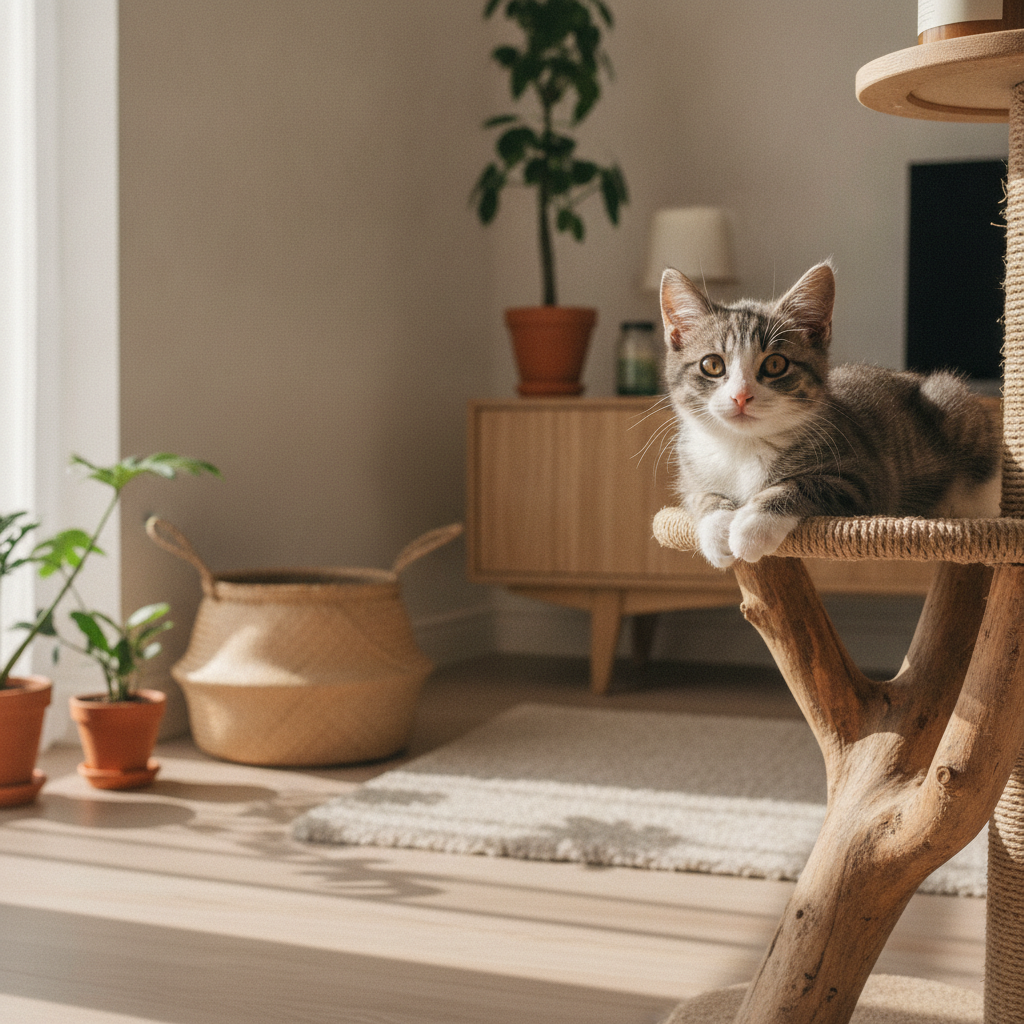 Product PicksThe Cat Tree You Won't Shove in the Basement Before Guests ArriveLeila Torres · 6 min
 Product PicksThe Best Cat Toy Is the One You Don't Hide in a BasketSasha Ford · 7 min
 Product PicksMost Cat Gifts Are Bought for the Human. These 6 Actually Get Used.Sasha Ford · 7 min