


Rescue Transport Asks One Thing of You: Show Up. The Rescues Do the Rest
Flying or driving a rescue dog to safety sounds complicated. It isn't, the organizations do all the logistics. Your single non-negotiable is reliability. Here's exactly how international and domestic transport works, step by step.

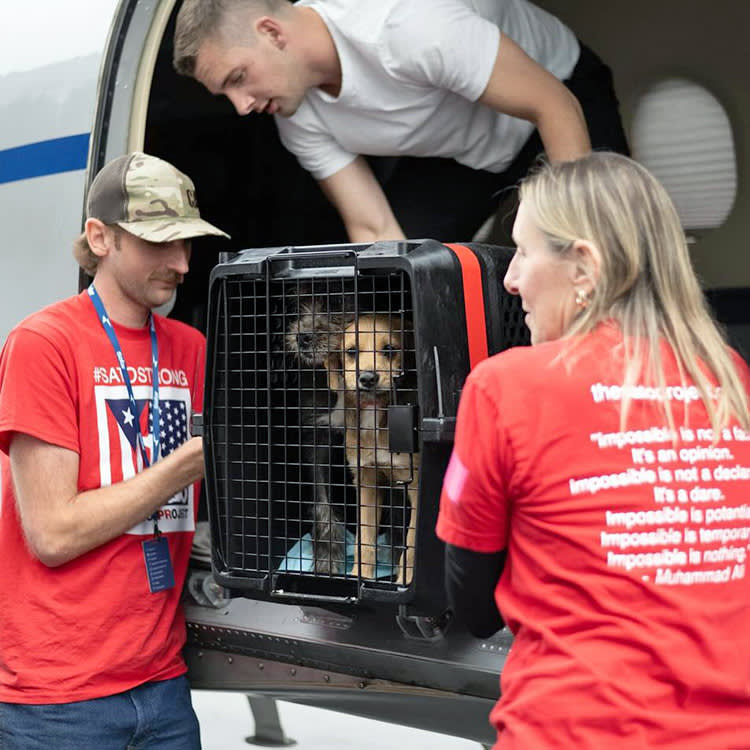
People assume rescue transport is a job for logistics experts: paperwork, customs, airline rules, crates, vet certificates. It is the opposite. Every one of those complications is handled by the rescue organizations on both ends. The volunteer’s role is almost comically simple, you show up and make a trip you were already taking, or a drive you don’t mind doing. There is exactly one thing the job genuinely demands of you, and it isn’t a skill. It’s reliability. Lives are scheduled around your yes, so the only way to fail at rescue transport is to flake. Everything in this guide flows from that single principle: the rescues own the hard parts, you own the showing up.
That is also why transport is one of the highest-leverage ways to help. With roughly 5.8 million animals entering U.S. shelters in 2024 and intake heavily concentrated in overcrowded Southern regions, moving animals from where they’re stuck to where adopters are waiting is some of the most direct lifesaving in animal welfare. A single van run can empty kennels that would otherwise force impossible decisions.
What transport actually does, and why it works
The whole system runs on a supply-and-demand mismatch. Some communities have far more homeless dogs than homes; others have eager adopters and empty kennels. Transport bridges them.
“Transport is just balancing the map,” says Brad Shear, who leads a Rhode Island rescue that moves animals north from overwhelmed Southern shelters. “You take a dog with almost no chance in one town and put it somewhere it’s very likely to get adopted. That’s the entire trick, and it saves enormous numbers of lives.”
The stakes at the sending end are blunt. Kathy Jacobs, a programs coordinator at a South Carolina nonprofit that supports an overburdened county shelter, says her organization “would have to euthanize almost half of the animals that come through our doors without a transfer program.” Her shelter took in over 4,700 dogs and cats in a single year and has been splitting kennels in half to fit summer arrivals. “We could never hold our no-kill status without transfer partners,” she says.
Option one: carry a dog home from a trip abroad
If you’re traveling somewhere with a large stray population or a high shelter kill rate, Korea, Morocco, Puerto Rico, Thailand, Turkey, Mexico, and many others, you can bring a dog back as a “flight volunteer.” Here is the sequence, and notice how little of it is actually your responsibility.
Start before you book. Search “animal rescue flight volunteer” plus your destination, reach out to a local rescue, and tell them your dates and route. Not every airline allows animal transport, so contacting the rescue first lets them steer you to one that does. If you’ve already bought your ticket, the rescue may ask you to call the airline and add an animal; there’s always a transport fee, but the rescue should cover it on travel day or reimburse you if you pay up front.
The rescue handles everything else, paperwork, airport transfers, reservations, at no cost to you, and gives you contacts (phone and email) for the people you’ll meet at each end. On flight day, someone meets you at the airport with a travel-ready dog already walked and relieved, in a crate fitted with a pee pad, water, and something soft. They review the plan, hand over your paperwork, and stay until the animal is checked in.
On a direct flight, you usually won’t see the dog again until baggage claim. If the dog is cabin-sized, you may fly together, in which case ask the rescue for treats or food, a small bowl, extra pee pads, and wipes. If you ever need to take the animal out of its carrier mid-flight, do it in the lavatory with the door locked and the toilet lid down, you do not want a dog loose in the cabin or near an open toilet. On a layover, you may be able to use a designated pet relief area; research that ahead and clear it with the rescue, since you’ll likely need a leash, collar, extra pads, and fresh zip ties to re-secure the crate.
At your final destination, clear passport control, collect the dog at baggage claim if it flew cargo, then proceed to customs. Whoever is receiving the animal waits just past customs. You make the handoff, and you’re done.
Option two: drive, no passport required
No international trip on the calendar? Domestic transport is in constant demand, and the barrier to entry is even lower. All you really need is a valid driver’s license, a clean record, and a tolerance for highway hours. You may not even need your own vehicle, larger rescues that run these routes often keep vans specifically for transport.
Domestic runs typically relieve overcrowding in municipal shelters across state lines, and they tend to move many animals at once. Shear’s group transports around 800 animals a year and schedules trips up to a year out, coordinating with the sending shelter and sending two volunteer drivers per van. For the driver, it’s straightforward: load the van, follow the paperwork, give each animal a quick visual once-over to confirm it’s safe to travel, and drive. Long trips include stops for walks, water, or a medical check, but the vans are air-conditioned and most runs are uneventful. On arrival, staff and volunteers unload the animals, then the van gets a thorough cleaning.
There’s an emotional caveat worth hearing before you sign up.
“It matters enormously, but you have to be honest with yourself about what it is,” Shear says. “You won’t get cuddle time. You can’t take them out of their crates or drive with one on your lap. You have to be satisfied knowing you’re moving the whole picture forward, not bonding with any one dog.”
Transport isn’t only long-haul, either. Many shelters need people to drive animals to and from foster homes and vet appointments, and some reimburse gas. If you have a car and a free afternoon, you’re qualified.
The one rule that outranks every other
Whatever route you choose, reliability is the job. Shear’s team often starts prospective transporters closer to home, walking dogs or helping at the rescue, until they’ve proven they show up. Given the coordination behind each transport and the number of animals riding on it, there is simply no room for a no-show. You already understand the stakes, which is most of what makes a good transport volunteer.
Where to start
A handful of rescues that coordinate flight transport around the world:
- China: Little China Dog Rescue
- Costa Rica: Charlie’s Angels Rescue
- Korea: Korean K9 Rescue
- Mexico: Wet Noses Rescue
- Morocco: Morocco Animal Aid
- Puerto Rico: The Sato Project and Flight Angels
- Thailand: Soi Dog Foundation
- Turkey: Tattered Paws and Golden Hearts Rescue
For domestic driving, ask your nearest municipal shelter or a regional rescue whether they run transfer routes, most in high-intake regions do, and almost all of them are short on drivers.
References
- Shelter Animals Count. “2024 Statistics.” shelteranimalscount.org.
- ASPCA. “Relocation and Transport Programs.” aspca.org.
- The Sato Project. “Flight Volunteers.” thesatoproject.org.
Leila Torres leads our Living coverage, from home life and travel to the products and rescue stories that come with sharing a life with animals. She edits and writes across the section, with a soft spot for pieces about the bond between people and their pets.
Meet our experts ↗Keep reading
 LivingThe Most Meaningful Hour of Your Vacation Might Be Spent Walking Shelter DogsLeila Torres · 5 min
 Health & WellnessReaching for Dramamine for Your Carsick Dog? Read This FirstDr. Amara Solis · 6 min
 LivingNew York Is Officially a 'No Dogs' Town. Here's Where That Rule Melts.Jordan Ellis · 8 min
 LivingThe Famous Dog Beaches Are a Zoo. These 10 Hidden Ones Aren't.Sara Lim · 7 min
 LivingDallas Just Lost Its Most Famous Dog Bar. The City Will Be Fine.Marcus Webb · 7 min
 LivingBARK Air Keeps Adding Routes. The More Interesting Story Is Who's FollowingNina Vasquez · 5 min