


The Dog Coat We'd Buy This Winter, and How to Tell If Yours Even Needs One
The Barkers Rex Trench Coat is genuinely good: warm, water-resistant, and well made. But before you buy any coat, here's the vet-backed way to know if your dog needs one and how to fit it right.

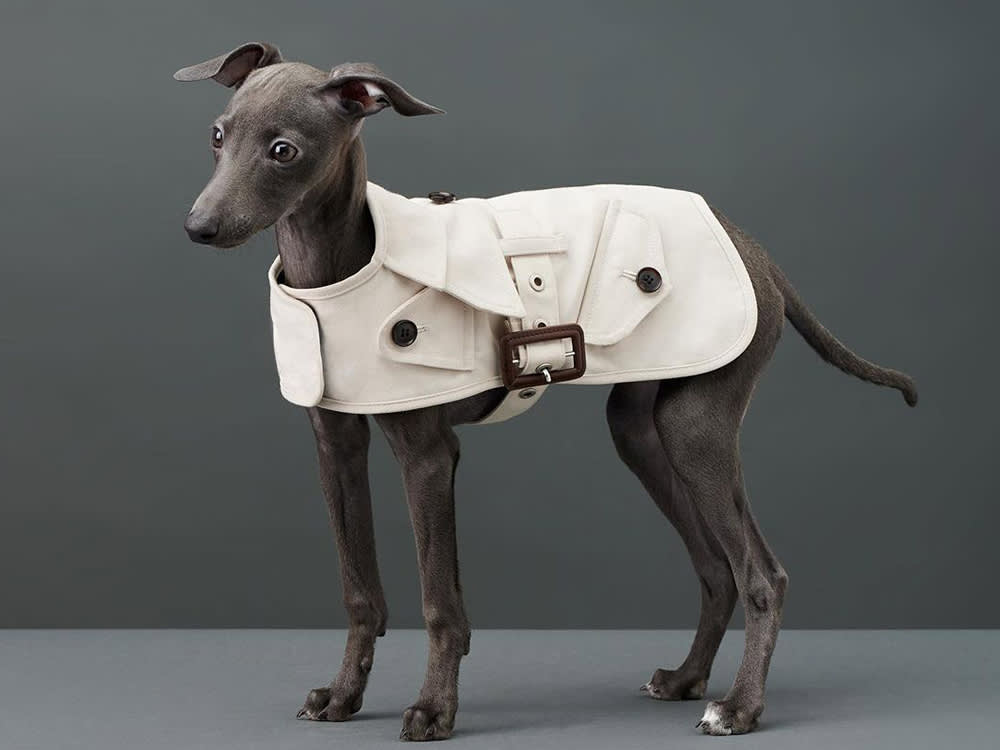
A dog coat has exactly one job that matters: keeping a dog who cannot keep itself warm warm, without binding up the way it moves. Everything else, the buckle, the color, the runway-ready silhouette, is a bonus for you, not your dog. Start there and the buying decision gets simple, because most cute dog coats fail the one job and a few plain ones nail it. The good news is that our favorite this season happens to clear both bars: it looks sharp and it actually works.
First: does your dog even need a coat?
Plenty of dogs do not. A husky, a malamute, or any thick double-coated breed is built for the cold and a coat just makes them overheat. But several types of dog genuinely struggle to hold their body heat, and for them a coat is welfare, not fashion. According to veterinary guidance, the dogs that benefit most are:
- Small breeds like Chihuahuas and French Bulldogs, who do not generate or retain enough heat for long outings.
- Short-haired and single-coated dogs, who lack the insulating undercoat that keeps heat in.
- Low-to-the-ground breeds like Dachshunds, Corgis, and Basset Hounds, whose bellies sit close to cold pavement and snow.
- Senior dogs and puppies, plus any dog with a health condition, since heat regulation weakens at both ends of life.
The temperature rule of thumb: for those dogs, reach for a coat once it feels at or below about 32°F (0°C). Below roughly 20°F (-7°C), watch any dog closely, regardless of breed, for shivering, lifting paws, slowing down, or whining, all early signs of dangerous cold. In serious cases, prolonged exposure can tip into hypothermia, where muscles stiffen and heart rate and breathing slow. A coat is one tool to prevent that; cutting the walk short is another.
Why the Barkers Rex Trench Coat is our pick
If your dog is on that list, The Barkers Rex Trench Coat is the one we would put on first. It is built from a cotton-wool blend that is thick enough to insulate heading into real winter, but not so heavy that it weighs a small dog down on a milder day. Crucially, it is water-resistant, so it earns its keep on a sleety walk rather than soaking through and chilling your dog faster, the failure mode of so many fashion-first coats.
The construction backs up the look. The fabric is Italian-made, the leather buckle keeps the coat secured on dogs prone to jolty movements, and the easy-fasten belt rides on metal eyelets that signal it will survive more than one season. It comes in two colors, khaki and navy, both restrained enough to look intentional rather than costume-y. At around $99, it sits in the reasonable middle of the dog-coat market, more than a basic fleece, less than a designer piece, which is about right for something this well made.
How to fit a dog coat so it actually works
A coat that does not fit either does nothing or actively hampers your dog, so measure before you buy:
- Back length is the key number: measure along the spine from the base of the neck (where a collar sits) to the base of the tail. The coat should cover that span without extending past the tail or interfering with toileting.
- Chest or girth: measure around the widest part of the ribcage, just behind the front legs. This is where small dogs are most often sized wrong.
- Neck: measure where a collar rests so the closure is snug but not tight.
Then check the fit in motion. Your dog should be able to walk, sit, squat, and stretch with full range; if the coat rides up, gaps at the belly, or makes your dog freeze and refuse to move, it is wrong. Two fingers should slide under any strap. A correctly fitted coat is one your dog more or less forgets it is wearing.
Buy the coat for the dog who needs it, fit it properly, and a good one like the Rex does its quiet job, which is the whole point. Looking like a tiny Humphrey Bogart on the way to the dog park is simply a perk.
References
Leila Torres leads our Living coverage, from home life and travel to the products and rescue stories that come with sharing a life with animals. She edits and writes across the section, with a soft spot for pieces about the bond between people and their pets.
Meet our experts ↗Keep reading
 Product PicksDog Trackers, Decoded: Match the Technology to Where You Live (10 Picks)Marcus Webb · 16 min
 Product Picks7 Pieces of Dog Gear That Won't Wreck Your Living RoomSara Lim · 6 min
 Product PicksShinola Made a Dog Collection, and It's Almost Too Nice for the DogSasha Ford · 4 min
 Product PicksOne Supplement Pack Was Never Going to Fit Every Dog. Dandy's Founder Bet a Company on ItNina Vasquez · 4 min
 Product PicksThe Best Dog Toys Aren't Toys. They're Puzzles.Jordan Ellis · 6 min
 Product PicksA Designer Dog Collab Lives or Dies on a Hole in the BackSasha Ford · 6 min