


The Bark Potty Is Really a Math Problem: One Pad vs. 60 Plastic Ones
A real-bark indoor potty that lasts a month sounds like a gimmick until you run the numbers on cost, plastic, and which dogs it actually suits. Here's the honest accounting.

Affiliate disclosure. This article contains affiliate links. We may earn a small commission if you buy through a link, at no extra cost to you. How we handle recommendations.
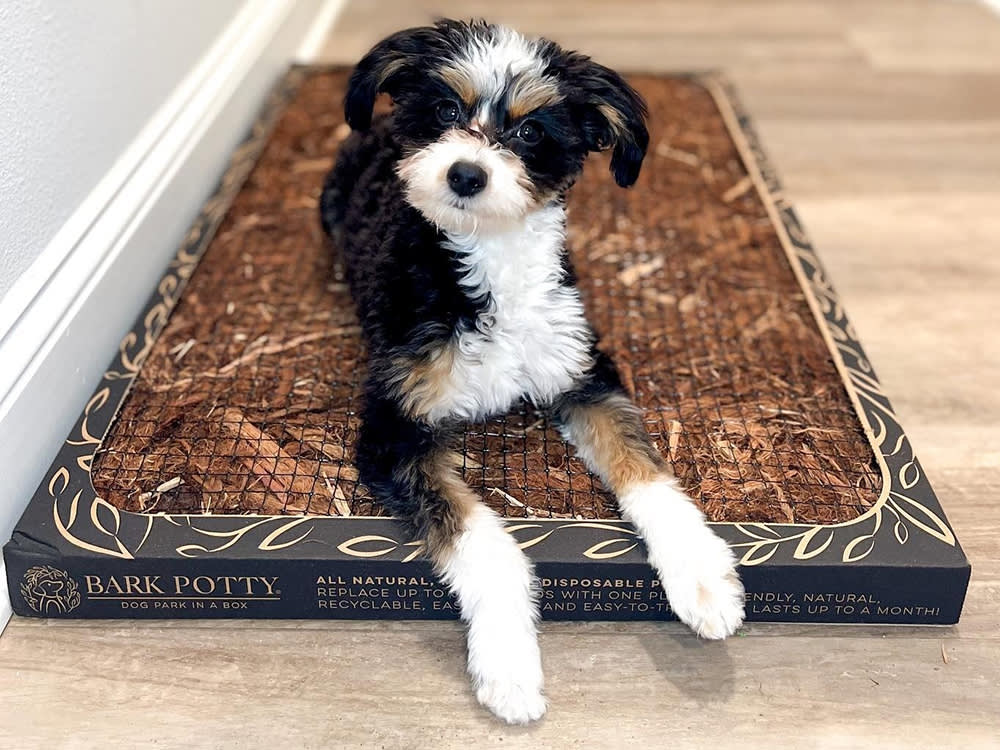
Most write-ups of the Bark Potty lead with the novelty, an indoor dog toilet made of actual tree bark that looks, feels, and smells like the outdoors. That is the hook, and it is real. But the novelty is not the reason to buy one or skip one. The reason is arithmetic. A single Bark Potty is built to last about a month, which the company estimates replaces roughly 60 disposable pee pads over the same stretch. Run that comparison honestly, on cost, on plastic, and on which dogs it actually fits, and you get a much clearer answer than “it is made of bark, how fun.” So let us run it.
How it works, briefly
Each Bark Potty is a tray of genuine bark engineered to mimic grass, the kind of natural cue that actually entices a dog to go, held together by a thin mesh netting so the chips and natural ingredients stay put instead of scattering across your floor. The tray underneath is lined to stop leaks, and the bark composite works to neutralize odor as it absorbs. You clean up solid waste the same way you would at the park (and if you skip that step, please take a long look in the mirror). There is no daily rinsing, no constant scrubbing, which is the chief gripe with artificial-turf alternatives.
The cost math, run straight
This is where the bark-versus-plastic question gets decided, so here are real numbers.
A single Bark Potty runs around $25 and is designed to last roughly a month. On a subscription, a month-by-month plan is about $24 for a fresh unit every 30 days, and committing to a three- or six-month plan drops the effective price as low as about $18 a month. Against that, the company’s claim is that one pad replaces about 60 traditional pee pads over the month.
So the comparison is: one $18-to-$25 unit versus 60 disposable pads, plus the part that does not show up on the receipt, 60 fewer plastic-backed pads heading to a landfill, where they do not break down. The Bark Potty itself is disposable and recyclable, so you can toss it with a clear conscience. If you already buy premium pads, the monthly cost can come out close to a wash while the plastic savings are lopsided in the bark’s favor. If you buy the cheapest bulk pads, plastic remains your inexpensive option, and the case for switching becomes about the waste and the smell rather than the dollars.
How long it really lasts (it depends on the dog)
The “lasts a month” figure is an average, and treating it as a guarantee is how people end up disappointed. In practice, a small dog or light, occasional use can stretch a single pad to a full four weeks, while a puppy in heavy potty-training mode or a larger dog who goes often may need a fresh one every two to three weeks. Budget for the shorter end if your dog is big or your pad is in constant use, and the value math still holds, just with a slightly higher monthly cadence.
Which dogs it’s actually for
A product is only a deal if it fits your situation. The Bark Potty earns its spot in three specific cases:
- Apartment dwellers without easy yard access. If you have lived in a fifth-floor walk-up, you know it is not always realistic to take the dog down for a relaxing stroll every single time nature calls. The Bark Potty is a genuine bridge, set it out, let your dog go, clean up after.
- Puppies in potty training. The grass-like cue helps a puppy learn to target the right surface, and you skip the river of plastic that traditional pad-training generates.
- Senior or weather-averse dogs. For an older dog prone to accidents, or the dog who would sooner hold it for twelve hours than get their paws wet in the rain, an always-available indoor option prevents both accidents and a miserable standoff at the door.
How it stacks up against the alternatives
The Bark Potty is not the only indoor-potty game in town, and naming the trade-offs is more useful than pretending it wins every round.
Against real-grass services like Fresh Patch or DoggieLawn, the bark’s headline advantage is longevity and odor control. Live-grass patches tend to start smelling and wilting within days, with the difference becoming obvious around day three to five, whereas the bark stays usable and relatively fresh across the month. The grass options arguably feel more “real” underfoot and some dogs prefer them, but they are higher-maintenance and pricier over time.
Against plain disposable pads, the bark wins on plastic, on smell, and on how rarely you have to deal with it, and loses on upfront simplicity and rock-bottom bulk pricing. Against artificial-turf trays, the bark wins decisively on maintenance, no repeated washing of a turf mat that has to dry between uses, and on manufacturing footprint, since the carbon cost of producing artificial turf is steep by comparison.
The honest bottom line is the one the arithmetic points to: if your priority is cutting plastic and skipping daily upkeep, the Bark Potty is the strongest pick in the category. If your only metric is the lowest possible cost per use and you do not mind the plastic, bulk pads still undercut it. Know which buyer you are, and the choice makes itself.
References
Marcus Webb writes about the gear, gadgets, and everyday choices that make life with a pet easier. His coverage runs from product picks to training and the causes worth paying attention to, always with an eye on what actually earns a place in your home.
Meet our experts ↗Keep reading
 Product PicksThe One Dog Accessory That Doesn't Annoy Your Dog: 9 Bandanas Worth ItSasha Ford · 4 min
 Product PicksA Vogue Alum Looked at Dog Carriers and Saw a Design ProblemLeila Torres · 3 min
 Product PicksMost Dog Sweaters Are for You. Here's How to Tell If Your Dog Actually Needs One.Dr. Lena Park · 4 min
 Product PicksThe $350 Viral Boot Sold Out. Your Dog's $49 Version Is Better.Sasha Ford · 4 min
 Product PicksGifts for the Dog Person Who Spends It All on the DogLeila Torres · 6 min
 Product PicksHer Fleece Sparks $1,000 Bidding Wars. The Dog Version Is $165.Sara Lim · 5 min