


Alison Wu Has Lived in 10 Places in 13 Years. Tilly Is the Only Fixed Point
The wellness influencer built a life around movement. Her Cavalier King Charles Spaniel, road trips, heart disease, and all, is the portable home that makes it work.
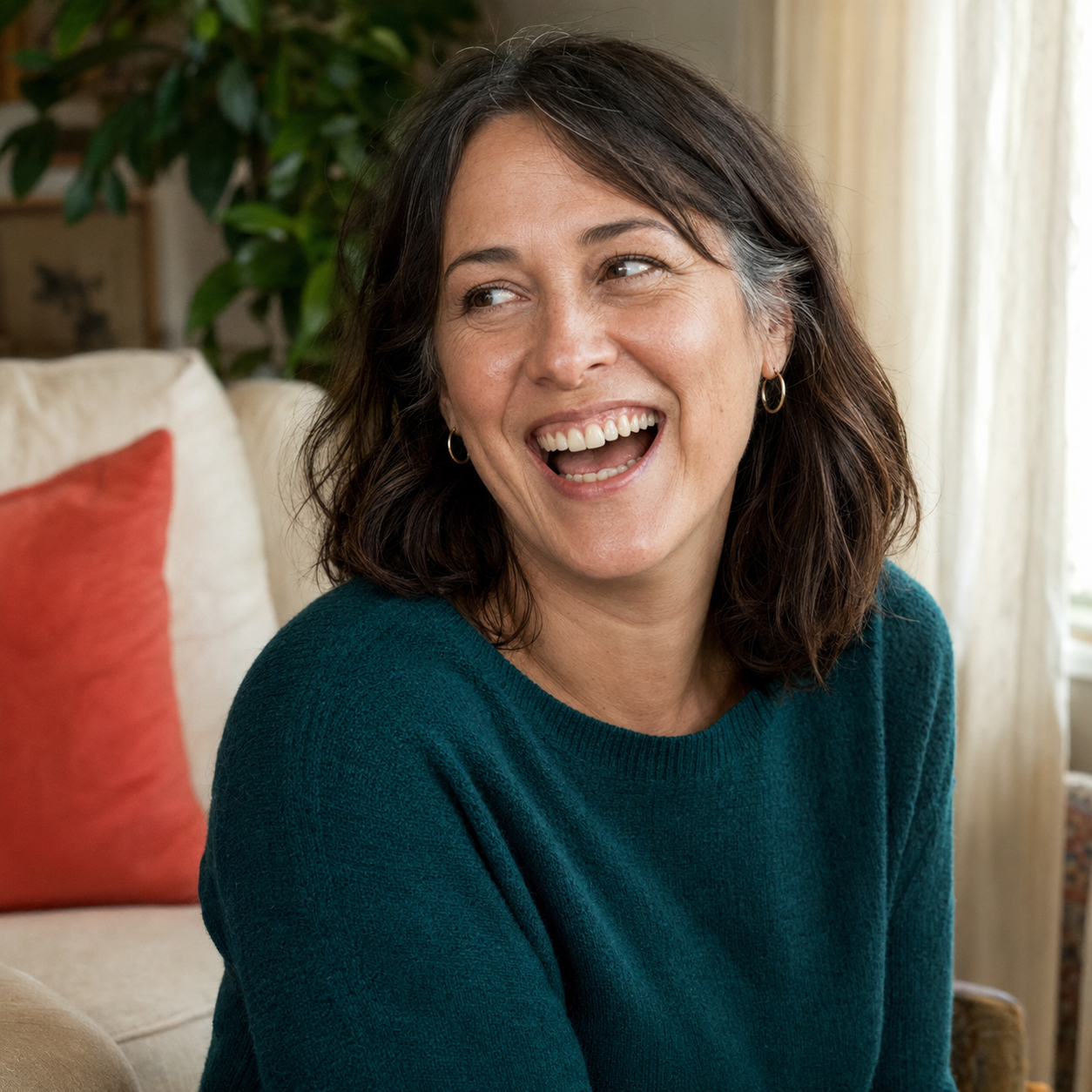
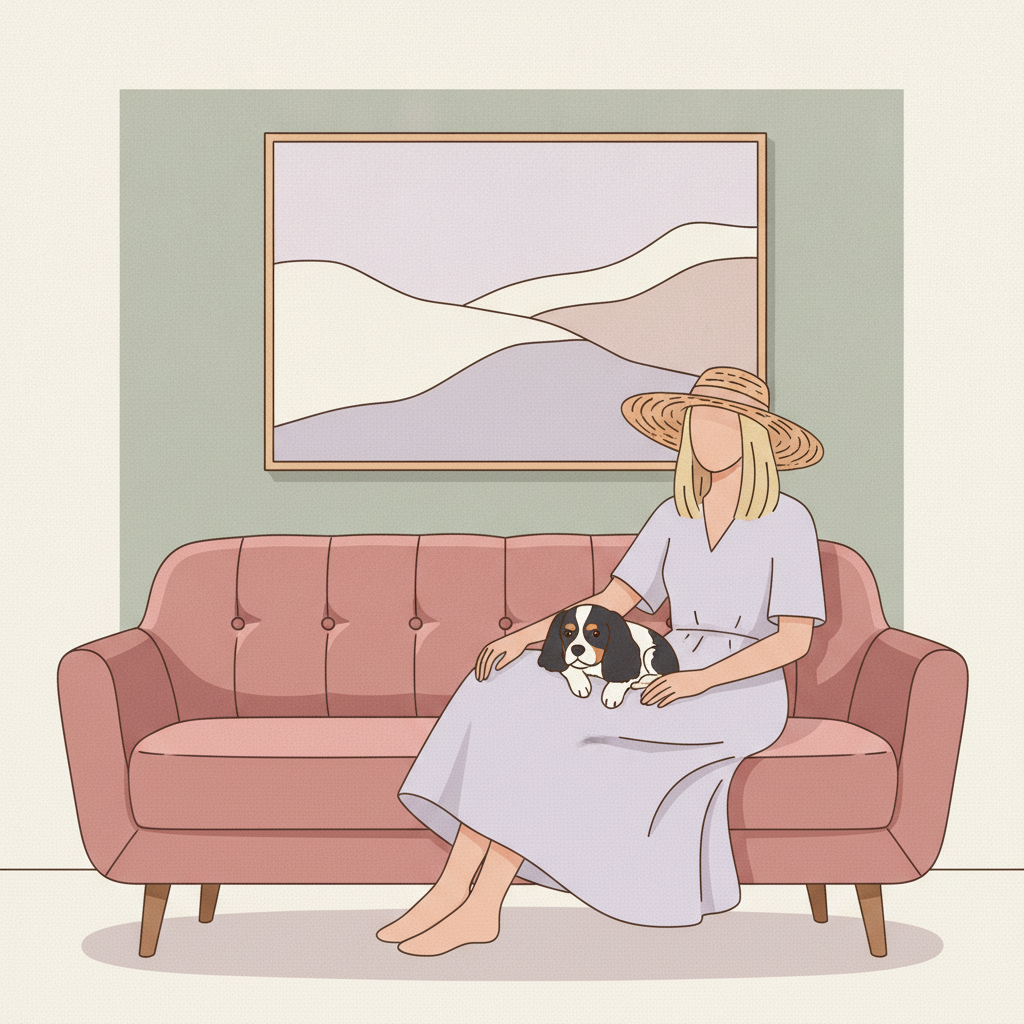
Alison Wu has moved ten times in thirteen years, from the Pacific Northwest through wildfire evacuations to a mid-pandemic relocation to Mexico City. The smoothie bowls and pastel design sensibility that made her name travel with her. So does one small, opinionated Cavalier King Charles Spaniel named Tilly. In a life organized entirely around movement, Tilly is the single thing that does not change, and that, more than the road trips or the decor, is what Wu’s story is really about: how one adaptable dog becomes a home you can carry.
The dog who came with a stipend
Tilly’s arrival was as improvised as everything else. Wu spent ten months of her junior year of college interning at a fashion buying office in Italy, and when it ended, the woman who owned it handed her an unexpectedly generous stipend. Wu used it to get the dog she had been wanting, naming her after the owner’s four-year-old daughter, Matilde. She picked a Cavalier on purpose, an East Coast kid who wanted a travel companion that didn’t need miles of running, and found Tilly online. The handoff, fittingly, happened in a Kmart parking lot in Salem, Oregon. “I swear!” she says.
That low-key origin set the tone. Tilly is, by Wu’s account, “always been a super-chill dog. We joke that she’s kind of like a cat. She can be active, but mostly just wants to be around me.” She is the dog in the corner of the dog park, sniffing the fence, supremely uninterested in toys. Off-leash in the country, she lights up; on-leash in a city, her whole posture says ugh. It is a temperament built for a nomad, low-maintenance, unbothered, content as long as her person is in the room.
Why she’s the constant
Wu calls Tilly her emotional support animal, and after nearly fourteen years the word carries weight. “She’s been through relationships and several moves,” Wu says. “We’ve lived in 10 places together and now she’s moved to a new country with me. She makes me feel like wherever I go, I’m home.” That is the function a fixed point serves: not stability of place, but stability of presence.
The decor and gear follow the same logic. Wu, famous for a precise aesthetic, keeps Tilly’s footprint deliberately small, a cozy sheepskin instead of a conventional dog bed, a leash and poop-bag holder from Wild One chosen because they match her palette and wash easily. “She doesn’t really like toys,” Wu says. “If I bought her one she’d be like, what do I do with this?” The minimalism isn’t only taste. It is what makes a two-week road trip possible with a sheepskin rug and two ceramic bowls in the back of a Subaru.
The heart of it, literally
The thread of borrowed time running under all of this has a specific, medical cause, and it is worth understanding because it shapes Wu’s choices. Cavalier King Charles Spaniels are the poster breed for mitral valve disease (MVD), a degeneration of the heart valve that is roughly twenty times more common in Cavaliers than in dogs generally. It is also the single most common heart disease in dogs and the leading cause of death in the breed, accounting for an estimated 42.8 percent of Cavalier deaths.
The progression is relentless and age-linked. The rate of dogs with the characteristic heart murmur climbs about 10 percent a year, so that by age five roughly half of Cavaliers have a murmur, and by ten nearly all of them do. When Wu says “a lot of Cavs pass away from it,” she is describing a statistical near-certainty, not a worry. It is also why the move to Mexico became a two-week drive instead of a flight: Tilly’s heart disease made flying too risky, so Wu sold 90 percent of her belongings, packed the rest, and drove down through Utah and Texas to get her there safely.
Living with the worry
Wu is candid that the hardest part of dog ownership for her is not Tilly, it’s the logistics and guilt of a travel-heavy life, and the low hum of fear that comes with loving an aging animal with a known diagnosis. “When she got heart disease it was really scary,” she says. “But every day with Tilly is a blessing, and I feel lucky to have had all these amazing years with her. Pets become like your children, and it’s hard to process some of that when you’re so attached and worried about them. I just try to be grateful.”
If there is a lesson here, Wu locates it in Tilly herself. Through ten homes, a country change, a heart diagnosis, and a thousand miles of highway, the dog simply makes herself at home wherever she lands. “She’s never scared and she makes herself at home wherever she goes,” Wu says. “We can all take lessons from Tilly!”
References
- “Cavalier King Charles Spaniel - Mitral Valve Disease (MVD).” UFAW, ufaw.org.uk.
- “Clinical and Echocardiographic Findings in an Aged Population of Cavalier King Charles Spaniels.” Animals, vol. 11, no. 4, 2021, mdpi.com.
- American Kennel Club. “Cavalier King Charles Spaniel.” akc.org.
Leila Torres leads our Living coverage, from home life and travel to the products and rescue stories that come with sharing a life with animals. She edits and writes across the section, with a soft spot for pieces about the bond between people and their pets.
Meet our experts ↗Keep reading
 Living'Will My Dog Ever Love Me?' Is the Wrong Question. Watch What They Choose.Dr. Priya Nair · 9 min
 LivingThe One Man Who Hated Frisbee Is Why the Rest of Us Knew HerSasha Ford · 4 min
 LivingThe Oscar Winner Whose Dog Was Also His Co-WriterSasha Ford · 5 min
 LivingThe Kelces Lost Two Wolfhounds in Two Years. That's the Deal With Giant Dogs.Sasha Ford · 6 min
 LivingMeet Luna, the Dachshund Who Runs Security at NYC's Most Radical JewelerJordan Ellis · 5 min
 LivingShe Came Home to a Box of Ashes. Her Sitter Had 118 Five-Star Reviews.Nina Vasquez · 6 min