


Fresh Cat Food, Sorted by the One Thing That Matters: Cooked vs. Raw
Before you compare prices, sort fresh cat-food services by cooked versus raw. New 2025 research found dangerous bacteria in 42 percent of raw cat foods and none of the cooked ones. Here are six services, read through that lens.
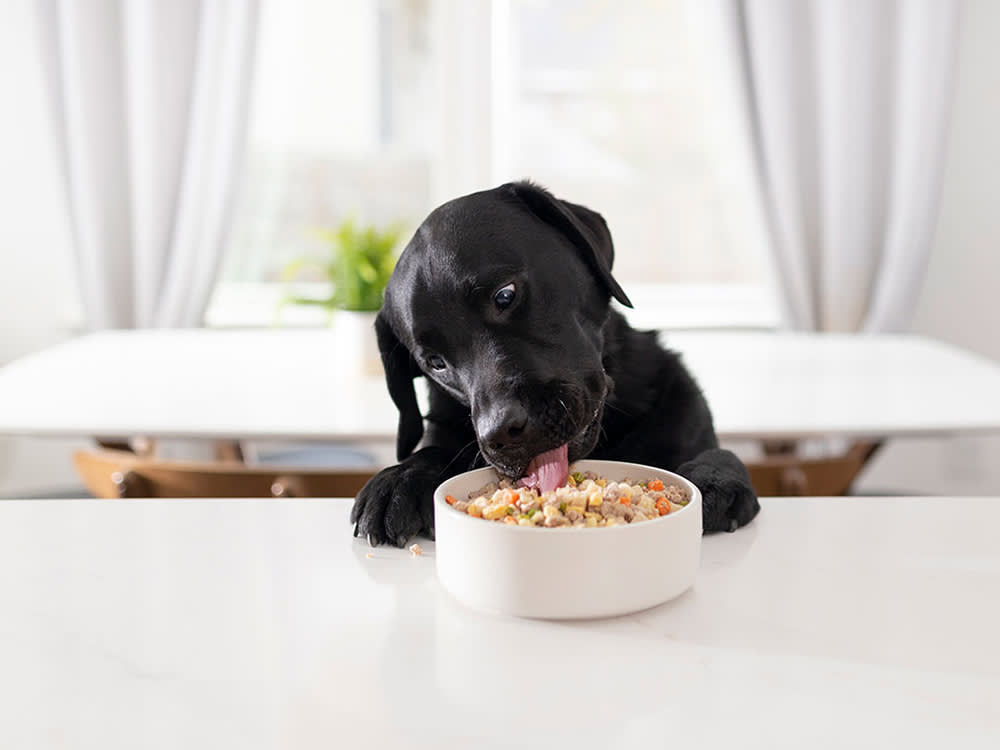
You have seen the impossibly glossy cats on your feed, the ones the internet briefly crowns “most beautiful cat in the world.” That shine is not makeup. A lot of it is moisture and quality fat, which is the real, unglamorous case for fresh cat food: it hydrates a species that evolved to under-drink, and it is gentler on the urinary and kidney systems that so often fail cats later in life.
But before you compare prices or proteins, sort every service by one axis that most roundups skip entirely: cooked versus raw. That distinction is no longer a matter of taste. In 2025, researchers at Cornell grew dangerous bacteria, including Salmonella, E. coli, and Klebsiella, from 42 percent of commercial raw cat foods they tested, and from none of the cooked ones. Some of those bacterial strains were genetically all but identical to ones behind human infections. Separately, the FDA now requires manufacturers using uncooked poultry or beef to treat H5N1 bird flu as a known, foreseeable hazard. For a healthy household cat, the safe default is a complete, gently cooked, bacteria-tested diet. Raw can be done, but it is a deliberate, higher-risk choice, not a free upgrade.
So here are six fresh-delivery services, grouped by where they fall on that axis.
Cooked and gently cooked (the safe default)
Milk
Milk handmakes fresh food in small batches and ships it cold, so you can skip the last-minute pet-store run. You register your cat’s weight, life stage, and activity level, Milk calculates the daily calories to hold their ideal weight, and you pick home-cooked recipes, adjusting as your cat shows favorites. Ingredients run wholesome and specific: chicken liver, pumpkin, cod-liver oil, roasted squash seeds, organic kelp, wheatgrass, rotated to fight food boredom. Plans start around $15 a week, on the pricier side, but the per-recipe and per-portion customization is the most granular of any service here. Milk also does dog plans, so multi-pet homes can source everything in one place.
Open Farm
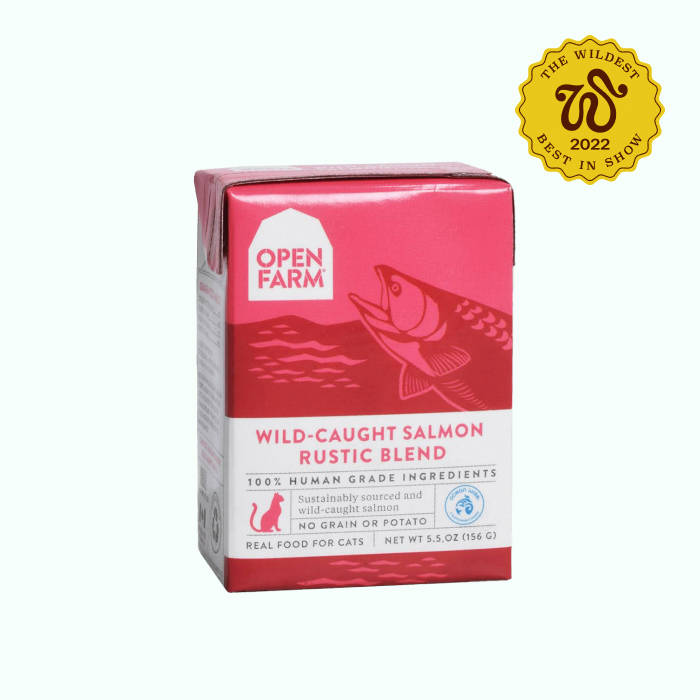
Open Farm is the pick for owners who care where the food comes from. It partners with certified-humane farms, fisheries, and producers, offsets its global emissions, and makes every ingredient traceable. The cooked best sellers, the Wild-Caught Salmon dry, the Harvest Chicken Rustic Blend wet, and the Bone Broth bundle, anchor a wide range, with dry options from salmon and whitefish to lamb and turkey-chicken, and wet blends including herring, mackerel, and grass-fed beef. The probiotic add-ons (goat-milk kefir, chamomile, turmeric, organic fruits and vegetables) lean into gut and anti-inflammatory support. A moderate blend runs about $26 a week. It is the most values-driven option here, and the traceability is genuinely rare.
Cat Person
Cat Person launched in 2020, when locked-down cat owners wanted simplicity, good design, and food from a source they trusted, and it has stayed one of the most affordable fresh options since. Recipes are high-protein, grain-free, and low-carb, formulated for cats of every age, across both wet and dry. You take a quick quiz about your cat’s preferences, get a customized starter box, then drop anything your cat snubs before the first monthly shipment. Combination wet-and-dry plans start around $25, roughly $3.23 a day, which makes it a low-commitment way to test whether your cat takes to fresh food at all.
Smalls
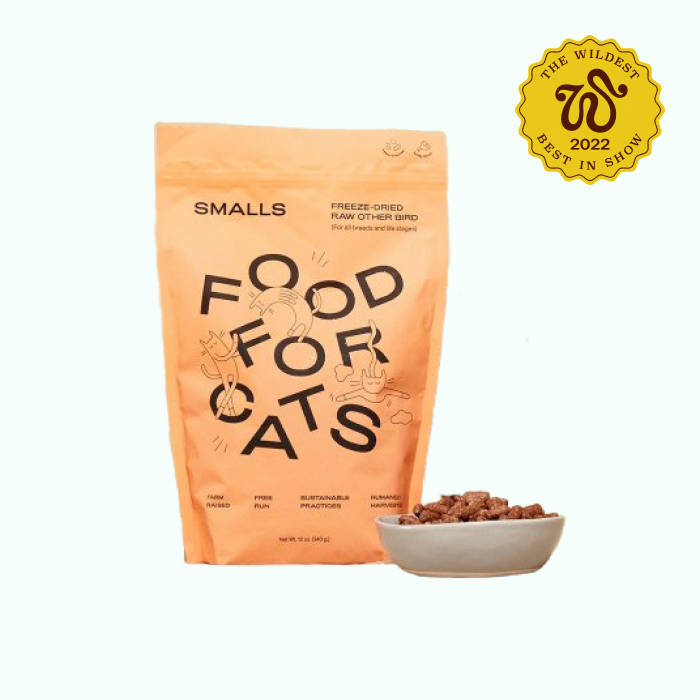
Smalls makes human-grade, gently cooked food built around getting back to nutritional basics without additives. The fresh line uses protein-rich cow, turkey, and chicken in pâté, diced, and shredded textures, so even a texture-snob cat has options. (Smalls also sells a freeze-dried raw line; if safety is your priority, stick to their cooked recipes.) With a starter-pack discount, Smalls averages roughly $1.25 per meal, about $17.50 a week. The high moisture and human-grade sourcing are the real draw, and the variety of textures makes the transition easier than most.
Raw and prey-model (proceed with eyes open)
These services do raw well, with humane sourcing and clear handling guidance. But given the 2025 contamination data, treat them as a considered choice, not a default, keep strict cold-chain hygiene, and avoid raw entirely for kittens, seniors, pregnant cats, or any cat (or human) in the home who is immunocompromised.
Savage Cat Food
Savage is a true raw, prey-based option, with chicken, rabbit-and-lamb, and duck boxes that are antibiotic-free and certified humanely raised in the US. Its real strength is hand-holding: the site walks you through transitioning dry to wet to raw, plus how to win over picky eaters and slow down gulpers. The food must stay cold, which actually simplifies prep, store the pre-portioned raw in the freezer and thaw daily servings in the fridge. Plans start around $9 a week on an eight-week schedule, though with shipping every three to five weeks it lands closer to $20 a week depending on portion size. If you are committed to raw and willing to manage the cold chain and hygiene, Savage is among the most transparent.
Raised Right

Raised Right makes human-grade food and skips the high-carb fillers, potato, rice, oats, yam, squash, pasta, parsnips, barley, that are cheaper for companies and worse for cats. Founded by a farming family, the Rudds, who shifted from growing food for people to making it for pets, the line was developed with veterinarian Dr. Karen Becker and is lab-tested for safety on every batch, which matters more than usual for minimally processed food. A food calculator sets portions by weight, activity, and goal weight; recipes include chicken, turkey, and pumpkin. At about $40 a week it is one of the pricier picks, but the lab testing and filler-free formulation are the reasons to consider it.
The bottom line
Lead with safety, then sort by budget and your cat’s palate. For most households, a gently cooked service, Milk, Open Farm, Cat Person, or Smalls, delivers the hydration and palatability wins of “fresh” without the contamination risk the 2025 research flagged. If you choose raw, choose it deliberately, handle it like the raw meat it is, and skip it for any vulnerable cat or person in the home. Whatever you pick, transition over a week or more; cats are wary of new food, and a slow switch is the difference between a glow-up and a hunger strike.
References
- Cornell University College of Veterinary Medicine. “Deadly pathogens found in commercial raw cat foods.” Cornell Chronicle, 2025. https://news.cornell.edu/stories/2025/09/deadly-pathogens-found-commercial-raw-cat-foods
- U.S. Food & Drug Administration. “Cat and Dog Food Manufacturers Required to Consider H5N1 in Food Safety Plans.” 2025. https://www.fda.gov/animal-veterinary/cvm-updates/cat-and-dog-food-manufacturers-required-consider-h5n1-food-safety-plans
- U.S. Food & Drug Administration. “Get the Facts! Raw Pet Food Diets can be Dangerous to You and Your Pet.” https://www.fda.gov/animal-veterinary/animal-health-literacy/get-facts-raw-pet-food-diets-can-be-dangerous-you-and-your-pet
- VCA Animal Hospitals. “Avoiding Raw Food in Cats.” https://vcahospitals.com/know-your-pet/avoiding-raw-food-in-cats
Common questions
Is fresh food worth the higher price over kibble?
For many cats, yes, but not for the reason the marketing implies. Fresh, gently cooked food is higher in moisture, which helps cats who chronically under-drink and is gentler on urinary and kidney health, and it tends to be more palatable for picky eaters. The "glow-up" coat is mostly a side effect of better hydration and quality fat. It is an upgrade, not a cure, and any switch should be gradual.
How do I switch my cat to fresh food without stomach upset?
Transition over 7 to 10 days, mixing a little of the new food into the old and increasing the ratio daily. Cats are neophobic about food, so go slow, warm refrigerated food slightly to release aroma, and if your cat has a health condition, check with your vet before changing diets.
Not a substitute for your vet. Our guidance is educational. For urgent symptoms, contact a vet or emergency clinic right away. Editorial standards
Dr. Solis is a board-certified veterinary dermatologist with over twelve years of clinical experience. She advises on skin conditions, allergies, and grooming practices that affect coat and skin health. All dermatology and allergy content at The Pet Times is reviewed by her team before publication.
Meet our experts ↗Keep reading
 FoodYou're Probably Overfeeding Your Cat. The Bag Is Part of the Problem.Dr. Nina Kohl · 4 min
 FoodFor a Carnivore, 'Is It Safe?' Is the Wrong Question About Human FoodDr. Priya Nair · 6 min
 FoodYour Cat Isn't Hungry. Unless These Three Things Are Also True.Dr. Priya Nair · 10 min
 FoodYour Cat Wants Your Salad. Here's What Lettuce Actually Does.Dr. Amara Solis · 4 min
 FoodThe Oldest Cat Ever Drank Wine and Coffee. Please Don't Copy Him.Dr. Ravi Mehta · 7 min
 FoodA Kitten's Diet Changes Every Few Weeks. Here's the Whole Schedule on One Chart.Dr. Priya Nair · 7 min