


How to Buy a Dog Raincoat That Actually Keeps Your Dog Dry
A cute raincoat that leaves your dog's belly and legs soaked is just a costume. Here's the fit-and-coverage test that separates a real rain layer from a photo prop, plus six coats that pass it.
Affiliate disclosure. This article contains affiliate links. We may earn a small commission if you buy through a link, at no extra cost to you. How we handle recommendations.
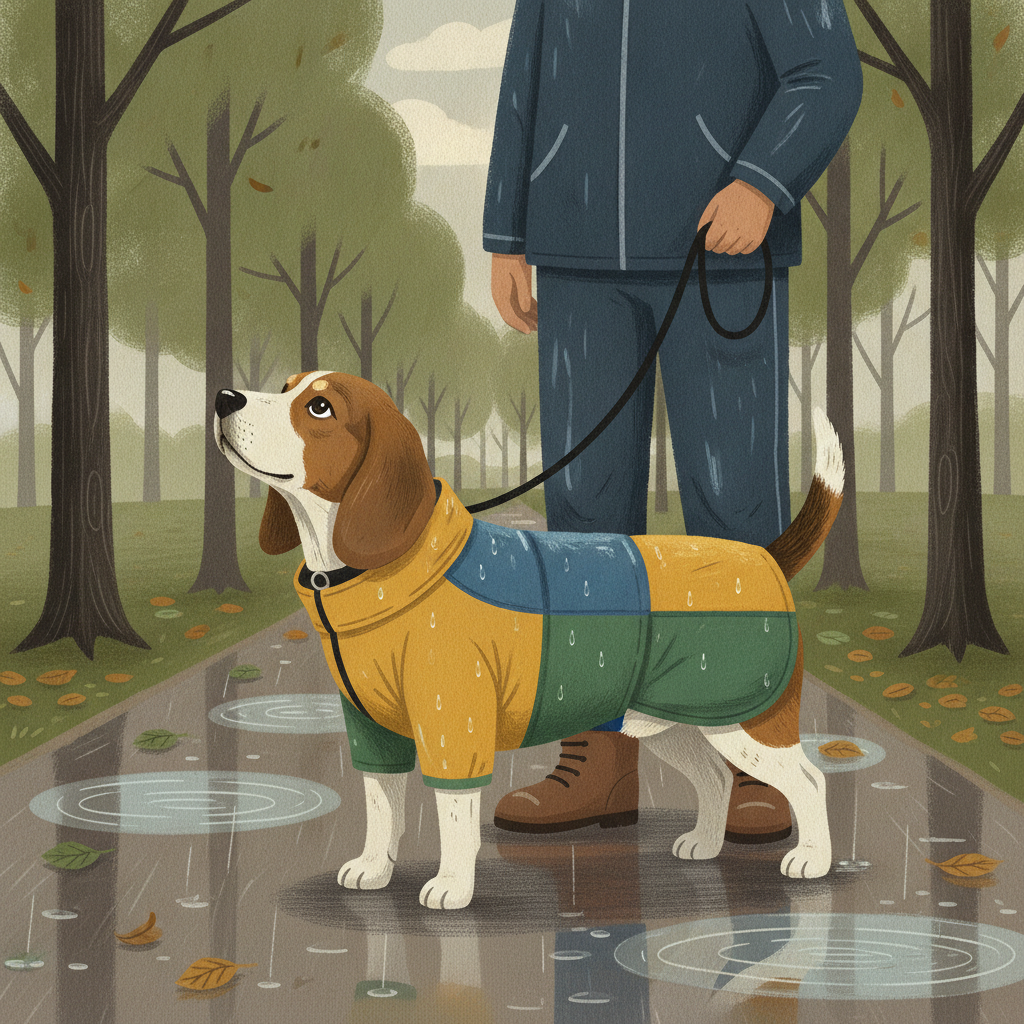
Most dog raincoats are bought for the photo and judged after the first real downpour, when the dog comes home with a dry back and a soaked, shivering underside. That is the part nobody mentions in the product shots: a raincoat is a piece of technical gear pretending to be an outfit, and the cute ones fail at the technical part all the time. A coat that drapes only the spine keeps the one part of your dog that was going to dry on its own, while the chest, belly, and legs (the parts that pick up cold road spray and take longest to dry) stay wet.
So before any picks, here is the test worth applying to every coat below, and to anything you see in a store.
The four things that decide whether a raincoat works
Coverage, not just length. Look for a coat that wraps down the sides and ideally has a chest panel or belly flap. Spine-only “capes” look sharp and do almost nothing in driving rain. Dogs with low-slung bellies (Dachshunds, Corgis, Basset Hounds) need the most belly coverage and get it the least.
Fit at the neck and chest. Rain runs downhill into any gap. A coat that gaps at the collar funnels water straight onto the chest. You want snug-but-not-tight at the neck, with an adjustable girth strap so it doesn’t billow. Measure your dog’s back length (base of neck to base of tail), chest girth (widest point behind the front legs), and neck before you order; nearly every brand sizes by those three numbers and nearly every return is a guessed size.
A real waterproof rating, or at least a coated fabric. “Water-resistant” and “waterproof” are not the same word. Coated nylon, PU-laminated polyester, and rubberized fabrics actually shed water; untreated cotton-blend “raincoats” wet through. If a listing won’t say what the shell is made of, assume it’s the weaker one.
Washability and a leash port. Mud happens. A machine-washable coat gets used; a hand-wash-only one lives in a drawer. And a back slit or zippered port for a harness clip means you’re not threading a wet leash under fabric every time it rains.
One more thing the cute listings skip: some dogs genuinely do not need a coat. A water-shedding double coat (Huskies, Labs, most retrievers) handles rain fine and mainly needs a towel by the door. The dogs who truly benefit are thin-coated and small breeds, seniors, puppies, and anyone who gets visibly cold or refuses to walk in the wet. Buy for the dog you have, not the dog in the ad.
Six raincoats that pass the test
These are organized by the job you need done, because “best raincoat” depends entirely on your dog and your weather. Prices are approximate and move with sales.
“The single biggest mistake I see is owners buying for the back length and ignoring chest girth,” says Dr. Mara Chen. “A coat that fits the spine but pinches or gaps at the chest gets shrugged off in two walks, and then people decide their dog ‘hates coats.’ Nine times out of ten the dog hated the fit.”
Hurtta Torrent Coat
This is the one to beat if you live somewhere genuinely wet. It’s a waterproof, windproof shell with side coverage, a high collar, and a reflective trim, built on adjustable straps so it holds shape on the move. Not the flashiest, but it keeps a thin-coated dog dry through a real storm. Around $55 to $75 depending on size.
Heads up. .
a snap-hood yellow slicker
The preppy yellow raincoat earns its reputation because the coated shell actually sheds water, and a snap-off hood plus adjustable cuffs let you dial coverage up or down. Look for a back leash hole and machine-wash-and-dry care so it survives heavy use. Around $40 to $60.
Heads up. .
a full belly-wrap rain suit
Dachshunds, Corgis, and other long-and-low dogs get soaked from the bottom up, so a four-leg or full-belly rain suit is the only design that truly keeps them dry. It’s fiddlier to put on, but it’s the difference between a dry dog and a wet one for these builds. Around $30 to $50.
Heads up. .
a forest-green nylon shell
For drizzle and wind more than downpours, a sleek nylon windbreaker with a durable zipper and adjustable hood goes on and off easily, which matters for fussy dogs. It’s a neutral that doesn’t scream “I bought into a trend,” and it packs down small for the bag. Around $35 to $50.
a paneled rubberized anorak
If you want the coat to be the outfit, a color-blocked rubberized anorak (the kind that doubles as Pride-wear year-round) is the most photogenic pick that still sheds water, thanks to the coated shell. Match it to a human anorak if you’re so inclined. Around $60 to $90.
a leopard-print taffeta coat
A water-repellent nylon-taffeta coat with a lined hood, neon trim, Velcro closures, and a small flap pocket gives you ’80s flair and a place to stash a poop bag, for less than the technical shells. It’s water-repellent rather than fully waterproof, so it’s a light-rain coat, not a storm coat. Around $25 to $40.
The five-minute fit check before the first wet walk
Put the coat on dry and watch your dog move across the room. The hem should not ride up over the hips, the neck should not gap when the head is down to sniff, and the girth strap should let you slide two fingers under it (snug, not strangling). Then do one short test walk in light rain and check the belly and inner legs when you get home. If those are dry, you bought the right coat. If they’re soaked, you bought a cape, and it’s worth exchanging for something with real side and belly coverage before winter.
References
- American Kennel Club. “Do Dogs Need Raincoats and Other Cold-Weather Gear?” akc.org.
- Tufts University, Cummings School of Veterinary Medicine. “Keeping Pets Comfortable in Cold and Wet Weather,” Cummings Veterinary Medical Center.
Jordan Ellis is a certified professional dog trainer with a decade of experience working with rescue organisations and private clients. They specialise in anxiety, reactivity, and positive reinforcement methods, and review all training and behaviour content at The Pet Times.
Meet our experts ↗Keep reading
 Product PicksOnly One Piece of Dog Car Gear Actually Saves Their LifeMarcus Webb · 8 min
 Product PicksHermès Gave This Dog Brand an Award. The Leather Is the Real Story.Sara Lim · 6 min
 Product PicksThe Handmade Collar Built for Dogs Who Destroy Everything ElseSasha Ford · 4 min
 Product PicksTheir First Dog Backpack Fell Apart in Two Weeks. So They Built One That Doesn't.Sasha Ford · 7 min
 Product PicksYour Dog Can't Walk Out. A Pocket-Sized Sling Can Carry Them.Tom Hadley · 4 min
 Product PicksYour Puppy's First Leash Should Be Boring. Here's the Upgrade Path AfterSasha Ford · 9 min