


Two Organs in One: The Hidden Engineering of Your Dog's Ears
A dog's ear is both a precision listening instrument and the most infection-prone real estate on their body. Understanding how it's built explains everything from their superhearing to why floppy ears get into so much trouble.

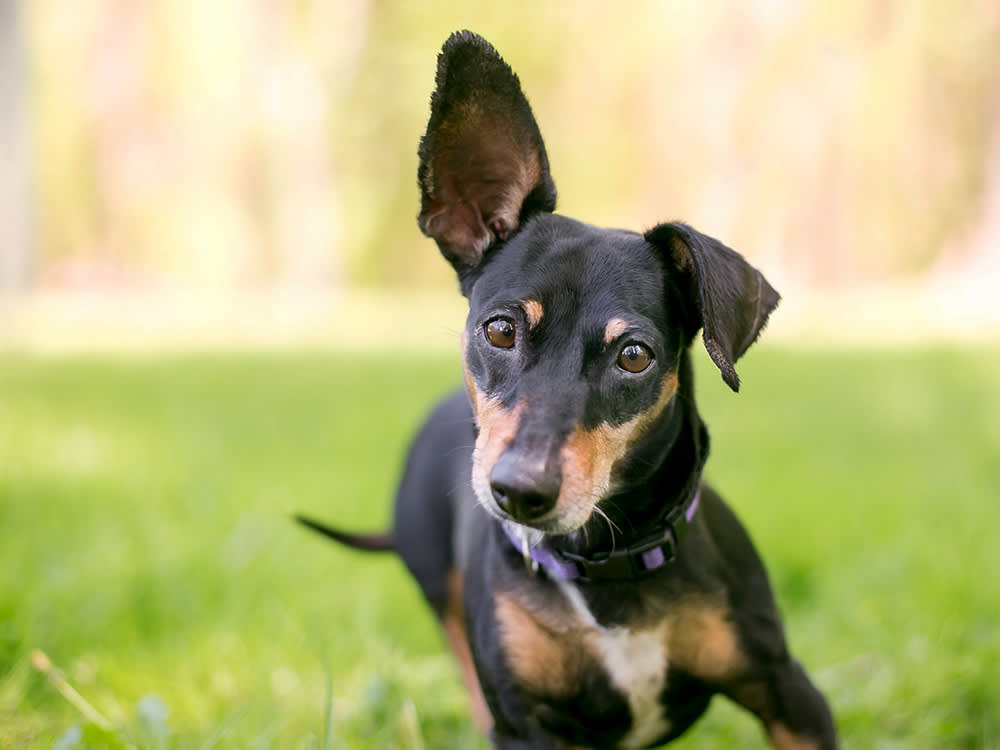
Your dog’s ears are doing two completely different jobs at once, and the tension between them explains almost everything worth knowing about ear health. On one hand, the ear is a precision instrument, a finely tuned listening machine that outclasses your own hearing in nearly every dimension. On the other, that same elegant design, a long, bent, often-covered canal, makes it the single most infection-prone piece of real estate on a dog’s body.
Hold both ideas at once and the rest falls into place. The structure that lets a dog hear a treat bag open three rooms away is the same structure that traps moisture and breeds yeast. So before the fun facts, a quick tour of the hardware.
How the ear is built
A dog’s ear is a strikingly complex structure, with anatomical names like “anthelix” and “medial process of the antitragus” for every fold. You do not need to memorize any of that, but knowing the four basic zones helps, especially if your dog is prone to ear trouble:
- Pinna: the floppy or pointy flap and its base. It amplifies sound and helps a dog work out which direction a noise is coming from.
- External ear canal: the tube from the base of the pinna to the eardrum, with a vertical section and a horizontal section.
- Middle ear: begins at the eardrum, which protects a bony chamber that conducts sound waves.
- Inner ear: a deep, protected structure essential to hearing, and home to the vestibular system that keeps your dog balanced.
That layout, especially the canal’s shape, is the key to the whole story. Now the facts, grouped by the job they belong to.
The listening machine
This is the half of the ear that earns the awe.
Dogs hear nearly four times farther than we do, and far higher. The average dog hears across a range of roughly 67 to 45,000 hertz. Human hearing runs 20 to 20,000 hertz, and most adults actually top out around 16,000. So dogs both reach higher pitches than we ever could and catch sounds from much greater distances.
They hear sounds we would call silence. Dogs detect noises down in the negative 5 to negative 15 decibel range, roughly half as loud as the faintest sound a person can register. Even in the quiet of night, a dog’s world is busy: the high-frequency pulse of a digital alarm clock’s crystal resonator, the vibration of termites in the walls, the whir of electronics, possibly even the early sub-audible cues before an earthquake.
That’s why ultrasonic whistles work. A “silent” dog whistle produces a tone above our hearing ceiling but squarely inside a dog’s range, which is the entire trick behind it as a training tool.
The hardware behind it: at least 18 muscles. Each ear is steered by a minimum of 18 small muscles that tilt, raise, and rotate it to lock onto a sound’s direction.
And they aim independently. A dog can tilt, turn, raise, and lower each ear separately, swiveling one toward a noise while the other tracks something else entirely, like a pair of independently mounted satellite dishes.
The expressive antennae
Those same muscles do double duty as a mood broadcast.
Ears are a feelings display. You can read a dog’s attention and emotional state off their ears: erect and forward means engaged and interested, slightly pulled back tends to signal friendliness, and ears clamped tightly back against the head usually mean a dog is anxious, fearful, or appeasing. It is one of the most reliable body-language cues a dog gives.
They are soft for a structural reason. A dog’s ear flap contains no bone at all. It is shaped entirely by flexible cartilage and covered in fine, densely packed hair, which is exactly why it feels so plush.
The vulnerable canal
Here is the other half of the story, the one that lands dogs at the vet.
The canal is long, narrow, and L-shaped. Unlike a human’s short, straight ear canal, a dog’s runs vertically toward the jaw and then makes an almost 90-degree turn to travel horizontally toward the eardrum. That bend makes the canal hard to examine and, more importantly, hard to keep dry and clean.
Floppy ears compound the problem. Compared with cats, dogs have far more ear trouble in general, and a hanging ear flap seals the canal off from airflow, turning that already-bent tube into a warm, humid pocket where yeast and bacteria flourish. It is a design issue, not a hygiene failure on the owner’s part.
Certain breeds draw the short straw. Cocker Spaniels, Poodles, Labrador Retrievers, Basset Hounds, and Shar-Peis all get ear infections more often than average, thanks to a mix of canal anatomy, allergy tendencies, and genetics. If you share your home with one of these, routine ear checks are not optional.
A practical note that follows directly from all this: many dogs with healthy ears never need them cleaned, and over-cleaning a healthy ear can do more harm than good. Dogs with allergies or a history of infections may need cleaning up to twice a week. Let your vet set the schedule for your specific dog rather than cleaning on a generic timetable.
The breed lottery
Genetics decides a surprising amount of what a dog’s ears can and cannot do.
Some breeds inherit deafness. Dalmatians have one of the highest rates of congenital deafness of any breed, historically around 30 percent affected, but the detail matters: that breaks down to roughly 8 percent deaf in both ears and 22 percent deaf in just one, and careful breeding has been driving the overall rate down in recent decades. The merle or dapple coat pattern seen in some Great Danes, Dachshunds, and Collies carries a strong association with deafness too, because the same genes that scatter pigment also affect the inner ear.
Hounds win the size contest, and there’s a record asterisk. Among living dogs, a black-and-tan Coonhound named Lou holds the Guinness World Record for longest ears, each measuring 13.38 inches. The all-time record, though, belongs to a Bloodhound named Tigger, whose ears reached 13.5 and 13.75 inches before he died in 2009. That length is not just for show: it helps sweep and funnel scent toward a hound’s sensitive nose while they work a trail.
Dogs can even get hearing aids. Researchers, including a team at the University of Cincinnati’s bioacoustics and canine audiology program, have worked on hearing aids for dogs with acquired hearing loss, an option that simply did not exist a generation ago.
And one to keep dogs humble
Cats actually hear better. As impressive as dogs are, cats edge them out, detecting low-frequency vibrations down to 45 hertz and high pitches up to 64,000 hertz, a wider range than a dog’s 67-to-45,000-hertz window. The dog’s true superpower was always the nose.
Which they’re born without. Puppies enter the world deaf and blind, eyelids and ear canals sealed shut. The canals open around 14 days of age, and full hearing develops over the next four to six weeks. So the superhearing above is earned, not issued at birth.
References
- Strain, G.M., “Deafness in Dogs and Cats,” and the LSU School of Veterinary Medicine deafness database
- Lewis, T.W. et al., “Decline in prevalence of congenital sensorineural deafness in Dalmatian dogs,” Journal of Veterinary Internal Medicine (2020)
- Guinness World Records, “Longest ears on a dog (living)” and all-time records
- Heffner, H.E., “Hearing in large and small dogs: Absolute thresholds and size of the tympanic membrane”
Common questions
Why are dog ears so soft?
Dog ears contain no bone. They are shaped by cartilage, which is far softer and more flexible than bone, and covered in fine, tightly packed hair, which is why the flap feels so velvety.
What frequency can dogs hear that humans can't?
Dogs hear up to roughly 45,000 hertz, while human hearing tops out near 20,000 hertz (and most adults closer to 16,000). That higher ceiling is what lets a silent ultrasonic dog whistle work: it produces a tone above our range but well within theirs.
Why do floppy-eared dogs get more ear infections?
A long, L-shaped canal already traps moisture and debris, and a floppy ear flap seals it off from airflow, creating a warm, humid environment where yeast and bacteria thrive. Breeds like Cocker Spaniels, Poodles, and Basset Hounds are especially prone for this reason.
Are puppies born deaf?
Yes. Puppies are born with their ear canals sealed shut and cannot hear at all. The canals open around 14 days of age, and hearing keeps developing for another four to six weeks after that.
Not a substitute for your vet. Our guidance is educational. For urgent symptoms, contact a vet or emergency clinic right away. Editorial standards
Dr. Mehta is a board-certified veterinary nutritionist who evaluates pet food formulations, ingredient quality, and the science behind dietary trends. He writes and reviews all nutrition content at The Pet Times, including our food rankings and feeding guides.
Meet our experts ↗Keep reading
 Health & WellnessAlmost Everything Your Dog Catches Stays With the Dog. Here's the Short List That Doesn't.Dr. Ravi Mehta · 6 min
 Health & WellnessA Dog Who Won't Drink Water Is a Clock, Not a QuirkDr. Lena Park · 7 min
 Health & WellnessMost Dog "Longevity" Supplements Are Guesswork. 9 That Aren't.Dr. Priya Nair · 11 min
 LivingThe Doodle Was Sold to You on Three Promises. The Data Backs None of ThemDr. Mara Chen · 9 min
 Health & WellnessWhen an Old Dog's Bark Goes Hoarse, It's Rarely Just a Sore ThroatDr. Lena Park · 7 min
 Product PicksYou Didn't Fail at Brushing Your Dog's Teeth. You Started at the Wrong End.Dr. Mara Chen · 7 min