


The Cat Bowl That Looks Good and Actually Works: 11 Modern Picks
The cat bowl is the one pet purchase people choose on looks alone, and the health details, material, depth, and height, matter more than the finish. A buyer's framework plus 11 modern bowls that get both right, whatever your style.

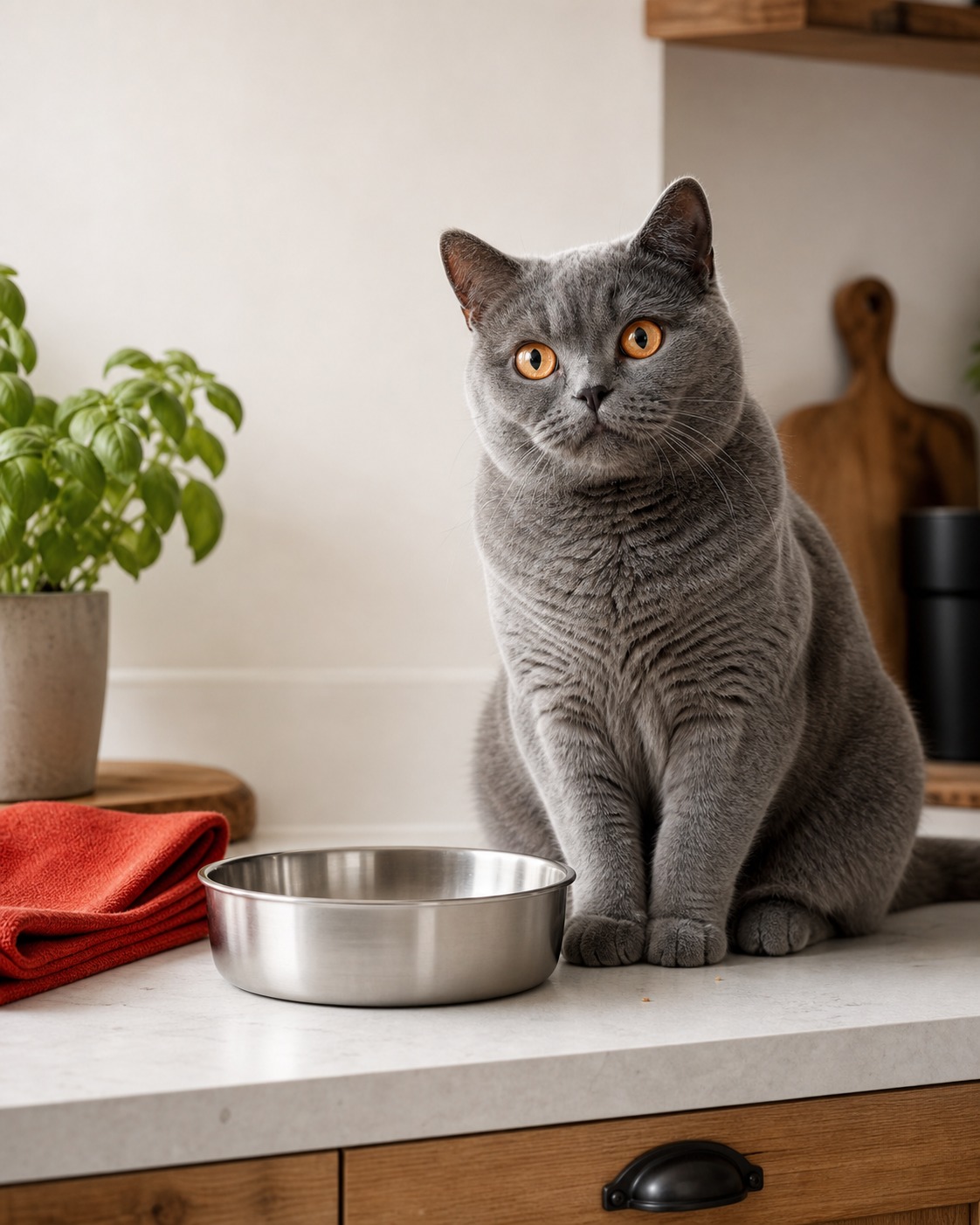
Most people buy a cat bowl the way they buy a throw pillow: by whether it looks good in the room. That instinct is not wrong, a bowl sits in your space at every meal and there is no reason it should be ugly, but it skips the part that actually affects your cat. The right bowl is a small health decision disguised as a decor one, and once you know the three things that matter, shopping gets both easier and more interesting. So this is not just a gallery of pretty dishes. It is the short list of what to check, followed by 11 modern bowls that pass on looks and function at the same time.
The three things that actually matter
Material, and it is not close. This is the detail most roundups skip, and it is the one with the strongest evidence behind it. Research comparing pet-dish materials found that plastic bowls carried the heaviest bacterial load, because the surface develops micro-scratches over time that harbor bacteria even after washing. Ceramic held up better than plastic but showed the most diverse and most pathogenic bacteria in one analysis, including strains like E. coli and salmonella, largely a function of glaze cracks and chips. The material veterinary sources land on as the safest is stainless steel, followed by glass, then well-glazed ceramic. Plastic is also the material most linked to feline chin acne in cats with sensitive skin. Translation: buy stainless or glass when you can, choose intact high-quality ceramic when you want the look, and treat plastic as the compromise, not the default.
Depth, with a caveat about “whisker fatigue.” You will see whisker fatigue cited everywhere as established fact. It is not. It is a plausible theory, that a cat’s highly sensitive whiskers get overstimulated brushing the sides of a deep, narrow bowl, but the research to confirm it does not exist yet. What is true is simpler and worth acting on anyway: some cats visibly prefer a shallow, wide dish and will eat more comfortably from one, especially if they paw food out or back away from a deep bowl. You do not need to believe a syndrome to notice your own cat’s preference and buy for it.
Height. A senior cat, or one with arthritis or any neck, back, or hip issue, often does better with a slightly elevated bowl that spares them the crouch. This one is about your specific cat’s age and joints, not a universal rule, so match it to who you are actually feeding.
Pick the material first, then the shape your cat has already shown you they like. A gorgeous bowl your cat avoids is just an expensive sculpture. Watch how your cat eats for a week and let that pick the finish.
With that framework in hand, here are 11 modern bowls worth the counter space.
The safe-material workhorses
The stainless steel everyday bowl. The material vets recommend, in a wide shallow shape that sidesteps the whisker question entirely. A quality stainless steel dish is the low-drama default: dishwasher safe, non-porous, and impossible to scratch into a bacteria trap the way plastic gets. Not the flashiest thing on this list, but it is the one I would put a new cat in front of first.
The glass option for the minimalists. Glass is the runner-up to steel on the safety list and reads far more like tableware than pet gear. A simple clear or frosted glass dish disappears into a modern kitchen and wipes perfectly clean.
The acrylic and contemporary statement pieces
The all-acrylic set. Nothing reads modern quite like clear acrylic. ShopHiddin reimagines the whole cat kit, bed, bowl, and tower, in a sleek acrylic build. Just note that acrylic scratches, so keep it to a dry-food or treat role rather than a wet-food workhorse, and retire it once the surface clouds.
The minimalist designer favorite. MiaCara is arguably the coolest name in modern pet design, pairing clean lines with genuine practicality. The pieces are refined enough to pass for human dishware, which is rather the point.
The dinner-party ceramic. So prim it could hold its own at a dinner party, which is roughly what you and your cat host every evening anyway. Ceramic here, so buy the intact one and retire it the moment it chips, since glaze cracks are exactly where the bacteria settle.
The health-minded shapes
The elevated all-rounder. Happy and Polly has become a breakout name with joyful, colorful designs that also fold in wellness ideas like elevated feeding aimed at easing neck and spine strain. A good pick if your cat is a senior or a known food-pusher.
The spine-friendly stand. We all bought standing desks for our own backs; an elevated bowl extends the same courtesy to a cat who hunches uncomfortably to eat. Most useful for older or larger cats.
The tilted whisker-relief bowl. The shape that has gone mainstream since this trend started: a shallow, angled dish that tips food toward your cat and keeps sensitive whiskers off the sides. If your cat is a bowl-backer-awayer, this is the one to trial.
The trend-forward and playful
The checkerboard enamel bowl. Enamel over steel gives you a safe surface and a graphic print in one. A fun, low-stakes way to refresh a feeding nook if the checkerboard look is your thing.
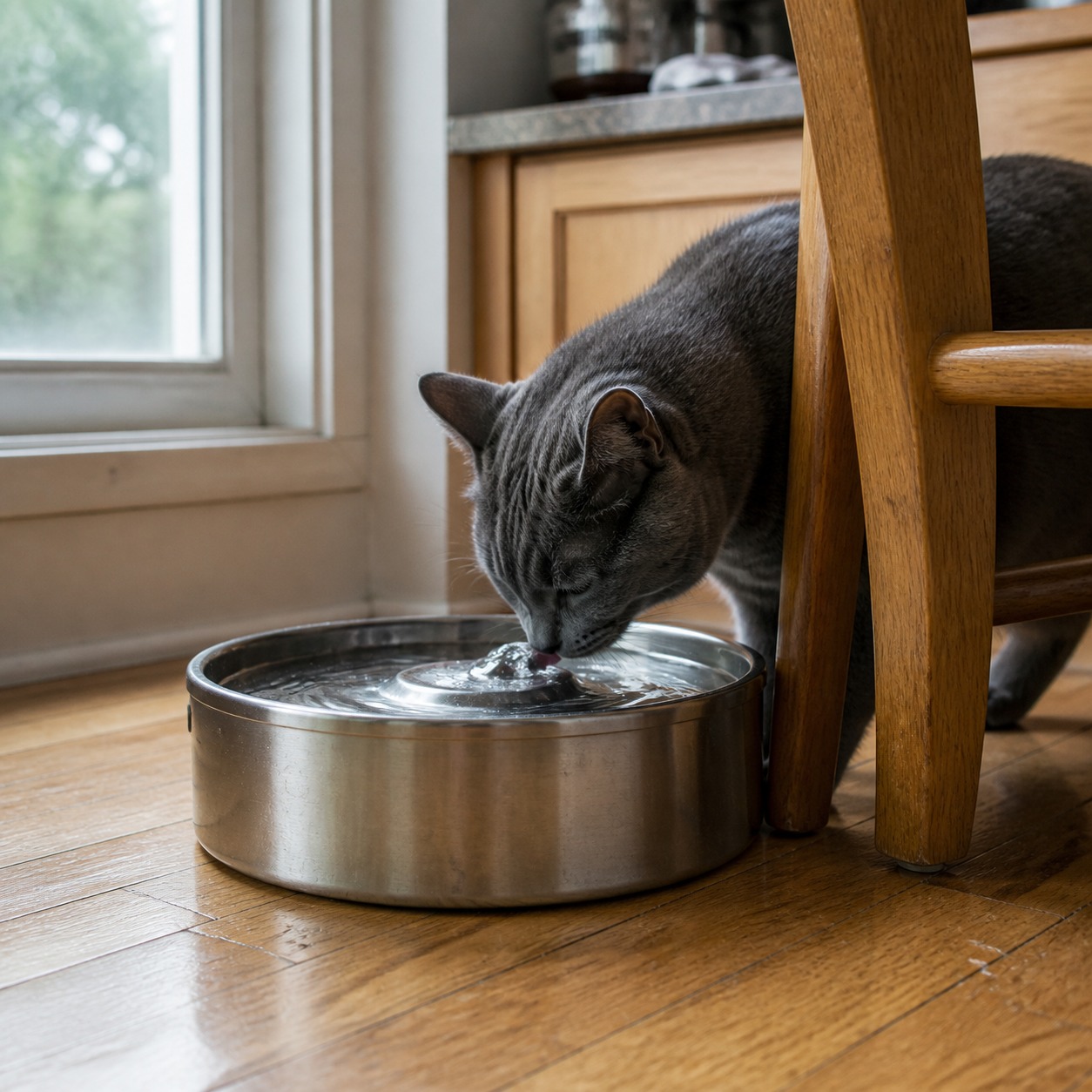
The fountain for reluctant drinkers. For the cat who dodges the water bowl like the carrier on vet day, a continuously circulating fountain nudges them to drink more, which genuinely matters for urinary and kidney health. Newer models run quieter and filter better than the early ones; just commit to changing the filter, or the hygiene advantage evaporates.
The right-sized small bowl. If your space is tight, a properly modest bowl looks adorably tiny to you and fits your cat perfectly. Small footprint, easy to keep in the safe-material lane by choosing steel or glass.
The quick buying checklist
Before you buy on looks alone, run the three checks:
- Material: stainless steel or glass first, intact ceramic for the look, plastic only as a last resort, and never for a cat with chin acne.
- Depth: if your cat backs away from or paws at a deep bowl, go shallow and wide.
- Height: elevate it for a senior or achy cat, keep it low for a young, limber one.
Get those three right and the finish is the easy part, because at that point every bowl on this list is a good one.
References
- “The Bowl Truth: Pet Food Bowl Safety.” Today’s Veterinary Business. https://todaysveterinarybusiness.com/pet-food-bowl-safety/
- “Is Whisker Fatigue a Real Thing?” Institute for Environmental Research and Education. https://iere.org/is-whisker-fatigue-a-real-thing/
- “Are Plastic Bowls Bad for Cats?” Americat Company. https://americatcompany.com/blogs/news/plastic-cat-bowls-bad
Sara Lim leads our Product Picks coverage, testing and comparing the things pets and their owners actually use. From everyday essentials to home-and-style finds, she focuses on honest, useful recommendations rather than hype.
Meet our experts ↗Keep reading
 Product PicksA Wellness Influencer's Cat-Parent Gift Guide That Skips the JunkSara Lim · 4 min
 LivingYou Can't Buy Sylvie's Cat Bowl From Emily in Paris. Here's How to Nail the Look.Leila Torres · 3 min
 Product PicksThe Cat Puzzle Toy Plan: Start Easy, Level Up, Actually Change BehaviorNina Vasquez · 5 min
 Product PicksCat Water Fountains: Why Most Get Returned, and How to Pick One That Doesn'tDr. Mara Chen · 6 min
 Product PicksI'm Lazy About Scooping. The Litter Genie Turned Me Into a Neat Freak.Marcus Webb · 6 min
 Product PicksThe Best Cat Litter Is the One Your Cat Approves. How to Narrow the Field FirstSara Lim · 8 min