


The Only Three Leash Decisions That Matter (and the One Trainers Beg You to Toss)
Forget the wall of options. A good leash comes down to length, weight, and clasp, and avoiding the one type trainers and vets warn against. Here is how to choose, with picks for chewers, pullers, small dogs, and hands-free walkers.

Affiliate disclosure. This article contains affiliate links. We may earn a small commission if you buy through a link, at no extra cost to you. How we handle recommendations.
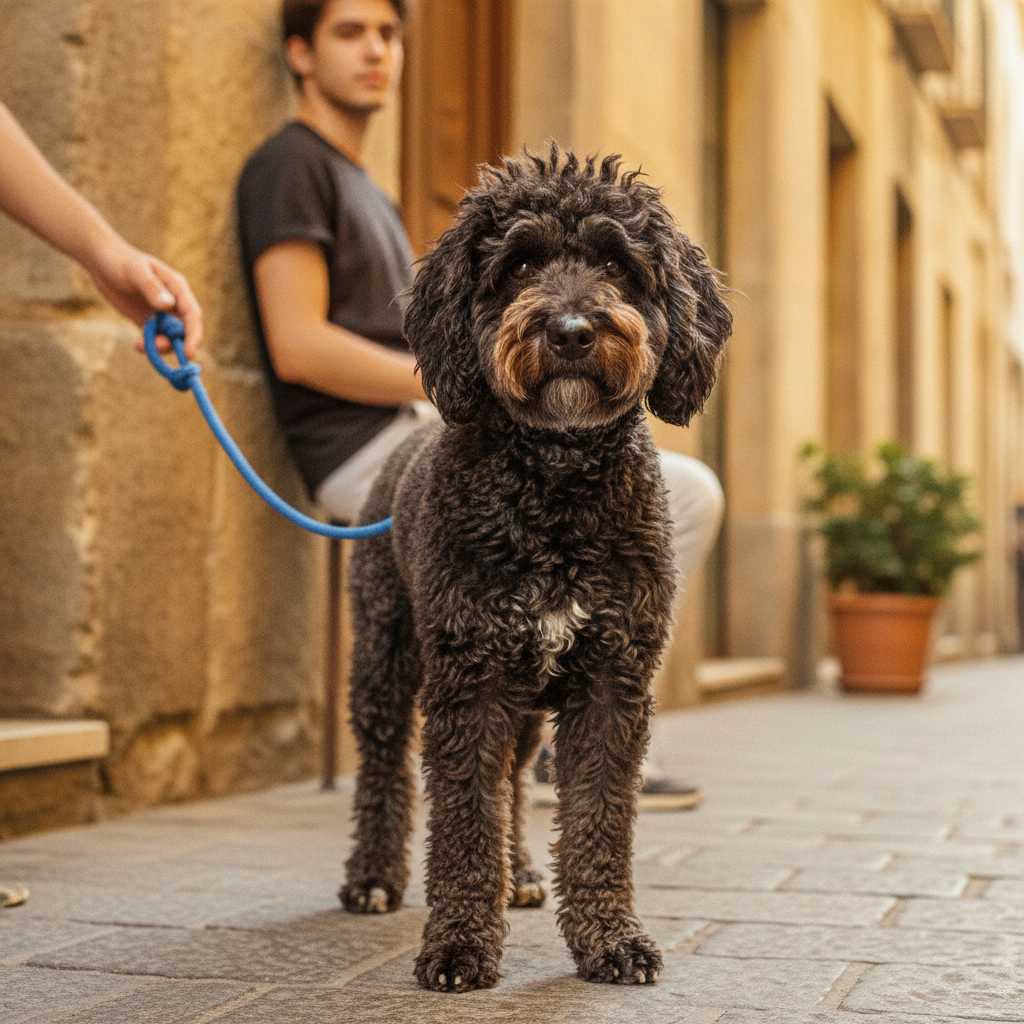
Walk into any pet store and the leash wall looks like a decision with a hundred variables. It is really a decision with three, plus one thing to avoid entirely.
The three that matter are length, weight, and clasp. Get those right for your dog and almost any well-made fixed leash will serve you for years. The one to avoid is the retractable leash, which trainers and vets bring up unprompted as the single piece of walking gear they wish people would stop buying. Sort out those four things and the wall stops being overwhelming.
Start here: skip the retractable
This is the rare point on which trainers and vets are nearly unanimous.
A retractable leash teaches the exact opposite of what we want. The dog learns that leaning into the leash makes more leash appear, so it is being rewarded for pulling every time it walks. You cannot do loose-leash work with a tool that pays the dog to pull.
The safety record is worse than the training problem. The thin cord can cause friction burns, deep cuts, and in severe cases finger amputations to handlers and bystanders, and if the bulky handle is dropped it can recoil and “chase” a startled dog, sometimes sending it bolting into traffic. The clean fix is a fixed-length leash, and from there it is just three choices.
Decision one: length
For ordinary walks, 4 to 6 feet is the sweet spot, enough slack for a dog to sniff and move, short enough to keep it close at a crosswalk. Shorten to about 4 feet for a reactive dog or a tight city sidewalk, where you want the dog near you and able to refocus quickly.
A long line of 15 to 30 feet has exactly one job: recall practice in a big, open, low-traffic space like an empty field or a quiet corner of a park. It lets a dog roam while you keep a safety connection. It is not an everyday walking leash, and it is dangerous in a crowd.
Decision two: weight and width
Match the leash to the dog’s body, not just its personality. A small dog or a puppy under 10 pounds should wear a thin, light lead with a small clasp, since a heavy leash and bulky hardware drag on a tiny neck. The lightweight Ruffwear Roamer or Front Range leash is a good template for a featherweight everyday lead. (Non-Amazon retail.)
For a dog over roughly 20 pounds, go wider, about a half inch to a full inch, so a sudden lunge cannot rip a flimsy leash out of your hand even from a non-puller. For a determined puller, a sturdy climbing-rope-style leash absorbs force without the bounce of a bungee lead (bungees can actually encourage tugging by giving the dog more give to lean into).
Decision three: the clasp
The clasp is the part most people never think about and the part most likely to fail at the worst moment. Choose a trigger snap, the type you pull back with your thumb, over a simple bolt or spring clasp. It has more overlap and is far less likely to pop open when a dog hits the end of the leash at speed. Scale the clasp to the dog: small and light for tiny dogs, heavy-duty for big ones.
Picks by the dog you have
With the three decisions made, here are leads matched to common needs.
For the chewer
A dog that gnaws its leash needs material it cannot win against. The VirChewLy Indestructible Leash is vinyl-coated steel cable rated to hold dogs from a few pounds up to well over 200, virtually chew-proof because a dog’s teeth cannot cut steel. A simpler trick for a casual chewer: clip a short length of chain between the leash and the collar so the dog meets metal, not webbing.
For the everyday all-rounder
A braided lead hits the rare combination of sturdy and lightweight. The Mendota Braided Snap Leash is hand-made waterproof rope with a trigger snap, comes in multiple lengths and widths for any size dog, and breaks in soft on the hands while staying tough for years. It is the leash to reach for if you want one good lead for daily life.
For the strong puller
A climbing-rope leash stands up to a hard puller without the training downside of a bungee. Look for a 4-to-6-foot rope lead in a half-inch or thicker diameter with a reinforced trigger snap, designed to take repeated force from big and small pullers alike. Pair it with a front-clip harness for real control.
For the hands-free walker
Hands-free leads (worn across the body or around the waist) are great, with one firm caveat from Ford: “A hands-free leash only works if the dog already heels well. If your dog is not solid on a regular leash, going hands-free just means it can pull you from your hips instead of your hand.” For a trained dog, a convertible rope leash long enough to wear around the waist, or an adjustable multi-way lead, frees your hands for treats and phone alike.
For recall training
Here the space matters more than the gear. Use a 15-to-30-foot long line in a wide, open, low-density area so the dog can range while you keep a connection, and never use a long line near roads or crowds.
The bottom line
Toss the retractable, then make three choices: 4 to 6 feet for everyday walks, a weight that suits your dog’s size, and a trigger-snap clasp. After that, pick a chew-proof cable for a destroyer, a braided rope for daily life, a climbing-rope lead for a puller, and a long line only for recall in open space. The leash wall is not a hundred decisions. It is three, plus one easy thing to leave on the shelf.
References
- American Kennel Club. “Why Retractable Leashes Can Be Dangerous.”
- U.S. Consumer Product Safety Commission. “Injuries Associated With Retractable Leashes.”
- Fear Free Pets. “Choosing the Right Leash and Walking Equipment.”
- ASPCA. “Teaching Your Dog Not to Pull on the Leash.”
Common questions
Why do trainers dislike retractable leashes?
Two reasons: control and safety. A retractable leash teaches a dog that pulling extends its range, which undermines loose-leash training, and the thin cord and heavy plastic handle cause real injuries. If dropped, the handle can recoil and chase a dog; the cord can cause burns, cuts, and even amputations to hands and fingers. Most trainers and many vets recommend a fixed leash instead.
What length of dog leash should I get?
For everyday walking, 4 to 6 feet is the standard, long enough for some freedom, short enough for control. Go shorter (4 feet) for a reactive dog or crowded city walks, and reserve a long line (15 to 30 feet) strictly for recall practice in open, low-traffic spaces, never for ordinary walks.
What leash clasp is safest?
A trigger snap (the kind you pull back with your thumb) is more secure than a simple bolt or spring clasp, because it has more overlap and is less likely to pop open under a sudden lunge. For small dogs and young puppies, choose a lighter clasp so the hardware does not weigh down the leash.
How heavy should the leash be for my dog's size?
Match the weight to the dog. A tiny dog or puppy under 10 pounds needs a thin, light lead and a small clasp, while a dog over about 20 pounds needs roughly a half-inch to one-inch-wide lead so it cannot yank a too-light leash out of your hand. Too heavy strains a small dog; too light loses control of a big one.
Sasha Ford is a certified cat behaviour consultant who has worked with shelters, catteries, and private clients across the country. They review all feline behaviour content at The Pet Times, with expertise in multi-cat households, indoor enrichment, and stress-related disorders.
Meet our experts ↗Keep reading
 Product PicksThe Escape-Proof Collar Shelters Swear By Comes From a Town of 400Nina Vasquez · 5 min
 Product PicksMy Dog Destroys Every Travel Bowl. This Squeeze Bottle Finally Won.Jordan Ellis · 5 min
 Product PicksHermès Gave This Dog Brand an Award. The Leather Is the Real Story.Sara Lim · 6 min
 Product PicksThe $350 Viral Boot Sold Out. Your Dog's $49 Version Is Better.Sasha Ford · 4 min
 Product PicksThe Poop-Bag Holders That Pass the One-Handed Test (and Still Look Good)Leila Torres · 4 min
 Product PicksThis Vegan Dog Leash Doubles as a BangleLeila Torres · 5 min